Category Archives: Travel

Berlin 2 – unscrambling the city….September 2014

Berlin leaves my head a kaleidoscope of dizzying experiences and thoughts . For some reason I think of filo pastry – fine layer upon layer of history, of human folly and of cultural aspiration. The chronological layers are clear yet their impact on the urban fabric is like a spoon has stirred the strudel’s  cherry filling. Within one square kilometre around Unter den Linden are major historical footprints:

  • the Prussian grand precinct with the Humboldt University buildings and State Library, Museum Island and the old palace now being rebuilt;
  • the old Third Reich Luftwaffe building ironically now the tax office;
  • the early Prussian Brandenburg Gate in the  Pariser Platz,  framed by the now rebuilt Deutsche Bank, the Adlon Hotel and the American Embassy;
  • Frederick the Great’s palace, Sanssouci  at Potsdam
  • the new glass architecture of the parliamentary precinct.

Prussian memories

Schloss Sanssouci at Potsdam

Schloss Sanssouci at Potsdam

And its folly

And its folly

Altes Museum, one of the many neo Classical buildings designed by KF Schinkler, used to be draped in Nazi flags when  Hitler spoke to the crowds in the Lustgarten from here.

Altes Museum, one of the many neo Classical buildings designed by KF Schinkler, used to be draped in Nazi flags when Hitler spoke to the crowds in the Lustgarten from here.
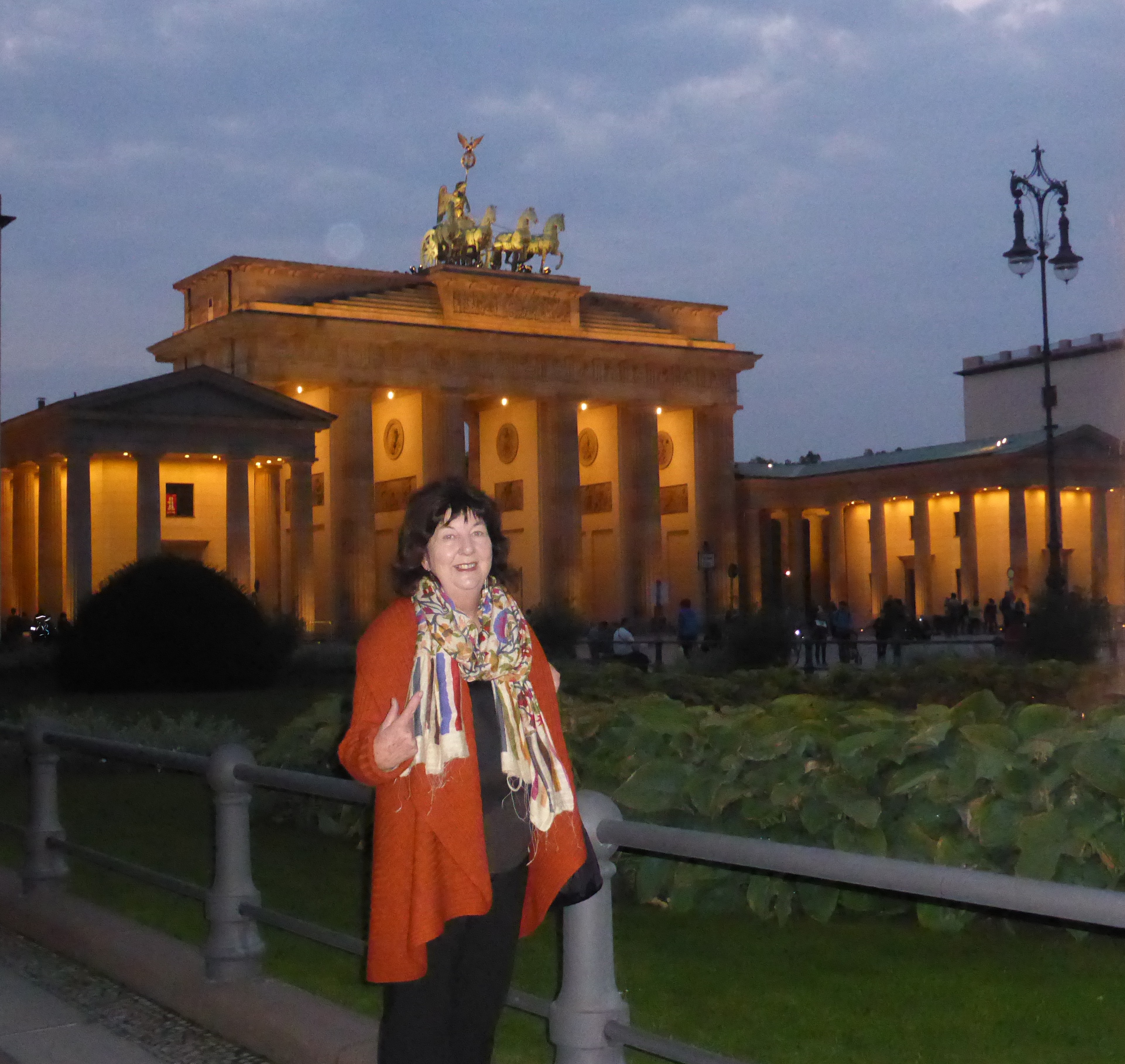
How could you go to Berlin and not have your photo taken at twilight by the Brandenburg gate?

How could you go to Berlin and not have your photo taken at twilight by the Brandenburg Gate?

The city surface is like a marbled cake  – here some Prussian grandeur, there some remnant communist building not the least of which is their showpiece TV Tower on Alexanderplatz, over there a monument to the murdered Jews of the holocaust and finally some standout modern architecture. And most of it , including the restoration of the Prussian palaces,  built in the last 70 years since 70% of the city was bombed.
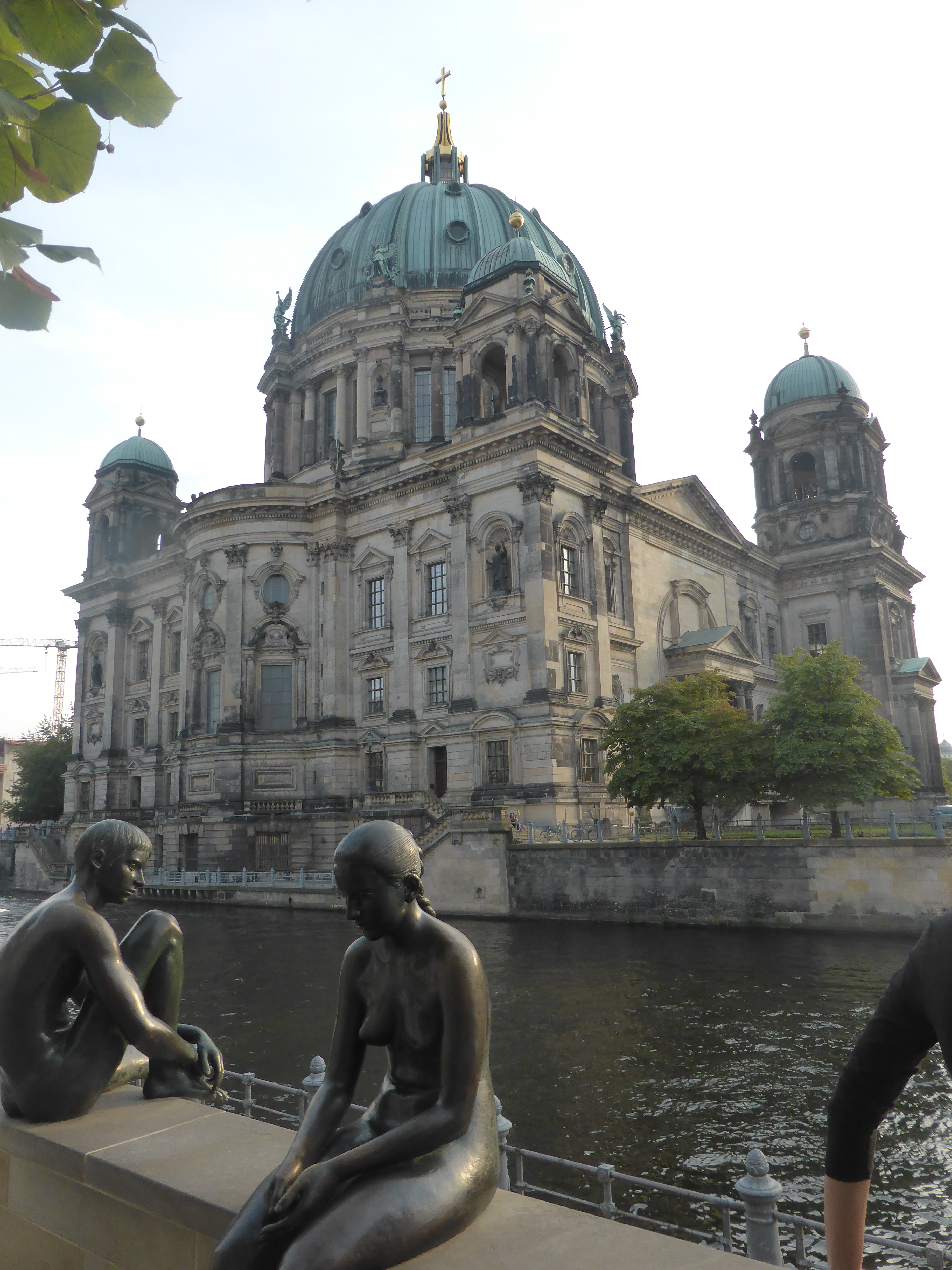
Berliner Dom, the royal court cathedral  built in 1905 stands by the River Spree,

Berliner Dom, the royal court cathedral built in 1905 stands by the River Spree,

Scattered throughout are the dozens of museum and galleries to every aspect of past and present life.
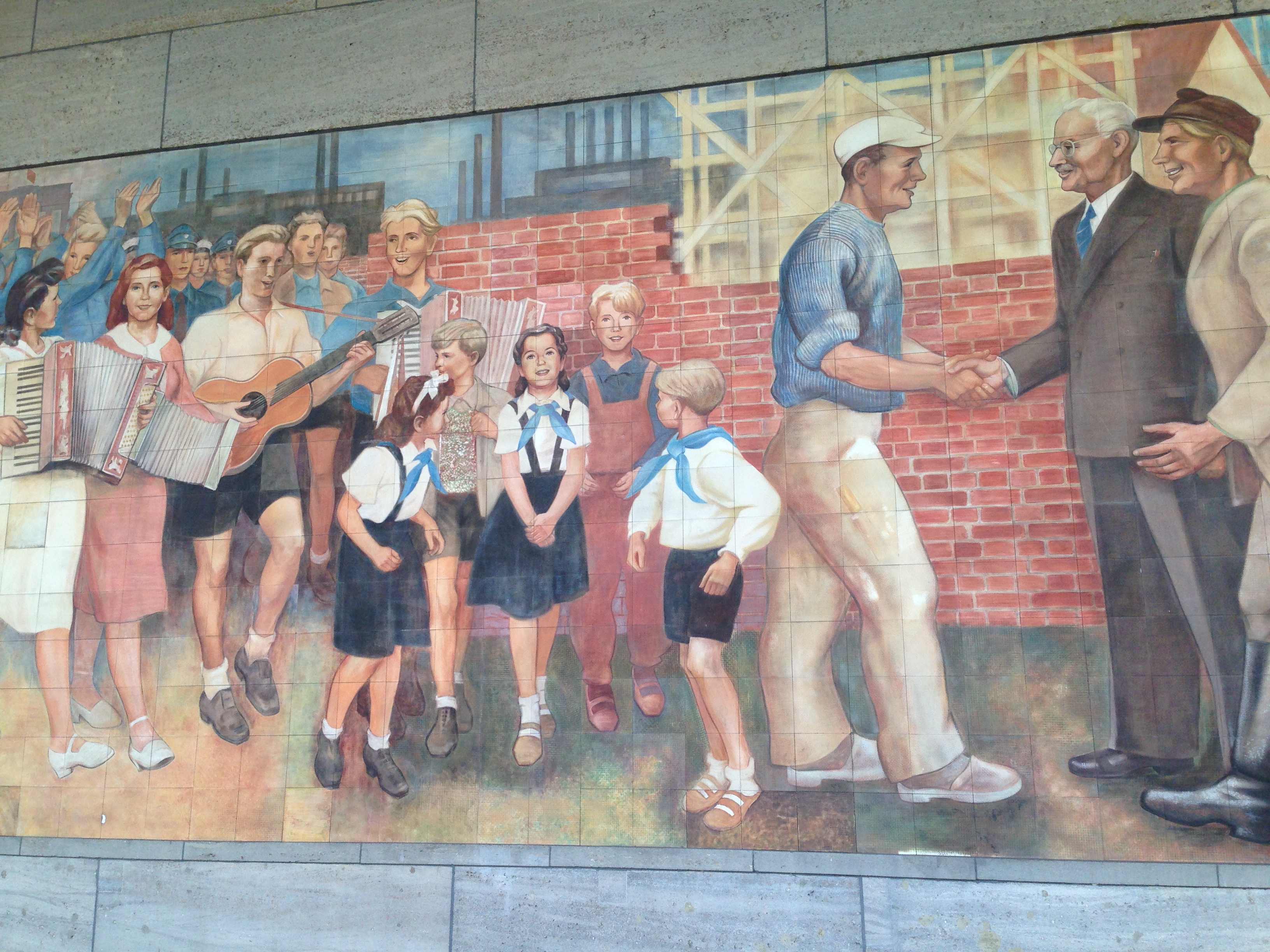
Part of a large communist era mural adorning the old Luftwaffe building.

Part of a large communist era mural adorning the old Luftwaffe building.

Part of the Sony Centre at Potsdamer Platz. The Wall ran right though here and destruction was rife; it left a blank canvas for some great modern architecture and a wonderful arts precinct.

Part of the Sony Centre at Potsdamer Platz. The Wall ran right through here and destruction was rife; it left a blank canvas for some great modern architecture and a wonderful arts precinct.

This is a city central to World War 2, the epicentre of the Cold War and now capital of a country leading much of the world in free education, renewable energy and support to other nations. The city in its many museums and memorials resonates with thousands of showcased stories (often retold on large cardboard placards) about both the perpetrators and the victims of its history. This is reconciliation on a large public scale.
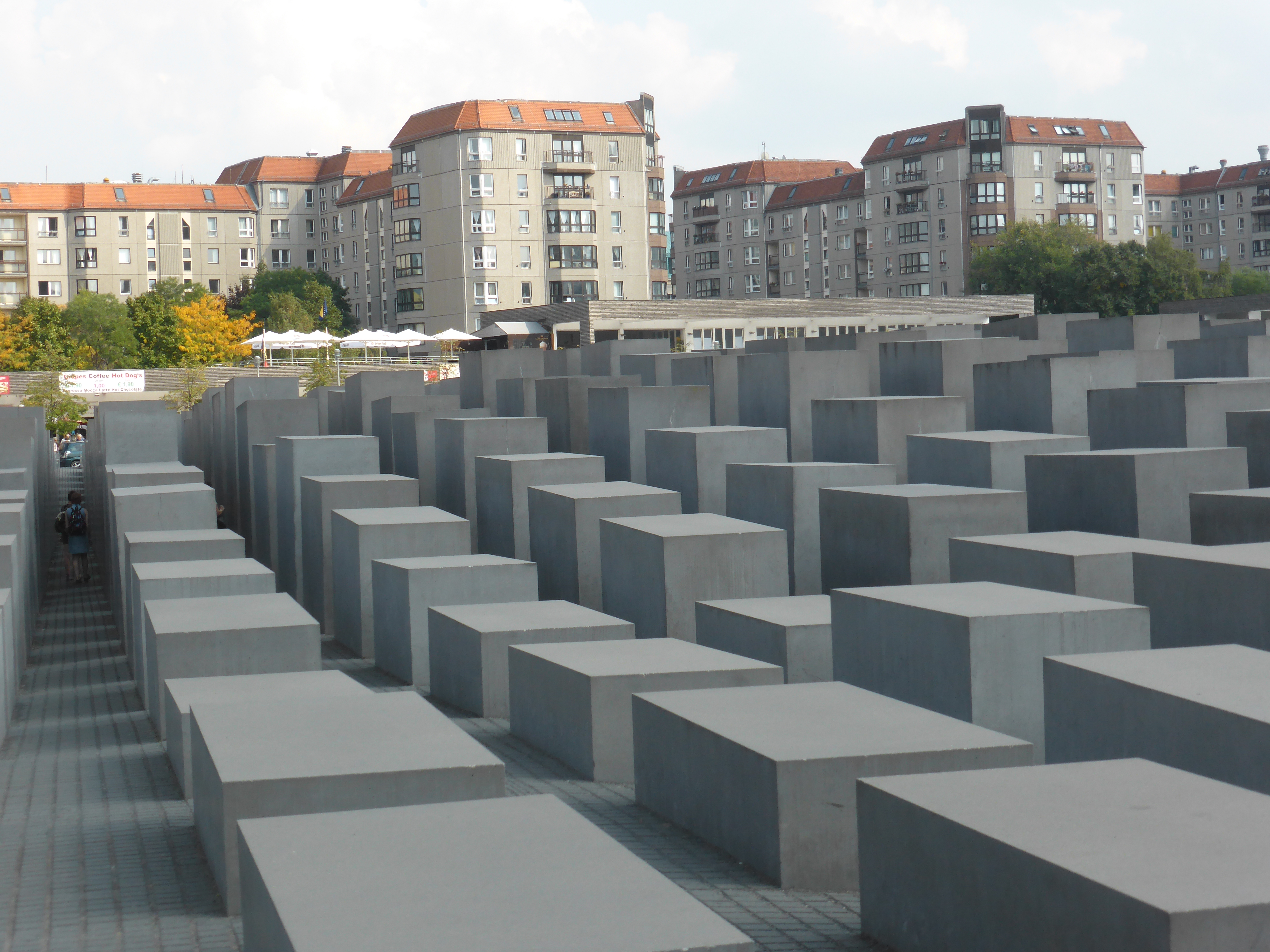
Here taking up a city block are theField of Stelae or the Holocaust Memorial.

Here taking up a city block are the  labyrinth Field of Stelae or the Holocaust Memorial. Underneath in one room short biographies of the 6 million Jewish people killed in Hitler’s war are read out. To read them all takes 7 years.

One small reason I came to Berlin was my own struggle to understand “man’s inhumanity”. On a much smaller scale in my own country the majority of people are seemingly unmoved by the government’s treatment of asylum seekers, and the awful life suffered by many Aboriginal people passes mostly unremarked. I came to touch the surface of how the German people, who remind me much of Australians, seemed to be compliant during the years from 1933, ignore the persecution of the enemies of the Reich, the unbridled fascism and later the unbridled power of the Stasi.

In many memorial museums simple cardboard placards record history.

In many memorial museums stark cardboard placards record history, mostly in the form of individual stories.

The answer too seems to be a marble cake of reasons – simplistically, the chaos of the Weimar Republic, the desire for improved economic conditions, the impetus to recover face from WW1, the pervasive rhetoric, the fear of  the Gestapo and later the Stasi, and maybe that innate respect for authority manifested daily in the fact that still no German seems prepared to cross the road without a green light. Anyway I leave with books to read to help clarify the mind. I am captured by a city where so many visible statements of the past are treated with quiet respect, where the arts are central, where alternative Berlin still lingers and at the same time young people say it is party central. This is a city of stories. The horrors of the twentieth century have been laid out for all who would, to see. In the blogs that follow, I now know how I shall slice the layers:

  • The Third Reich
  • The Cold War
  • Archeology, art and architecture
  • Alternative Berlin and street life

They used to say New York was where the future came to rehearse. I think Berlin is where the future is being created, where everything old is new again and much that is old is actually new and there is striving to do it well.

Leave a comment

Filed under Photography, Travel

Berlin 1 – superficial observations…… September 2014

Berlin captured me. Its history, its honesty, its energy, its architecture – two weeks later I am still struggling to order the rich and resonant cacophony of images and thoughts, remnants of my few weeks there.

The next blogs will be an attempt at such order but first I want to list some of the superficial impressions – to clear the mental decks.

• This is a city being continuously reconstructed, not just through history but actually. Cranes abound.

A city under re-construction for at least 70 years.

A city under re-construction for at least 70 years.

• Because it is built on swampy soil, Berlin is a relatively low rise city and surprisingly green.

Here' a built in trampoline in one of the many open spaces.

Here is a built in trampoline in one of the many open spaces.

• It is a city of illusions, not just of historic ideas but actually. Inside the seemingly historic buildings everything old is new again. They kept the frames but updated the paintings inside.

From the outside theBundestag looks like its old self but Sir Norman Fosters internal design shows the view of the surprisingly modest Chamber from the glass dome.

From the front the Bundestag (the Parliament building) looks like its old self but Sir Norman Foster’s internal design shows the view of the surprisingly modest Chamber from the glass dome.

• Berliners are superficially abrupt but given a few days, have bright smiles. They remind you of your manners with a strong “Morgan”.

• Everybody seems to be eating large servings of great creamy cake yet few overweight people are around.

• Young berlin boys have the best range of carefully coiffured hair I have ever seen.

• Bike riders are well catered for and you had better look out if you stray into one of the many footpath bike paths.

• There is a stunning public transport system and after 2 weeks even I could change lines with some confidence. Conversely traffic is amazingly light given this is a city of 3.5 million people – but then again I am comparing it to the unacceptably heavy situation in Sydney

Light, airy, well organised the main rail station has much to be envious of.

Light, airy, well organised, the main rail station has much to be envious of.

• Accessibility is helped by the large number of people who speak English.

But sometimes Andie, Maja and Tom had to consult a map.

But sometimes Andie, Maja and Tom had to consult a map.

• While the streetscape is mostly post-war crisp, cigarette butts adorn the pavements.

• People drink beer in the streets and on the trains yet I never saw a drunk. Part of the response to the oppression of history has been to turn from the nanny state – bike helmets are not worn; there aren’t rules about alcohol in the streets, nor are there any CCTVs and it all seems to work.

Enjoying a beer on the train

Enjoying a beer on the train

• Neighbourhoods outside of Mitte (the centre) each have their own character although gentrification is closing in on much of the alternative areas.

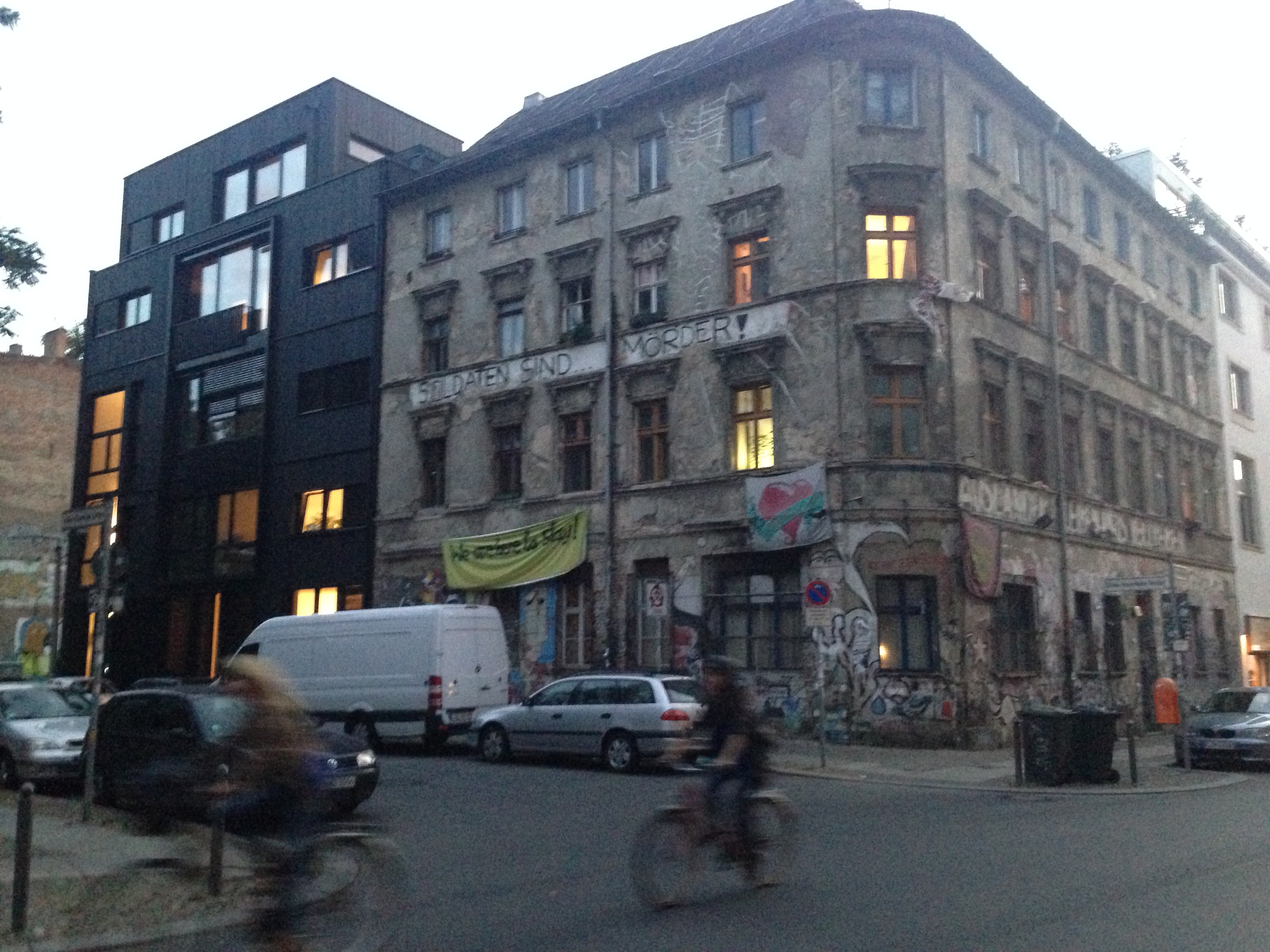
Old squat, smart neighbourhood, it may not last long.

Old squat, smart neighbourhood, it may not last long.

• Exhortations in unlikely places – on foundations and footpaths, as well as street art street art, remind you that this is a city of culture.

The stone base for this blue pipe has one of many  quotes from the famous. The blue pipes are a fixture constantly draining the swampy land on which the buildings sit.

The stone base for this blue pipe has one of many quotes from the famous. The blue pipes are a fixture constantly draining the swampy land on which the buildings sit. The quote from the philosopher translates as “the limits of language are the limits of the world”

• Department stores have not taken over given the range and number of small boutiques although the for hall in the big KaDeWe is the best I have seen.

The chocolatier in was KaDeWe. He got a bit sue after I had been given my third free truffle.

The chocolatier in KaDeWe. He got a bit sus after I had collected my third free truffle.

• Under the city I see, I know there are other Berlins invisible to me – club central is one, high culture another and I suspect, history and European politics has left more than the usual number of distressed people.

7 Comments

Filed under Photography, Travel

Wiesbaden – a German town on the Rhine, friends and ancestors …… September 2014

The town

A soft landing into Germany, collected by my friend Gunther and driven to my hotel in the middle of this charming Rhineland town about 35ks from Frankfurt.

The splendid florist displays hint at the coming autumn.

The splendid florist displays hint at the coming autumn.

While the town goes back to Neolithic times, it begins its starring role as a spa town when the Romans propped here. By 1800 it had 23 bathhouses. Around the turn of the 20th century Kaiser Wilhelm11 made the city his unofficial “summer residence”. Following the imperial court, numerous nobles (including Russian ones), artists and wealthy businessmen settled in the city.

The old town hall was built in 1610; now it is the marriage registry

The old town hall was built in 1610; now it is the marriage registry


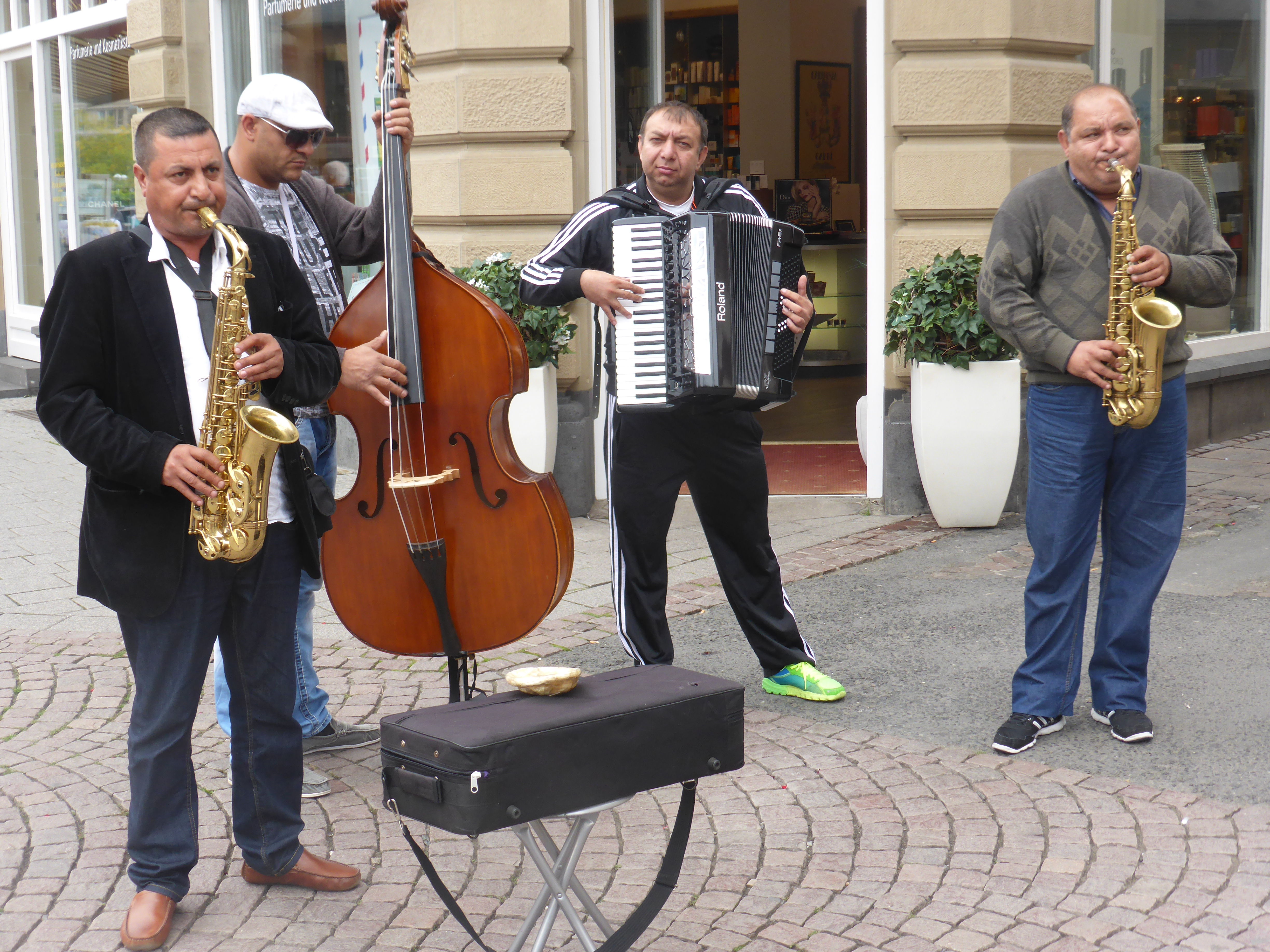
Friday is a big day for weddings and these buskers cheer up the scene.

Friday is a big day for weddings and these buskers cheer up the scene in front of the town hall.


Goethe, Dostoevsky, Wagner and Brahms (who wrote his 3rd symphony here) were visitors. The town is also a casino town and rumour hath it that Dostoevsky got thrown out of the casino and did a runner on his hotel bill

The hot minerals springs still sprout in small fountains and indoor springs enhance the town.

About 270,000 people live in Wiesbaden with American Army Europe HQ set to increase its own population to 30,000 in Erbenheim, one of the suburbs.

In WW2 about 30% of buildings were damaged and small pockets of bland 50s/60s rebuilding is testament to that.

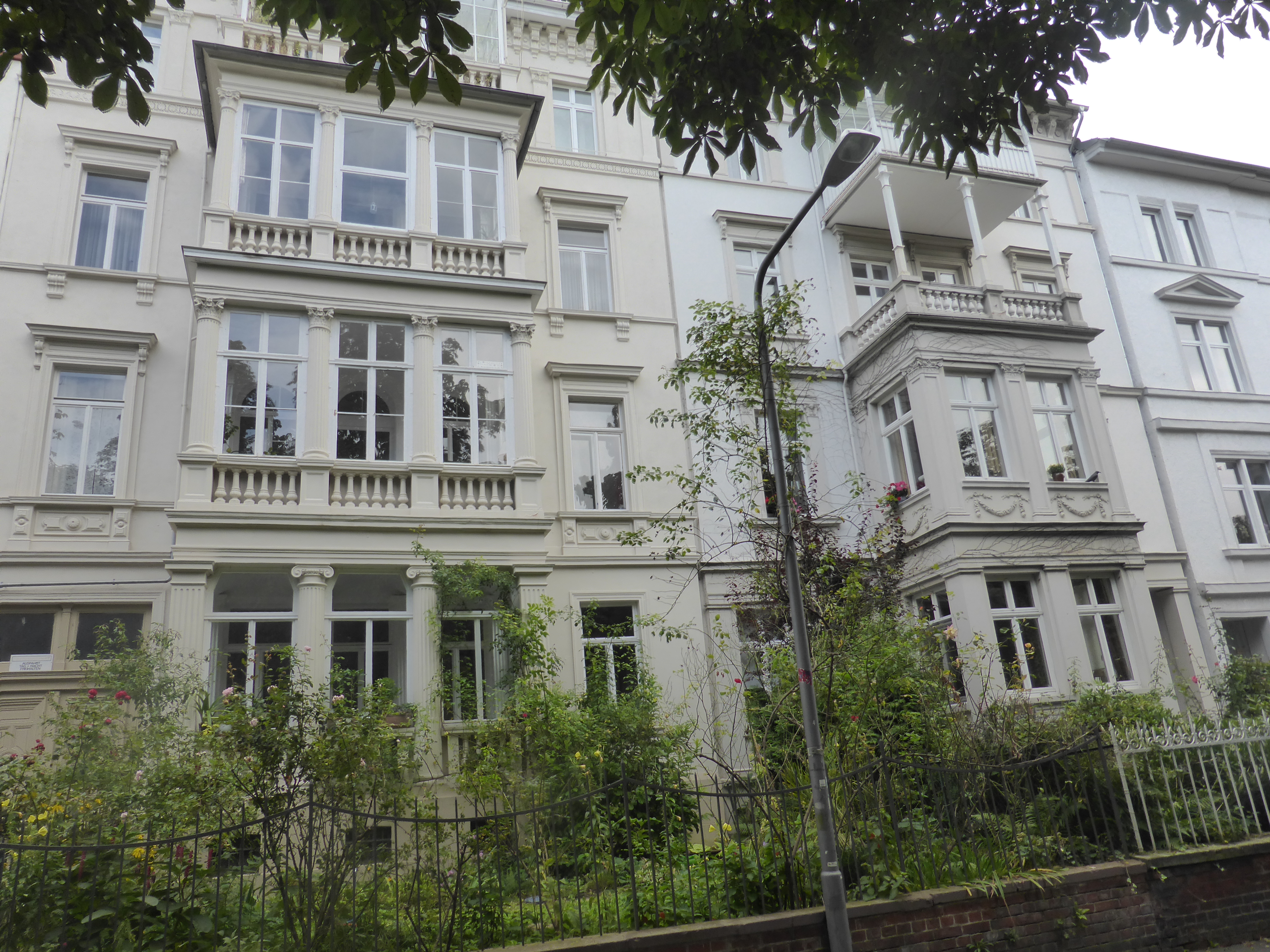
But many of the grand villas of the18th /19th century remain. Perhaps it is the number of these grand apartments and villas where European royalty and millionaires once came to “take the waters” that is the trigger for the move to have the town listed as a UNESCO World Heritage site. Around the town various grand “styles” impose themselves from neo Classical and neo Baroque to faux Florentine and a touch of Rococo.

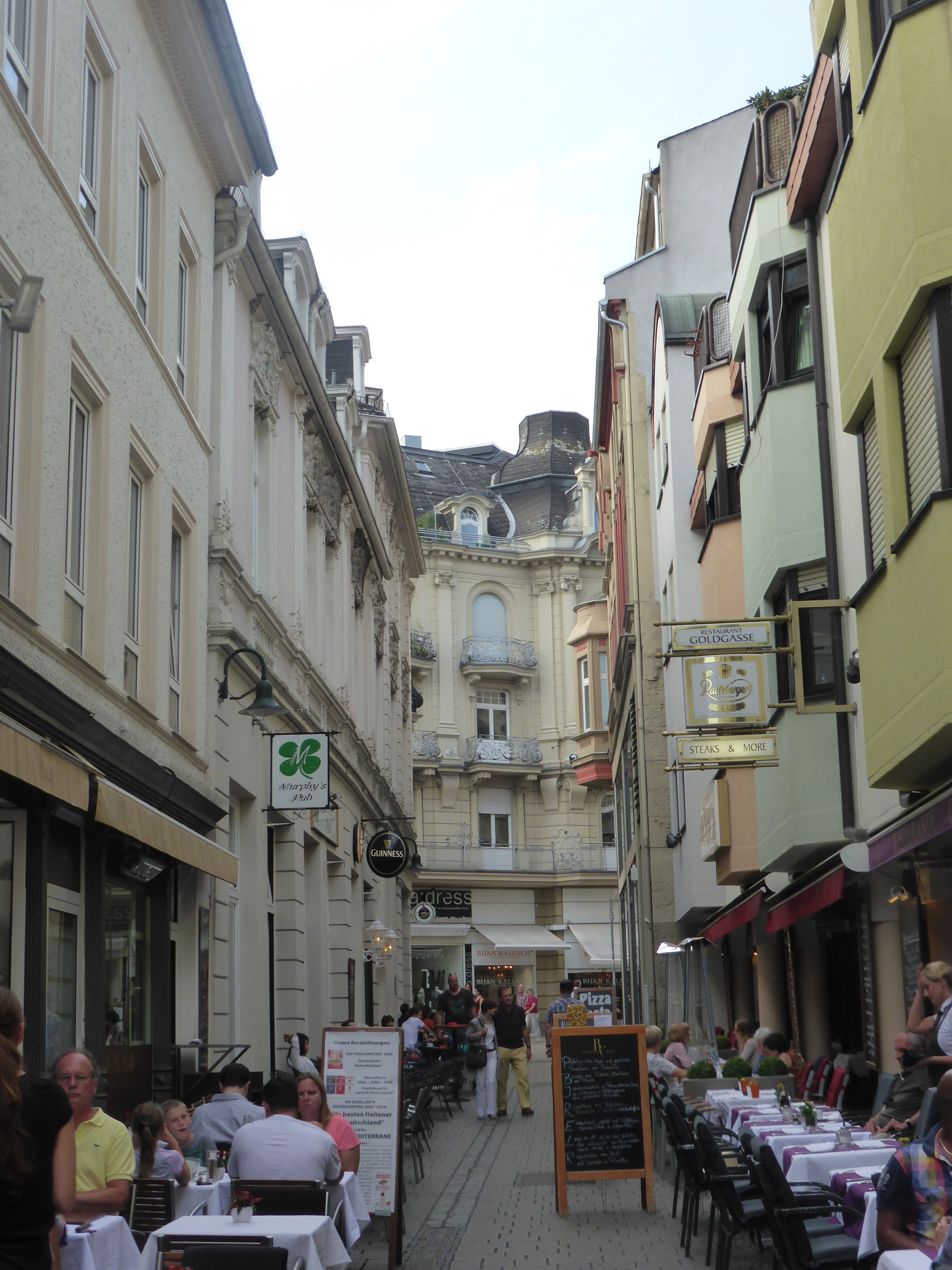
Charming streets

Charming streets

European street life

European street life

Now Turkish immigrants mingle happily in the largely pedestrianized and charming town centre where almost everyone speaks English. I am extremely comfortable here, the faces and families remind of a summer Saturday in Sydney

Wiesbaden has a  market twice a week in the city square; as always the cheeses are spectacular.

Wiesbaden has a market twice a week in the city square; as always the cheeses are spectacular.


Ancestor hunting

My friend drives me through the mountains

My friend drives me through the mountains

Thanks to the kindness of my friend, Gunther, I am driven to the nearby villages named on the marriage and birth records of my maternal great grandmother and her forebears who are traceable back to the mid 1700s. This is an odd adventure as I had always identified with my Irish heritage and now I am beginning to find, in the directness and bluntness of the Germans, qualities I recognise from my family.

Strange the ways of DNA.

A line of white villages across the northern green and forested Taunus mountains are strung like irregular beads, some with houses showing the wood and mud walls of the 17th century.

Villages still nestle in the mountains.

Villages still nestle in the mountains.


The  wood framed village houses that used to be.

The wood framed village houses that used to be.

It becomes clear that from at least 1700 my people moved between villages – Igstadt, Beckenheim, Naurod, – inter-marrying and leaving branches of the tree amongst and between them all. The once walled village of Erbenheim has been absorbed into the town of Wiesbaden itself

Eight of my Goebel tree were born in the village of Erbenheim but the root of the tree is said to be in 30ks away in Panrod.

In 1697 in the church of Burgschwalbach near Panrod a young Nikolaus Goebel married Anna Diel from that village. Here the village nestles below the castle

In 1697 in the church of Burgschwalbach near Panrod a young Nikolaus Goebel married Anna Diel from that village. The village still nestles below the castle.

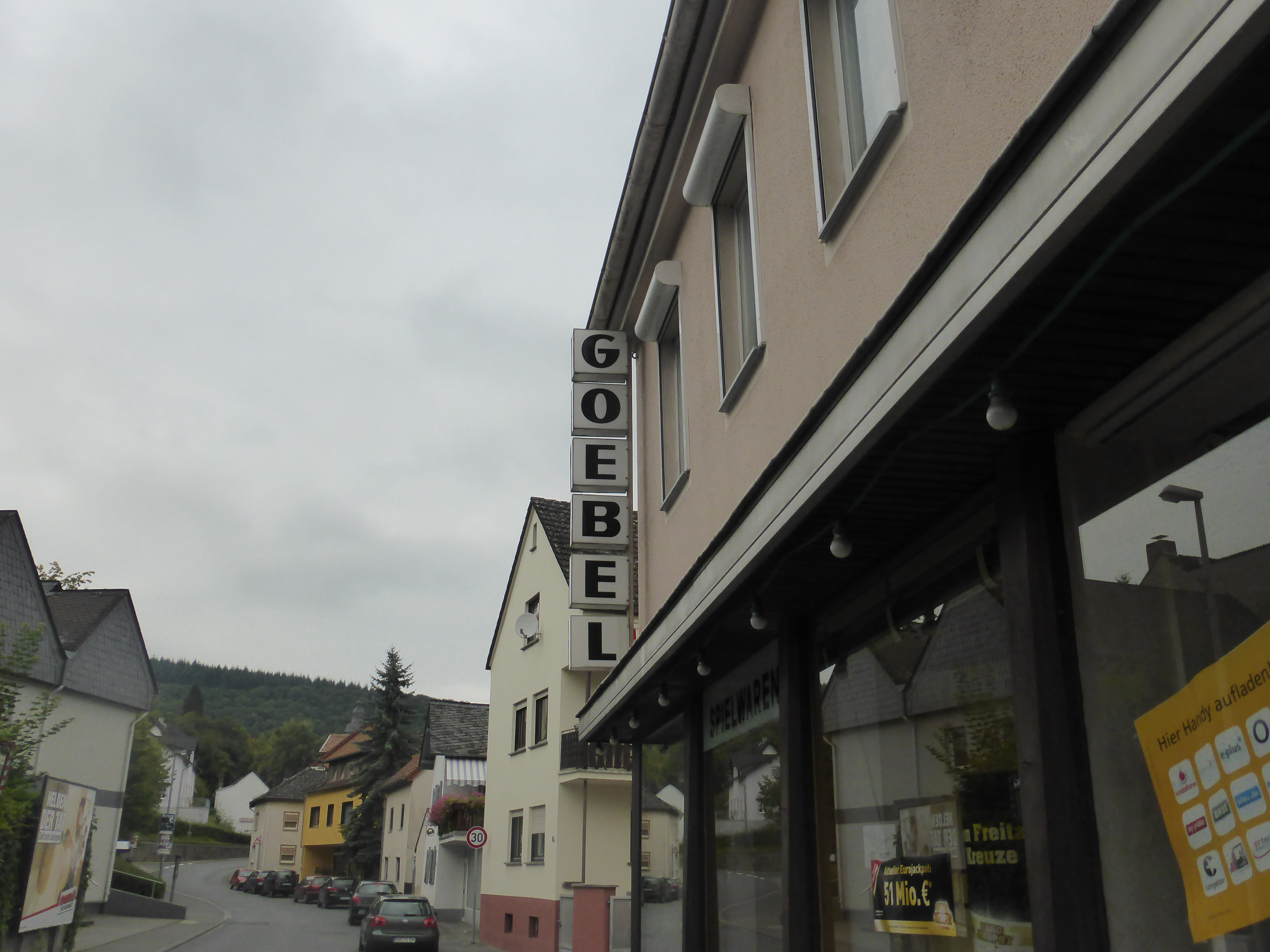
In Naurod I find a 20th century grave of a familiar family name from there; in another village the name of the male line shows on a WW2 memorial; while in a third, a Goebel is mentioned ons an 1875 veteran’s memorial.

In Panrod I visited an address I have been given as that of a living relation. He is 92 year old Horst and currently in rehab after a car accident but I am given the phone number of his daughter who now has some aristocratic title. That future encounter awaits me.


Is there really a direct connection?

Is there really a direct connection?

These Germans were the first of my line into Australia. They came in the mid 1800s from this Rhine region as part of a Macarthur initiated program to bring wine growers to NSW.

I realise later that the German people, responding to the European uprisings of the 19th century and kicked along perhaps by the upcoming Austro-Prussian war and their own potato famine, were themselves an emigrating people. Indeed I am told that such were their numbers and industriousness, German was once considered a contender for the mother tongue of America.

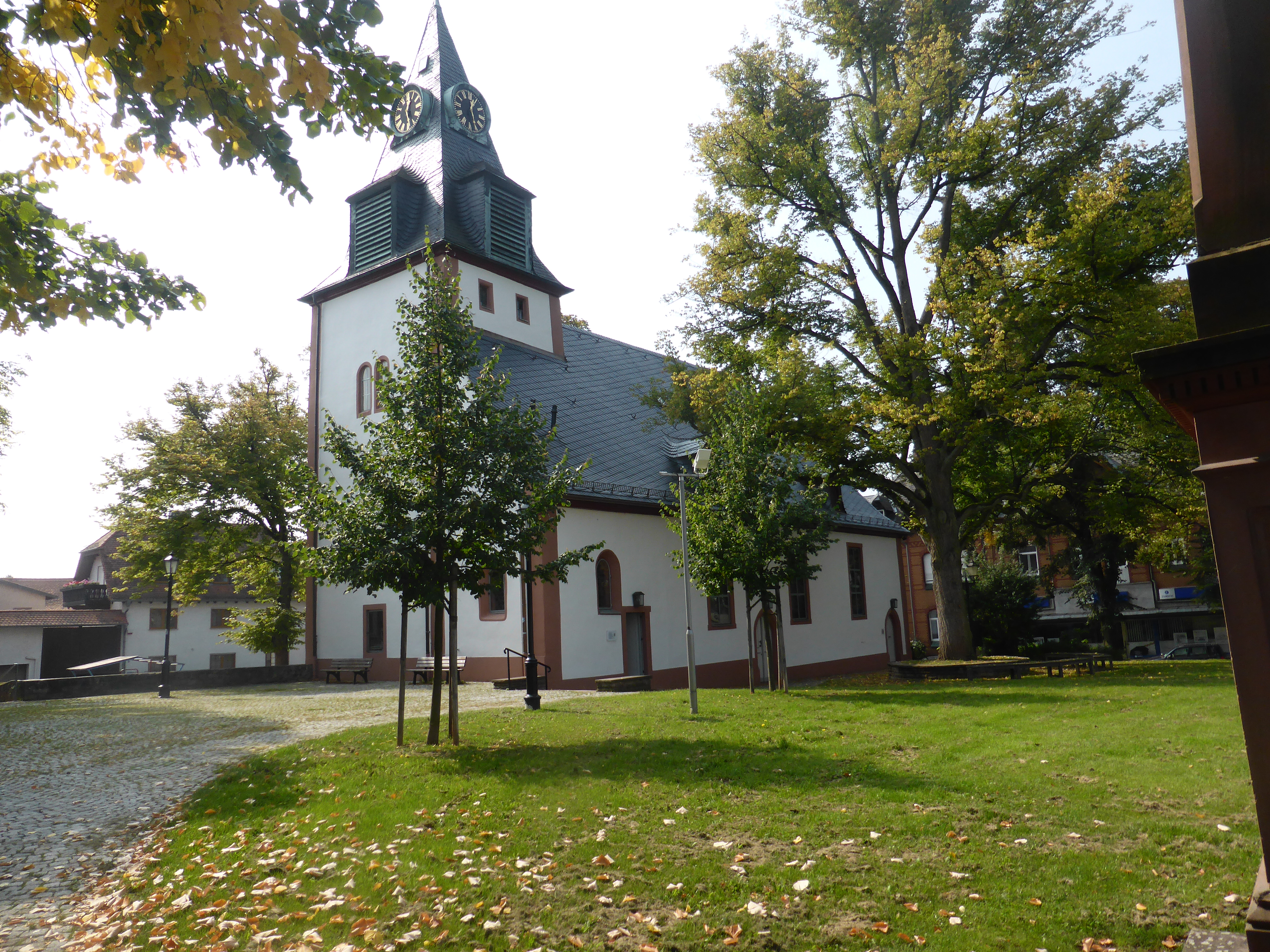
On my final days of ancestor hunting, I visit the church where the gg grandparents were married. An absolutely delightful Lutheran Pastor Fritz is welcoming; gets out the marriage lines to show me and puts me in touch with a genealogist of the parish. More is to come.

Here in 1850 my g g grandparents were wed.

Here in 1850 my g g grandparents were wed.


Before this very Lutheran altar.

Before this very Lutheran altar.


Hospitality and the Rhine.

Besides sharing a number of meals, Gunther’s Jill took me to the famed Rheingau where grape vines tumble down hills and the 12th century former Cistercian Eberbach Abbey once controlled the district’s wine making and now produces some of the region’s best drops.

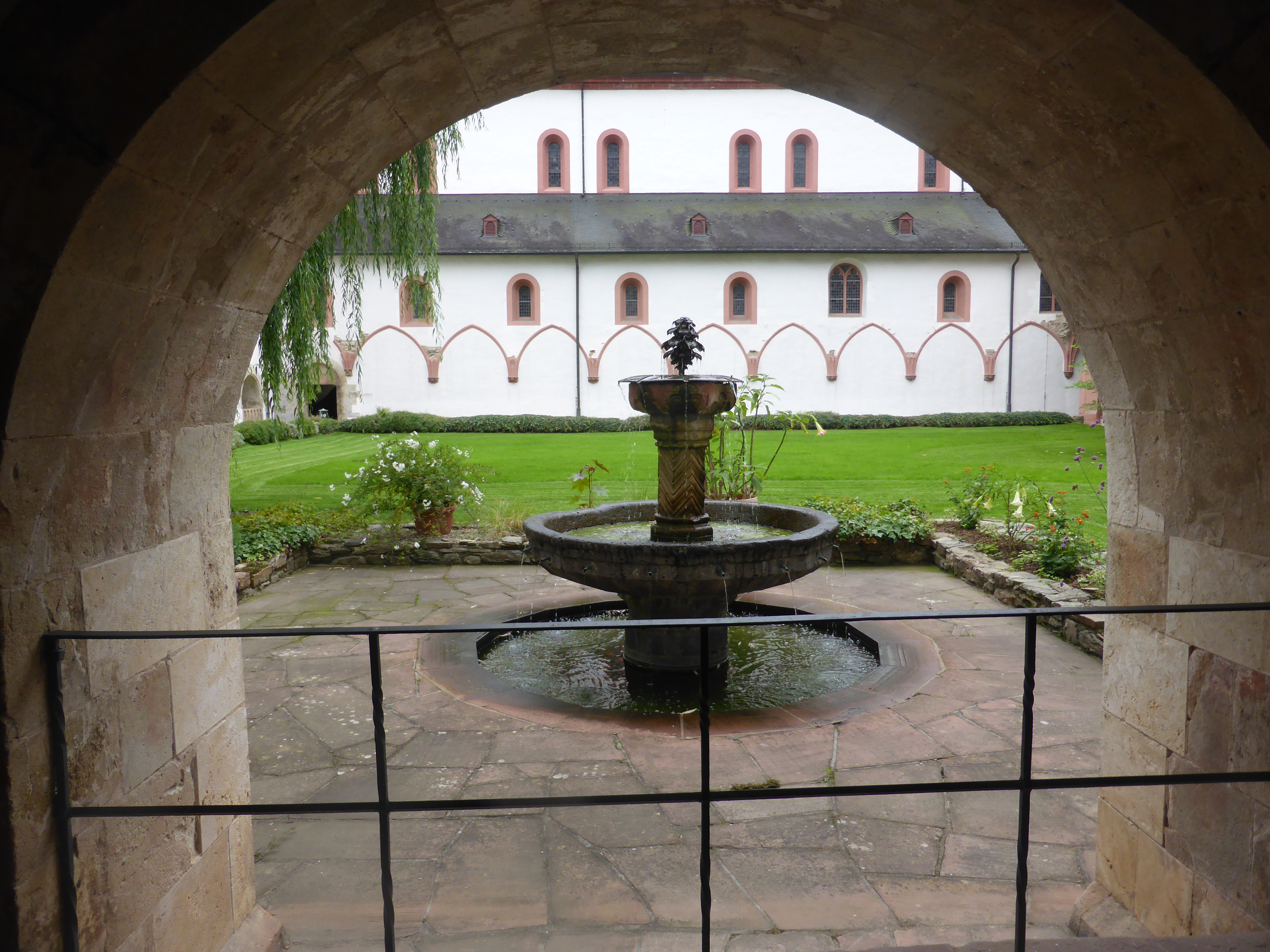
The cloister of the old Abbey where Rhine wine has been made for 900 years.

The cloister of the old Abbey where Rhine wine has been made for 900 years.

Then it was off to one of the world’s charming spots, a pub on the Rhine at Eltville where locals share an evening drink under the shadow of the picturesque castle.

Eltville

Eltville

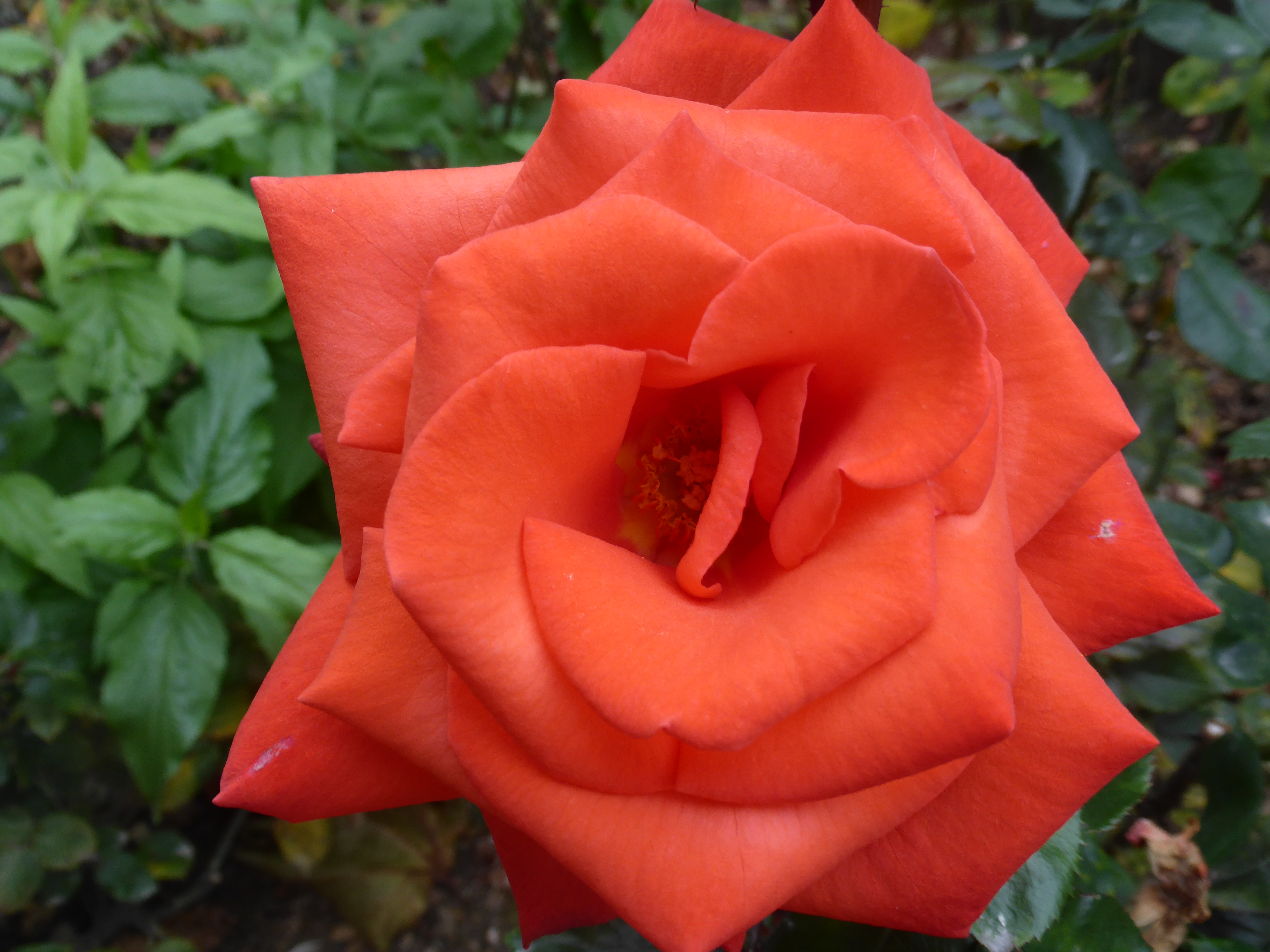
Famous for its roses

Famous for its roses


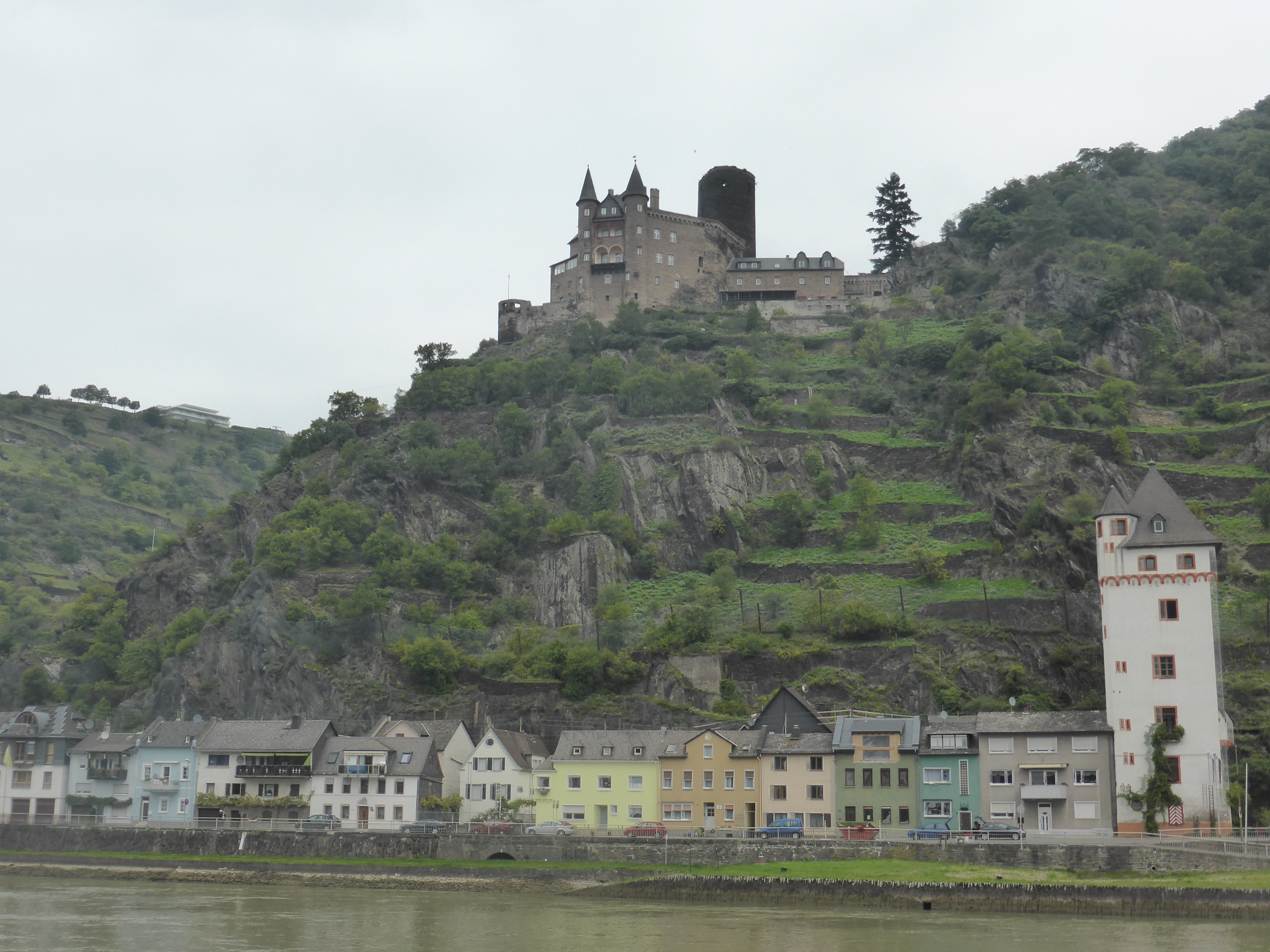
A few days later I spend the day on the river – along the UNESCO World Heritage run of it dotted with castle ruins, lines of vines down slopes and a dozen charming villages.

Castles on the Rhine

Castles on the Rhine


And villages along the way

And villages along the way


The hospitality of my friends, the palpable closeness of an ancestral line, the charm of the town and its people and the beauty of the Rhine — it is a joy to know that back in time…………


1 Comment

Filed under Photography, Travel