Category Archives: Travel

Libya – memories updated and images……2006

A desert Berber of the Maghreb

Libya is in a horror zone; thousands dead, violence dominant, cities ruined, citizens terrified, chaos abounds. And still the tyrant has not gone.

It seems almost improper to talk of my brief visit there in the face of the current civil war and the deserted hospitals with bodies piled up. But perhaps my pictures will provoke a better idea of a real country for those who have seen nothing of it but clips of the fighting.

In 2006 I went on a study tour of Roman North Africa. It didn’t start well as my travelling companion was careless enough to be knocked over by a car in Sydney while I was in transit visiting Uganda. So I was left with a bunch of strangers who didn’t dance to the same drummer. Still, it was an adventure, a chance to see what had been a pariah state although now Gaddafi was sucking up to the west.

As we approached Libya’s western border from Tunisia, the road was lined for a few kilometres with men selling cans. I was told it was petrol. Smuggled out of Libya with its overabundance of cheap oil I can understand, but what were the cans full of on the other side of the road? More work for Dr. Google.

At the border we were held up for hours before being allowed to enter because someone on the bus was suspected of once having visited Israel. No-one owns up. That same bleak border now houses thousands of “guest workers” from further south in Africa sheltering in makeshift refugee camps escaping the civil war.

Tunisia had a French, Roman, Moslem, Berber overlay but Libya? I didn’t go into the vast Sahara desert inland but clung to the coast; still it was parched and overwhelmingly Arab, male and in retrospect, the air was heavy with what was probably the heel of oppression. The following snippets skim the surface mostly of the past.

The theatre at Sabratha

Counterpoint to the featureless highway and the first bleak town of poor provincial Libya, Sabratha had form ~ a Berber, Phoenician, Hellenistic and later Roman  settlement. Sometimes drifting off to sleep at night, I conjure up the still majesty of the theatre at Sabratha as the sun sets on its sandstone. Now a UNESCO World Heritage site, its three colonnaded stories tower behind the stage testimony in scale and beauty to the grandeur of great Roman architecture. The dying sun turns them rose.

Gaddafi dominated Green Square – the museum wall

Green Square is the civic centre of Tripoli. On one side is the Med a few scraggerly palms along the front, on another the Italinate arched gallerias; across from them is the fine museum and the doorway to the medina. Here in front is the platform where Gaddafi used to stand to harangue the people and review his Empire. The medina has the narrow alleys of Middle Eastern cities; tradesman shape bronze; antiques and gold are sold. I scored some fine coral and trading beads. But Tripoli never felt alive to me and now seeing the depth of the anger the people have, I understand.
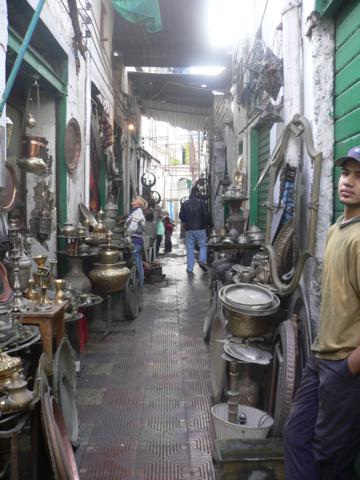
A street in the medina

A street in the medina

Glamour must be somewhere

Antique shops

Antique shops

Always the gold merchants

Star fish on sale

Leptus Magna is east of Tripoli and perhaps the greatest intact Roman archeological intact site. Situated on the ruins of a 7th century BC settlement, it reached its peak under the Romans when it was their food bowl and probably the shipping of lions and other exotics to amuse them.  The extent of the ruins is extraordinary, the market with its weights and measures stone, the empale and theatre, the forum and the goths. I was overwhelmed by the Great Colonnaded Street, the remains of statues and mostly by sitting on the high wall separating the almost intact amphitheatre and the Hippodrome, gazing out to sea.

Arch of Septimius Severus at Leptus Magna

I was tweaked to realise that 2000 years ago the Romans had expensive holiday homes by the sea. The Villa Sireen is a grand isolated estate replete with fine mosaics and a private bathhouse that must have wowed the guests. I could see the fine ladies in draped robes and fine jewels sitting where I propped on the seawall contemplating life.
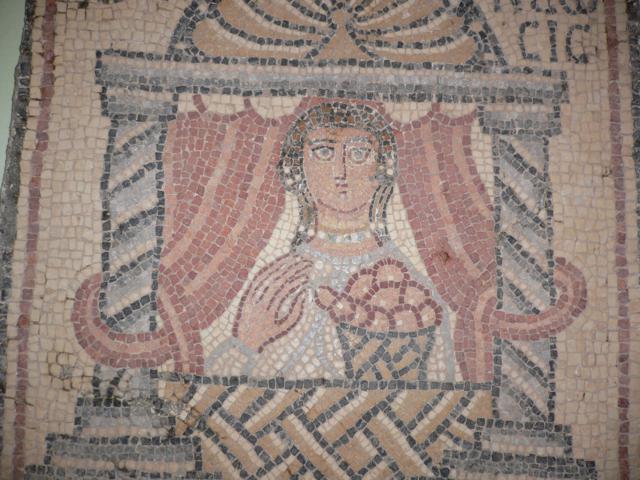
Mosaics at the Villa Sireen

Mosiacs at the Villa Sireen

We stayed in Misrata, the scene of recent particularly bloody battles and I remember cheerfully catching a taxi to a cyber cafe where young men earnestly sought the wider world. Then on to Sirte halfway between Tripoli and Benghazi in the area where Gaddafi came from and where his tribe is based. It was the modern centre of his administration (his Canberra?) where he had his famed Congress tent. I am glad the photos I had taken before his huge portrait there are too dark to reproduce, ditto me speaking at the lectern from where he lectured the world.
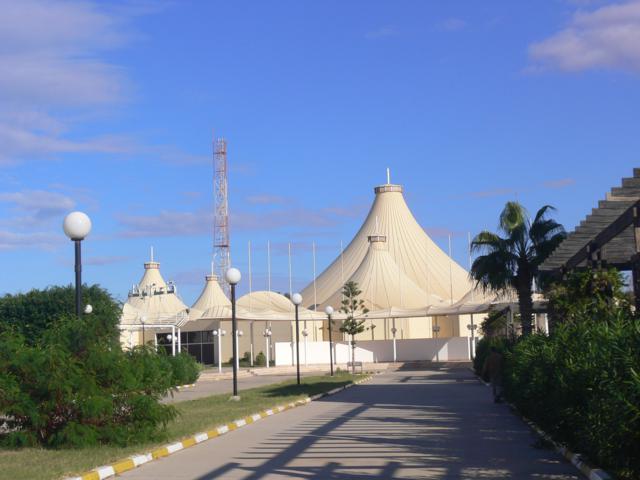
The famous tent where Gaddafi met the world
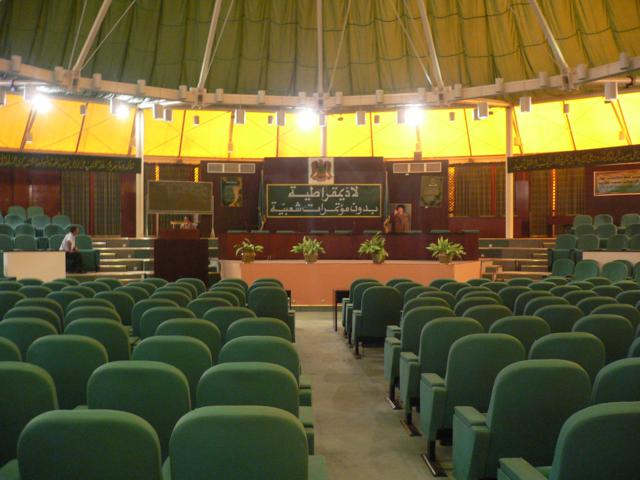
Inside the tent with Gaddafi?

Continue reading

2 Comments

Filed under Photography, Travel

Uganda – more an essay than a quick one ….2006 and 2007

Kampala

The dinasours out front of the local shopping centre in Kampala seem weirdly symbolic

Mention Uganda and most people’s spontaneous response used to be Idi Amin or Raid on Entebbe. These days it’s Forest Whittaker playing Idi Amin. Those horrors were 25 years ago. For the last two decades President Yoweri Museveni has been the Big Man ruling this country of 27.6.million, a patchwork tribal population.

Uganda’s current long-term war in the north is still playing out in stalled peace talks in southern Sudan. The foe is the guerilla Lord’s Resistance Army, a vicious and wacky lot who kidnap, terrorise and enlist children in the name of God. Each night, thousands of children march long distances to safe havens to avoid abduction.  1.8 million people are living in camps.

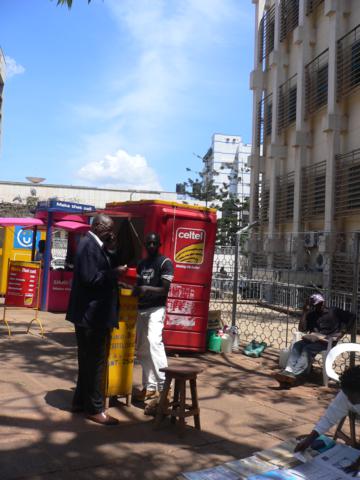
All this is a long way from Kampala – at least 8 hours by road. In this capital of 1.2 million, life is a series of visual contrasts as economic development rushes into the city.  The blue glass high rise of the social security building is fringed by streets where vendors loll on the pavement; a young boy stands patiently behind bathroom scales waiting for a rare customer; men in suits use phones at mobile kiosks.

Phone calls to make

Magazines for sale


And these are the magazines

A bold construction program is delivering hundreds of new hotel rooms for CHOGOM in November. The Aga Khan’s Serena hotel is up and running with its strange mix of Rajasthani/African/Islamic architecture. The homeless Karamajong children from the warrior tribe in the west have been rounded up off the streets as part of the tidying up process for the Heads of Government. Main roads are being repaired.

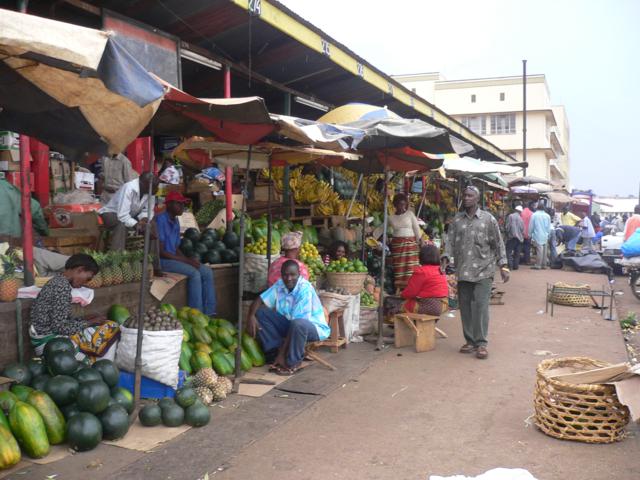
An abundance of prooduce

Women in the markets

Chickens for sale

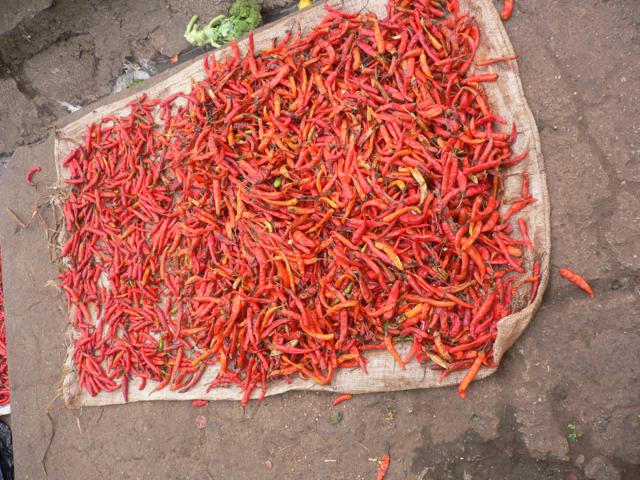
and chillis

Markets everywhere in the third world are the heart of a city… beats a mall any day!

New oil exploration is another heralded bow to the economic fiddle while in parts of the country up to 60% of people still live in traditional huts without access to safe water or electricity. Though back in 1956 when Princess Elizabeth came to visit Murcheson Falls, she had all mod cons in a purpose built house. we were lucky enough to stay in the charming house and hear the hippos pass during the night.

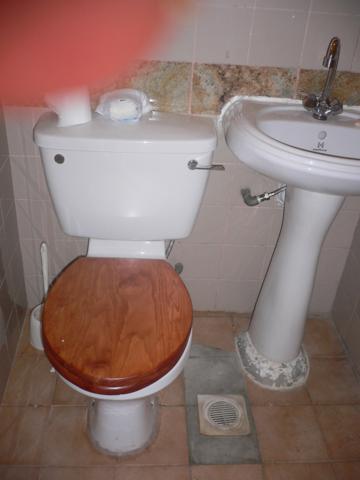
And the Princess’ mod cons.

The house built for Princess Elizabeth


The 7 hills of Kampala bear absolutely no resemblance to those of the Eternal City but they are as symbolic.  They demonstrate the various lifestyles and beliefs systems that shake along together in this city. A grand mosque gifted by the Saudis, a Catholic cathedral, a Hindu temple, the city centre, an enclave of prestige bungalows each with a verdant garden (and all guarded by armed security)  – each crowns a different slope.

Kampala is a city where differences seemingly live serendipitously together. And there is an Art Gallery.

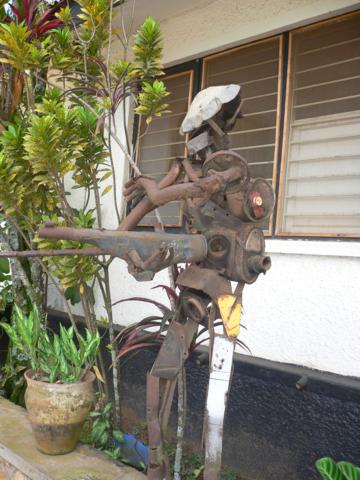
Modern art with a gun.

A local sculpture


The languid air, soporific in its humidity, weaves around traffic chaos and pollution spewing cars. Lush tropical vegetation, banana palms, frangipani, jacarandas, bougainvillea, flame trees, are punctuated with dry red dust rising from compacted footpaths and median strips.

Nature isn’t leaving the city centre without a fight

There are many rich and middle class people here both Ugandan and ex-pat, many of whom are part of the army of aid personnel. These enjoy the fringe benefits of any sophisticated city, from supermarkets and bars to a French patisserie and a Belgian butcher all set in the sawtooth streetscape of many developing cities. The affluent can even enjoy a nearby resort on the shores of Lake Victoria with horse riding and the largest swimming pool in East Africa.

But here’s another example of the impact of change, the lake has receded about 100 metres in the past two years following the construction of a damn at nearby Jinja, the fabled but now questioned, mouth of the Nile.

Outside this world of bars and pools, compare the life of the vast majority of Kampalans struggling to find a living income.  There is sadness in the eyes of one as he talks of a dead baby daughter killed by witchcraft and his long term employer who would give him no money to get a doctor. Another man’s eyes wash with emotion as he speaks of “the brothers” who are still suffering in the war -torn north. At a busy crossroads, a boy stands with his blind grandmother day after day, charity their only hope for survival. The slums of Kampala remain.

Yet these people, subdued by a history of horror, have a quiet dignity. The courteous greeting and genuine enquiry after family wellbeing slows one down to the core elements of life. This is a marked difference to the bustle of western cities. If nothing else the local innate style in the wearing of beautifully pressed, mostly second hand clothes, makes most westerners look dowdy.

Outside the bustle of town, the site where the kings of Buganda are buried boasts a large grassed hut. The Buganda, a Bantu people, are the largest tribe in Uganda with 16% of the population mostly settled around Kampala. Work is slowly proceeding on restoring grass roofs and re-matting boundaries in anticipation of CHOGOM when the Queen of England will visit the tombs of the kings of Buganda. She will not be allowed to pass the fence of spears however, unless she too is drawn into the mythical forests where the local dead kings now dwell.

The grass hut of the Bugandan kings

Work on the restoration is not going at a cracking pace with some suggestion that UNESCO funding has been siphoned off. The local paper is full of the current audit of central government departments where vast monies are unaccounted. A recent scandal fingered the Kampala City Council and every urban pothole is a reminder that corruption is a fact of business in many worlds.

These are boom times for some. In the café at the Sheraton, tables are occupied variously by 4 well-tailored Indians, a glamorous blond woman with a Clark Kent look-alike, a pair of elegant African women, and an intense group of English and Africans. A sign of the times is the laptops open and at work on every table.

Many more Australian tourists will find their way to Kampala as a middle aged group, one boasting the Tamworth County Music festival T shirt, advised me. The city is a jumping off ground for the truly intrepid who want to see the gorillas in the mist of the Mountains of the Moon, a day’s journey to the west of the capital at Biwindi Impenetrable National Park.

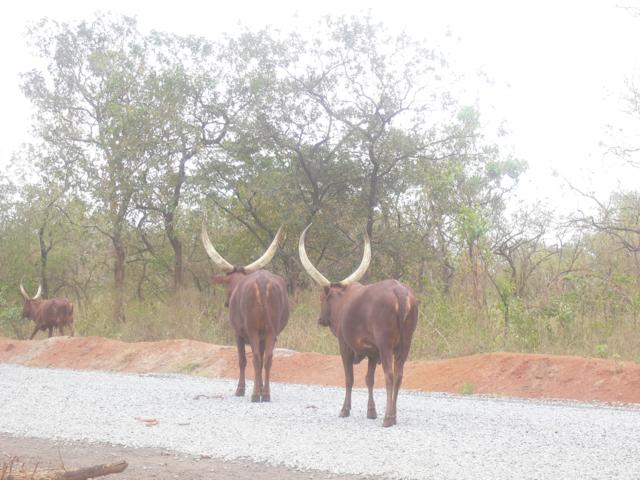
And cows on the road

Of course there are baboons


If you look closely, you can see the elephant

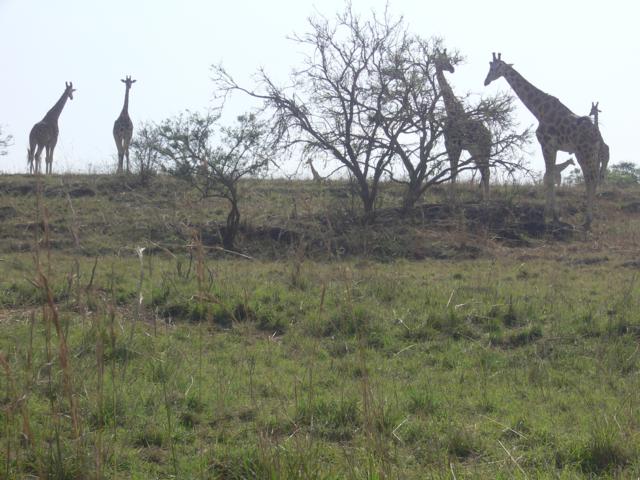
If you are a wildlife tourist, most of the big game was wiped out by vicious slaughter during the Amin regime but it is returning to Queen Victoria National Park and Murcheson Falls.

In the national parks the animal numbers are growing again

Churchill called Uganda the Pearl of Africa. More tourists would help buff its dulled lustre and provide welcome income for many. Don’t wait until the hordes come, get there early!

Leave a comment

Filed under Photography, Travel

Iran….. 1996

This is as much an aide memoire as it is a travel piece I wrote  all those years ago to catch my own memories; now I can share the experience. I wish I had taken more photos back then as I do now.It was so long ago……

In some global chain of effects, the speechwriter who put the “axis of evil” in the mouth of George Bush had me rummaging through memories. I was with the first Australian tour group into Iran after the Ayatollah seized power. It was 17 years ago. What portents did I see, or fail to see, that defined this country as a point in the triangle of terror?

I had replied to an ad: “Carpet dealers going to Iran will take others….”. As an obsessive my recent interest in carpet determined I should go; should swallow the chattering classes’ scorn at “tour group” travelling and tailgate the expertise and contacts of the carpet dealers.

Eighteen of us gathered in Istanbul, some of the women unable to wait before donning the head to toe black chador only to find that the bar at Istanbul airport did not look kindly on women in hejab taking a drink or two. Better to wait until some point in the flight when as if by osmosis, the Iranian women aboard gave the lead. Their expensive western clothes disappeared under heavy coats and all hair covered. We are in Iranian air space.

The herbs and spices of the bazaar and souks are always one of the enchanting sights.i
The herbs and spices of the bazaars and souks are always one of the enchanting sights.

In the chromatic scale of airports, Tehran was a stand-out. It was basically a male show but the few women personified the exotic – one in exquisitely cut full length camel hair coat, another a wisp in long white with a tribal scarf wound around her head and trailing down a slender back.. The rich and stylish can carve a niche anywhere. There were large headscarves that came from the fashion houses of Europe and a young couple, she in patterned black chador, furtively sharing a cigarette. A ravenesque flock of teenage girls peeped out, chadors clenched between their teeth.

From the window of the down at heel Azardi Hotel (formerly the Hilton) 25 idle cranes interjected the jagged skyline of this concrete box city. With a city of 12 million people, growing at a rate of more that 2 % per annum, development must continue a pace.

The pervasiveness of the Government was first noticed the next day with security guards who were clearly meant to protect propriety as well as museum exhibits. A blonde amongst us got more than one poke in the ribs and signaled instructions that she was to attend to her drifting headgear.

That night we were invited to a party at the home of a journalist and his wife. At that party, the Iranian women in the safety of the home wore the most chic of clothes and there seemed to be no shortage of forbidden alcohol for toasts.

It was in the days when I had a smoke with my drink...even in the strict theocracy.
It was in the days when I had a smoke with my drink…even in the strict theocracy.

Yet under the surface, here is a story of great sadness. The hosts had not seen their children since the revolution when they sent the little ones to Europe for safety and left them there for the same reason. Photos of sons grown and married abroad represented a lifetime of family life forgone.

In the sparsely populated west, there was a training/work centre for the widows whose husbands had died in the 19980-88 Iran Iraq war. They were making a grand carpet for some opulent mansion.

Over the next week we travelled most of the country. We walked through Qum, the holy town where Mullahs stride and visited the carpet auctions in Isfahan; we mixed with the wary, impassive silent crowd in the covered markets of Bijar in Iranian Kurdistan; we gaze at the extraordinary palaces of Persepolis and wander the rose gardens of Shiraz. We pass breathtakingly stark Biblical hills and see young women threshing sunflowers, for seed for stock, dressed in wondrous patterned colour from scarf to floating skirt. We have tea in the tents of nomads and visit snow fields in the summer. On the road to Baghdad we see great carvings in the towering cliff face, the way ancient kings told of the exploits.

One of the preserved towers of Zoroastrianism, an ancient religion begun in Persia 
One of the preserved towers of Zoroastrianism, an ancient religion begun in Persia

But the presence of the state is never far away. Exploring a 13th century mausoleum we are followed by a local camera crew. They say they are making a travel documentary for the American market and would like to interview us on our impressions. Someone says they are from the Ministry of Propaganda and the paranoia rises.

When we visit the roof of Iran, home to the Lors and Bakhtiari tribes, we are accompanied by the chaps from the Department of Islamic Culture and Guidance and again they video us.

A final time we notice the Monty Python security measures is at Persepolis. Exploring the parade of long forgotten nations, we notice a newcomer. He has a tape recorder and is clearly causing our urbane and loquacious guide some disquiet. With customary Australian directness, someone asks him what he is doing. He advises that he is learning to be a guide and disappears soon after.

The guide at Persepholis, one of the most elegant men I ever met.
The guide at Persepolis was one of the most elegant men I ever met.

Our guide seems to speak openly enough although he sings a song of a bird pining to be free. He is a man of culture who soaked up life living as a gentleman in London under the Shah but found his career cut short with the revolution. He is witty and elegant, a poetic Persian. How sad to see him waiting anxiously in the hotel foyer while the details of his pittance are calculated.

The tile work alone is worth the trip.

It is difficult to know the reality when you whistlestop through. The crowds out walking in the evening look like the passing parade anywhere. Families eating ices; young couples eyeing each other; children playing happily But we hear first hand of women professionals scared to laugh on the job or look at colleagues in the eye for fear of dismissal. We are told of a couple to be jailed that week since guests danced with the opposite sex at their wedding. This dancing boldness is hard to believe since the only weddings we saw were one where the men and women held separate receptions and another, a mass ceremony of a hundred country couples financed by the Government and scripted to protocols.

img_0144
There were mosques where the chador had to be more formal even when worn by Westerners.

There were satellite dishes on many roofs. Hard to believe that the culture was not being nibbled away. More so now with the Internet revolution. Back then, shy knots of women talked to us, curious about our lives. There was the woman praying in the brilliantly tiled mosque for her son in Thailand hoping for his visa to America.

Gentle women were shy in communicating.
Gentle women taking tea, leaving their work on carpet making, were shyly communicating.

I wonder sometimes whether he was so desperate that he came by boat to Australia instead and is one of the Iranians we held in the camps. Maybe it is someone like him who is now one of the Iranians we are now forcing to go back or keeping in the disgraceful conditions of Manus Island quelled by the PNG police.

If it was going to be all right, who wouldn’t want to go back to a land of beauty, history, culture and family? Unless of course, you believed you were in danger.

What I saw in Iran was as much a product of religion and politics as gun massacres and capital punishment reflect American culture and politics. Bush might have call Iran part of the axis of evil but in Iran at that time, America was equally depicted as the Evil Empire. The sad irony of it all!

Now 17 years later there is an Iranian refugee in my extended family, a young man who suffered greatly at the hands of our Government before he was allowed to stay. A finer person it would be hard to find; this country is lucky to have him but he must pine for home.

Leave a comment

Filed under Travel