Three days in Greenland…. Ilulissat July 2016

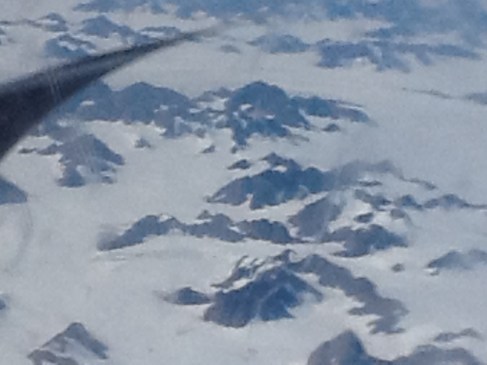
The only glimpses of Greenland during the long flight to Ilulissat on the west coast were of ice. This should be called Iceland I thought and Iceland from whence I had come, should be called Greenland given the wonderful varied hues of green across that country in summer.
img_0765

Greenland from the air on the way in

I had done no reading. I had no expectations. To my embarrassment apart from media on the problem for polar bears with melting ice floes and vaguely knowing the people were Inuit, I knew little. From Borgan, the Danish TV series, I had a visual of a sparse settlement tumbling down a hill and a suspicion that tensions existed between Greenlanders and their legal “protectors”.

I soon got up to speed. Firstly our destination Ilulissat is on the west coast of Greenland, a 3.5 hour flight from Iceland and 250k’s north of the Arctic circle. From the hour plus it seems to take fly over this, the largest island in the world, it appears much of its land surface is covered in ice. Most of its small population lives along the ice-free, fjord-lined coast.

dsc03826

At the airport we are picked up and in the 10 minute drive to town, the driver volunteers that the icebergs are 30% smaller than they used to be. This is Ilulissat, the 3rd biggest town on the island. The word means “iceberg” and it is why we are here. This is a UNESCO world heritage site because of the “living” glacier which produces the largest iceberg flow in the northern hemisphere into the oddly named Disco Bay.

The first impression of the town is that the people, apart from the tourists at the café (which is run by Thai women) and the Danes who provide much of the tourist infrastructure, the people are all Inuit; 4,500 people live here with an island wide population of 56,000. Apart from a theory that the Inuit came from Mongolia, their antecedants are unknown

dsc03734

Inuit men play board games in the square

dsc03731

Inuit women get about their business and stop for a smoke

It is summer and a pleasant 10 degrees with some people in shirt sleeves. Good weather for a G&T on a balcony overlooking the bay.

dsc03626

What a spot for a G&T

Firstly some context: Greenland is an autonomous territory of Denmark which provides two thirds of the money. This town’s secondary source of funds is tourism, while overall the country supports a $1 billion fishing industry (and a huge Royal Danish refrigerated ship is a sight in itself). A more recent policy allows mineral resource (including uranium) mining and there is also a guest US air base in the north. One optimist even suggested the Americans could give them enough money to enable the self-sufficiency that would allow a break from Denmark.

Fishermen setting up lines for trolling and some of the catch


dsc03603

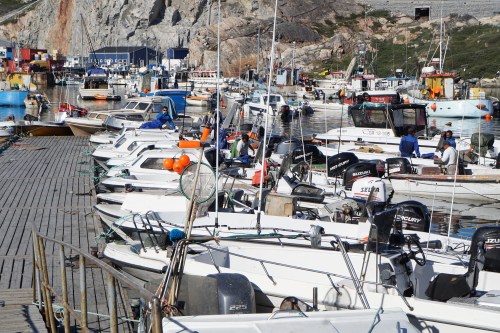
Part of the fishing fleet


Like other very cold climate countries, Greenland has its share of social problems many centring around alcohol and unemployment.


The town

The Inuit have lived in Greenland for over 4,000 years. Original houses were sunk into the earth and made of peat, driftwood and furs. Occasionally they built igloos.

Historically, whale fat was traded for sugar, salt and tools.

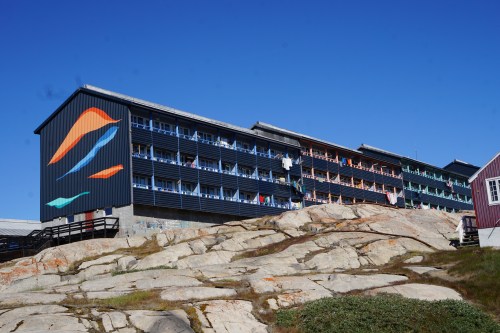
Now red, blue, green brightly coloured houses sit on concrete foundations in an erratic layout that mystified the town planner in me but seems to reflect the hilly stone outcrops of the landscape. Occasional apartment complexes stand out.

dsc03628

Dr Google reports: “Hans Egede’s arrival in Greenland in 1721 marked the new colonial style whereby wooden houses were sent up from Scandinavia as timber kits.The colourful tradition of the characteristic, brightly coloured houses began here. The colours were practical and indicated the function of the building: commercial houses were red; hospitals were yellow; police stations were black; the telephone company was green and fish factories were blue.”

Indeed the hospital on the point is still yellow and the houses are now a range of bright primaries.
dsc03568

Denmark built these flats for local people and below some of the reindeer antlers and sleds that hang from the balconies

Open ended thick pipes jut out from the foundations of many houses. They are attached to the water truck since the town has no reticulated piped water. When I asked why some houses had no water point, one young Greenland man told me that often the “old people” could be seen dragging blocks of ice, off the icebergs, up the hill to supply their water needs.

I am surprised by the size of the electrical goods shops near one of the 2 supermarkets. The TVs are huge, there are many DVD, baby alerts and other electrical paraphernalia. Then I realize that this part of the world is totally dark 24 hours a day in November and December until the sun fleetingly reappears in January. Watching TV would help to pass the dark hours.

In the 24 hour summer days however, flowers bloom:

Packs of small huskie puppies play around town and we were told they cannot be touched until they are 6 months old. Full grown huskies are chained up around the town. They work pulling sleds all winter but in the summer energy needs are slight so they are fed only twice a week.


The living glacier and its icebergs

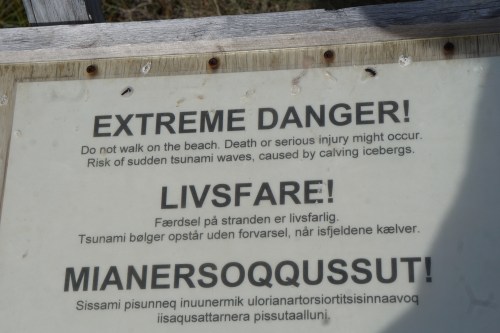
Isulissat means iceberg and the Isulissat Icefjord is the fiord where the icebergs float into the bay from the glacier.

The next day was all about this, the reason we had come here. It was spent walking through the national park to the shore to see the icebergs, then flying over the glaciers in a 6 seater aircraft, and finally sailing the Bay in the night to see the icebergs from the water in the fading light —– although the sun doesn’t really go down at this time of year.

Walked them:

Below is the peat moss of the national park and the first sight of the icebergs at the end of the walk


dsc03673

Finally:

dsc03714

dsc03689

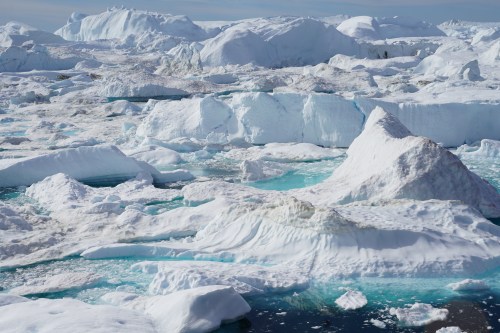
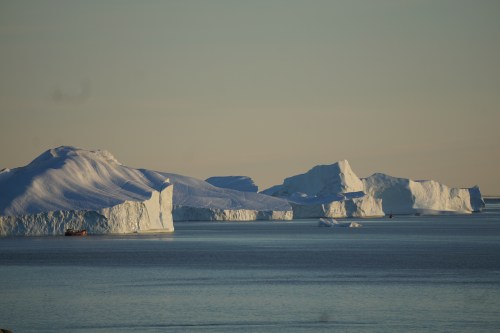
Icebergs reach across the fiord and melt is a stunning blue


Flew them:
dsc03783

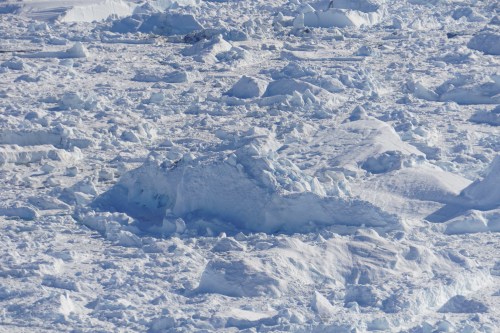
These are icebergs growing on the glacier

dsc03751

Broken ice floats in the bay

dsc03812

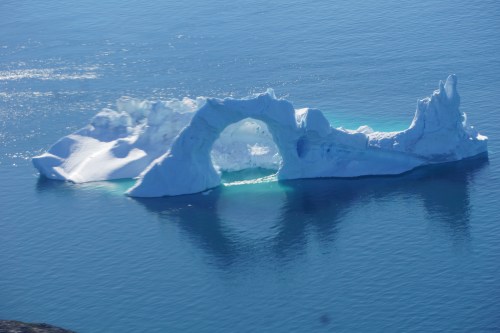
The melting icebergs can take odd, beautiful shapes


Sailed them in the evening:

dsc03839


dsc03632


img_1804

img_1790

img_1854

img_1880

The Icefjord is the sea mouth of the 7 km wide Sermeq Kujalleq, one of the few glaciers through which the Greenland ice cap reaches the sea and therefore sometimes called “a living” glacier. Sermeq Kujalleq is one of the most active glaciers in the world.

(According to the air charter company)

  • it regularly calves around 46 km of ice every year;
  • It is one of the fastest moving (up to 40 m per day);
  • if melted the amount of water could cover the annual consumption of water in the USA;
  • it accounts for 10% of the production of all Greenland calf ice and more than any other glacier in the northern hemisphere;
  • The largest icebergs calved are the size of 1.5 cubic kms of ice. This is the equivalent of 30 football fields covered by a layer of ice as high as Mount Everest.
  • at their highest the icebergs can be 125 metres but not now
dsc03887

From the boat we followed a group of whales around the bay, There are 15 kinds of whale in Greenland. The blue whale and the killer whale are rarely seen. During summer the humpback. the minke and the fin can be seen
 

dsc03643

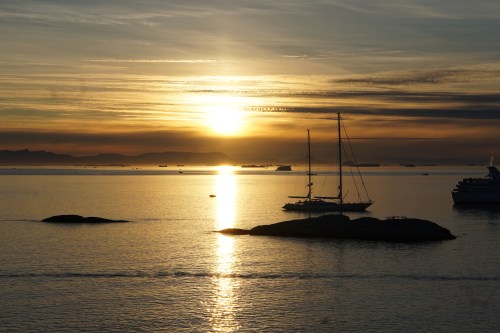
The setting sun never sets in the summer months

Irrelevant post scripts

Underneath, the charters and other well-oiled tourist experiences the town remains touchingly local and unsophisticated.

The best hotel in town is the Arctic Hotel on the cliff top overlooking the harbour. Our hotel although central was a version of Faulty Towers. One of our number did not have a phone in his room yet he was told to ring for room service; when he walked up to order dinner, he was told he would be rung when it was ready.

img_3987

And yes, they do serve whale

I leave a cardigan in a cab. The receptionist identified the driver from my description and rings her. The cabbie is off duty; after a number of calls, the cabbie is back on duty but says she does not have the cardigan.

At the airport the Philippino man behind the kiosk (and that’s another story – he thought the agent had organised him a job in Denmark) tells me the cabbie has been there looking for the owner of the cardigan; I cannot ring the hotel and give up; a fellow traveller arrives and hands me the cardigan. He saw it on hotel desk and on spec. picked it up and brought it to airport. The hotel receptionist who made all the calls appeared to have forgotten it

A short stopover

On the way back to Iceland we land for refuelling at Kangerlussuag population 499. The town which seems sparse and in the middle of nowhere, is known for its airport, which is Greenland’s major international transport hub. The airport’s Museum illustrates the town’s past as a U.S. airbase during WWII. A road runs northeast from town to the vast Greenland Ice Sheet. Here, Russell Glacier is a vantage point for ice-calving events.

dsc03941

This is a pretty big air terminal for a pop. of 499. Inside the terminal is a hotel with its own night club.

It is farewell to the summer night in Greenland, the land of the midnight sun.

dsc03899

1 Comment

Filed under Photography, Travel

Finland….July 2016

London had been a whirlwind, Berlin the continuation of an affair with the city. Then Helsinki? Finland? – calm, dignified, pleasant – occasionally bland? When I read this blog back it isn’t the normal easy informative, sometimes wry tale of my observations and experiences. This is more a recording of information, more lecture notes.

I suspect though that this is a city that would grow on one – with its human scale streetscape, wide streets, quiet buskers, fine design and steeped in a musical culture.

It may be that my responses were simply a counterpoint to the high of the previous fortnight, especially since I was now travelling with strangers.

I joined a small group tour in Helsinki – ah! group travel! I haven’t done much, mostly with the university to exotic places (Timbuktu, Libya, Syria). Group experiences themselves deserve at least a blog. Your instincts are constrained, your time pre-determined, the schedule rapid, the path pre-trodden, control out of your hands — a tourist not a traveller. Cocooned in a new world.

Luckily the group leader was not just charming but also erudite, learned and engaging.

History in a nutshell

To start understanding Finland (as much as one can do on a whistle stop, roller coaster tour) the briefest contextual setting is necessary. First it is a surprise that the official languages are both Swedish and Finnish although Finns comprise 93% of the population and Swedes only 6%. History explains that.

Although people have lived in Finland for 9000 years, the Swedes controlled the country from early in the 14th century until the beginning of the 19th century when Russia took over and Finland became the Russian Grand Duchy of Finland.

Finnish is a language with links to Hungarian and a smaller family of northern languages unrelated to Scandinavian ones. It was not written until the mid 16th century when Bishop Agricola translated the New Testament

The Russians granted increased power to the Finnish parliament in 1869 and the use of the Finnish language spread. However, by the beginning of the 20th century, programs of Russification were widespread. Finland finally became independent in 1917. Russia invaded in 1939 and finally Finland agreed an alliance with Germany. Consequently Finland ceded Karelia, 10% of its land, to the Russians

In 1995 Finland joined the EU and later adopted the euro. Imagine being a country of 5.4 million people living next door to a belligerent neighbour of 300 mill. Potential retaliation may well be why Finland does not upgrade its partnership agreement with NATO to full membership.

Here endeth the history lesson. I mention the history because its stages are written in the architecture of the city.
IMG_3737

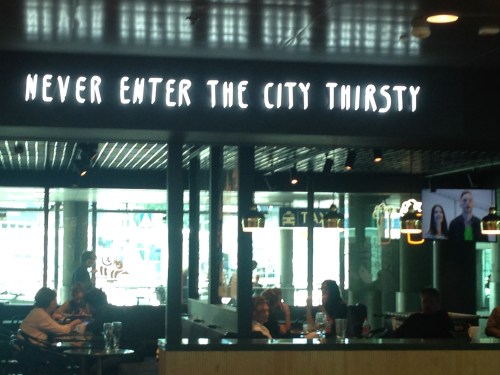
The first sign to greet you in Helsinki airport is this one; a reminder that many months of the year are very cold and very dark when a warming wine might be welcome.

Street life in the city

People play:


People pray:

DSC02292

People enjoy street art and sculpture:

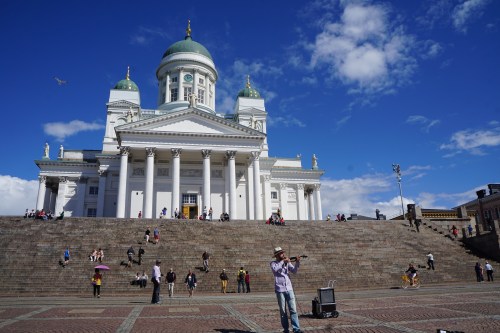
People busk:

and pigeons enjoy statues

Helsinki – The Architecture

A city the size of Helsinki, 560,000, evokes thoughts of large provincial Middle European centres big enough for some signature architecture.


Neo-Classicism

Sitting high above much of the city centre is the main Evangelic Lutheran Cathedral, a symbol of Helsinki. It was designed by a Berliner, Carl Ludwig Engel in the 19th century (completed in 1852) as part of the Empire-style-downtown Helsinki area.

DSC02241


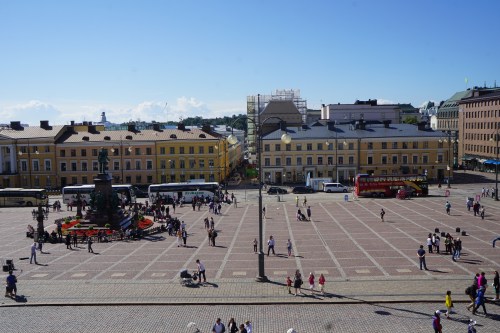
Below is Senate Square framed with buildings in the Empirical Grand Classical style. The pale yellow buildings also designed by Carl Ludwig Engel dominate it. He was the architect of much of the Square including the Government Palace, the National Library and the main buildings of the University of Helsinki.

DSC02235


Russian Architecture

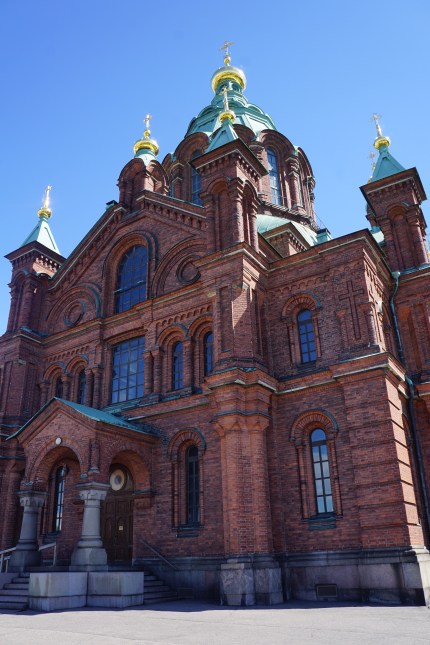
Completed in 1868 the Uspenski Cathedral is the largest orthodox church in Western Europe. With its golden cupolas and redbrick facade, the church is one of the clearest symbols of the Russian impact on Finnish history.

DSC02246


Art Nouveau

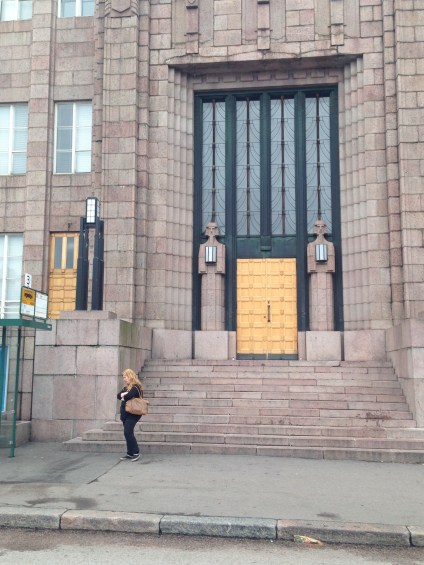
Art nouveau architecture was interpreted in Finland as its own form of National Romanticism.

DSC02284

Some of the finest art nouveau examples include Saarinen’s Central Railway Station (1914).

IMG_3805

The Aschan Café has some splendid nouveau features.

DSC02244

Modernism

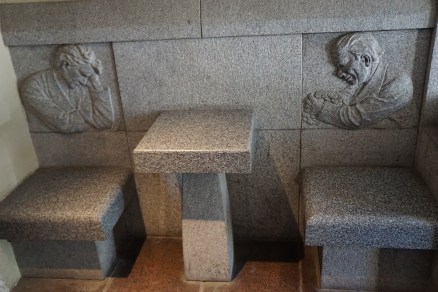
The Helsink University Library,whilst it has an interesting exterior is more interesting because of what it shows about modern Finnish architecture. It is built to maximise internal light and the fittings, as are those of a nearby supermarket, are made of beautifully turned and pleasing wooden shelves – not our ugly tin shelving. Indeed the Finnish reputation for good design shows in the details of so many of the buit interiors.


Other fine pieces of architecture we whistle stopped through were both in central Helsinki, the Church in the Rock, literally that, and the  Chapel of Silence in one of the city’s busiest squares.


At the  Seurasaari Island open air museum old buildings have been relocated here to show how people sued to live in previous centuries.


DSC02338

It’s summer in Finland so this chap out walking to the island was wearing appropriate shades

Music and education

Every town of 35,000 inFinland has its own orchestra; there are dedicated music high schools and music is part of the curriculum in ordinary schools. This is a meritocratic society where teachers need a Masters degree and belong to a highly regarded profession. It is an egalitarian system with few private schools and no streaming for brighter children. Physics, chemistry and maths are compulsory,

 We were told a few times that Finland honours its heroes and those heroes are its artists and intellectuals. (Perhaps a long cold winter sets the scene for creativity.)

Sibelius

Perhaps the most famous Finn of all is the great composer Jean Sibelius b. 1865. he went to the first Finnish speaking school, established in 1863 byTzar Alexander. A visit to his home and an insight into his life is a centrepiece of a visit to Finland.

DSC02456


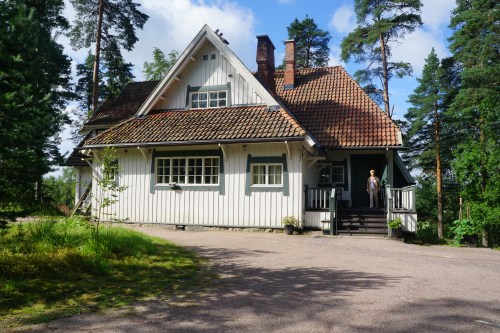
Sibelius and his wife Aino lived the 65 years of their married life at Villa Ainola part of the artists’ colony near Lake Tuusula.

Sibelius would wander in the countryside around his home and take inspiration from the landscape; he would compose work in his head and then return home and put it to paper. It is said Aino would be relieved to hear the sound of his working as she could sleep then knowing his creative struggle was resolved.

As he lay dying his music was played on national radio and filled the air of the villa.

DSC02464

A rose from the Sibeleus’ garden


Alvar Aalto

Aalto designed a number of public buildings in Helsinki, the most notable being the while tiled Finlandia Hall, a palace of culture, now managed in a private/public partnership. The white tiling is evocative of the Sydney Opera House, not surprising as it the latter was designed by a fellow northerner, the Danish Jorn Utzon

We visited the home of, and homes designed by, Aalto. Mention has to be made of his wife, another architect, who kept the show on the road after his death.

Aino and Alvar Aalto’s home was completed in 1936. In this as in their other works, the young architects combined the modern and traditional. Furniture designed by the Aaltos won international acclaim by the early 1930s, and their home is furnished with their own designs. Pieces by well known artists such as Le Corbusier and Alexander Calder were part of their environment.

Below are views of the house from the back, the view of the garden and the light shades designed by the AAltos.


On the fringes of the city we visited another Aalto house, which was quite an experience. The Villa Kokkonen´s atelier was designed for music, commissioned as it was by Kokkonen, a composer. The host and hostess, pianist Elina and opera singer Antti, have taken over the house to lovingly restore it. Their tour exists of a meticulaous recital of restoration details by the excitable Antti, a splendid lunch prepared by Elina and then a musical interlude by both.

DSC02485

A break from buildings —Day Lilies from the garden of Villa Kokkonen


Another visit to a Finnish villa took us to the Didrichsen Art Museum. Once the home of private collectors, it now shows both Finnish and international art.

Below area 1964 Picasso and a Henry Moore sculpture which sits in the garden.


Within the famous artists’ colony of Tuusula, stands the home of Pekka Halonen one of the most beloved artists of the ‘Golden Era’ of Finnish art. He like Sibelius,took inspiration from the landscape and painted both nature and people.

DSC02467


At the end go the 1880’s many of the leading artists of Finland built wilderness ateliers in the ideal landscape of the national romantic period. The fringes of Lake Tuusula provided such an environment as the pictures  below of the lake today show.


Meanwhile back in Helsinki, I cannot leave this blog without mentioning my favourite works in the the Ateneum at Railway Square part of the Finnish  National Gallery collection……

DSC02367

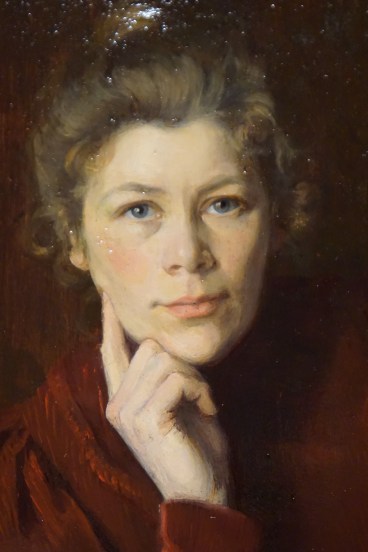
An amazing face on the “selfie’s wall”

DSC02389

Gallen -Kallela  painted Lemminkainen’s Mother as part of his Kalevala themed works. This is a mother and son story about the death of a warrior


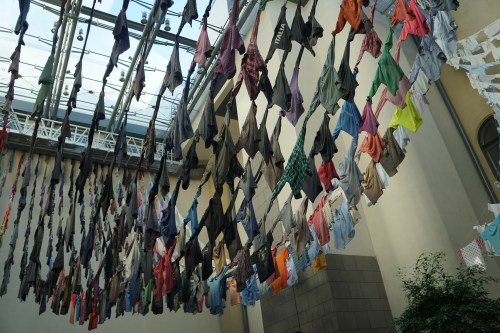
And for light relief, the Kaarina Kaikkonen  used shirt installation in the courtyard,

DSC02364


Next we headed to Savonlinna for some music. It is worth noting that music plays a central part in the education system of Finland; some lower schools are music based while there are a number of music high schools

Savonlinna

After a train ride north through the interminable pine forests, we arrived at Savonlinna, closer to Russia than to Helsinki – 350k to St Petersburg. Here in the world’s furthest castle in the north built around 1475, the annual music festival was happening.

DSC02564

The first night Riccardo Muti  conducted the orchestra he founded, the Luigi Cherubini Youth Orchestra performing  Beethoven’s Fifth; next night Don Giovanni was the offering.

I was entranced by the symphony and understood perhaps for the first time how a great conductor can create wonderful music from what is perhaps not a world-class orchestra.

IMG_3826

The second night I left the Opera Festival Choir and Orchestra performance of Don Giovanni at interval. Perhaps it was the closeness of the air inside the castle..

And finally this little duck left Finland…..

DSC02403

and yes…I did eat reindeer…dear me..goodness… Rudolph?

IMG_3783


2 Comments

Filed under Photography, Travel

Berlin again…3 days in July 2016

Whoo hoo, first the Eurostar. Eight hours from London to Berlin with quick changes at Brussels and Cologne. Everything about it, the efficiency, the quality of the trains, the comfort puts the public transport system in my country to shame.

IMG_3620

Cathedral, Cologne through the fretwork of the railway station

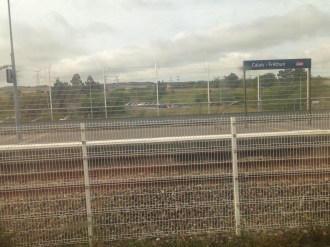
The tunnel passed in a flash and the only discordant note was the barbed wire along the tracks posing yet another barrier to add grief to the trials of  asylum seekers. Beyond the wire, the French fields were their usual precise soothing patchwork of green and ochre.

IMG_3617

Barbed wire along the line at Calais

How could I go to Europe and not drop into my current favourite city? I first visited 2 years ago (see 8 blogs from 2014) and fell in love with the vitality, the sensitive presentation of history, the architecture…..I wanted to test the impressions of that 2 weeks. Back to the same apartment at Hackescher Markt, I find I am beginning to know my way around the bigger city. Part of the pleasure of Berlin is that it is so accessible.

Why am I so taken with this world city?

  • is it in my DNA? – I do have same  Prussian blood
  • is it the architecture old and new?
  • is it the honest way the city presents its 20th century history?
  • is it the preservation of the Prussian architecture?
  • is it the vitality of the streets?
  • is it the proliferation of cultural opportunities?
  • is it the constant opportunity for street photography?

As a refresher I take the general intro Berlin Walk; the guide gives me new information. He claims that in the past 5 years rents have gone up 65% and house prices doubled. No surprise then that while I was there, residents held a robust demonstration against the gentrification of the city.

Hopefully Berlin will not be a casualty of its own success. Forty thousand people are moving here each year and no wonder. There are 450 publicly funded/subsidised art galleries and museums. 3 opera companies and 6 world class orchestras. Before I wax too lyrical I also have to mention that there were 40,000 instances of pickpocketing reported to the police last year.

IMG_3635

On the way out Saturday night, lots of Goths gathered with their Rottweilers in the park next to the Cathedral

Saturday night I went to the Karl Schinkel designed neo-classical Konzerthaus which was opened in 1821. Its own in-house orchestra preformed Dvorak, Schhostakowitsch and Schumann with guest violinist Julian Rachlin. On the way I detoured around the free open air concert  on a closed Unter den Linden outside the Humboldt University where Daniel Baremboim was conducting the state orchestra. Music in the air, Berlin flowers. I am reminded that 29 Nobel Prize winners studied at this university; Einstein worked and Marx studied here too.


The next day all Berlin seemed to be at the flea market in Mauer Park.

DSC02061

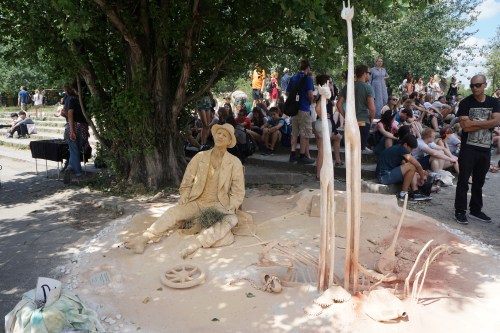
This man describes himself as a performance artist and has a ‘peace’ homily sitting in the sand.

DSC02031

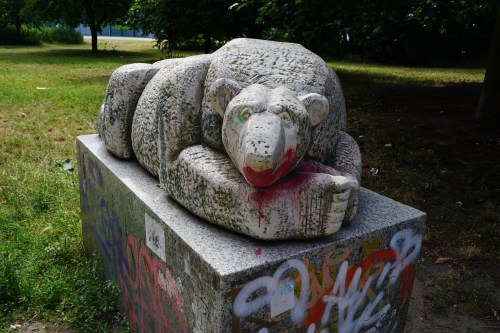
They say you can put lipstick on a pig but it will still be a pig. what about on a Mauer park bear?

After the market I spend a few hours wandering the streets of Prenzlauer Berg before walking back to Mitte ending with a flop on the deck chairs alongside the Spree contemplating the Dom, still stained black from the fires caused by Allied bombing. I was surprised to be told (by a Scot) that 80% of British bombs didn’t get within 5 miles of their target.

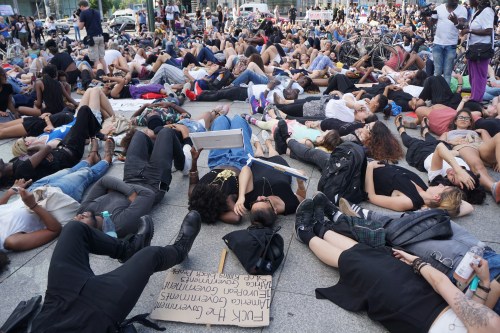
Later I put the skates on to re-visit the architecture of Potsdammer Platz and run accr0ss a #BlackLivesMatter demonstration. I am again reminded of the cultural mix of  young Berlin seeing so many African Americans read the roll call of those who have died by violence and police shooting in the USA.

DSC02124

Lying down in remembrance of the dead.

DSC02117

DSC02134

What a contrast to the people demonstrating — these upper class pretenders were meeting next to the demo and paying it no attention

Being so close I slip in a visit to Martin Gropious House which I had missed last time and see an exhibition of photographs by Bernice Abbott who started as Man Ray’s assistant before becoming famous herself. Her most known photos are the New York black and white streetscapes and portraits of people such as Jean Cocteau, James Joyce and Sylvia Beech. Then it’s a beer under the wondrous roof of the always lively Sony Centre.

DSC02142

I did catch up with other architecture that also inspires me

DSC02012

I M Pei’s addition to the Museum of Berlin

Again I ask myself in what other city would so many experiences fall into my path.

On my last day in Berlin I have the roller skates on. Back to walk the shopping stretch of Kurfürstendamm before lunch at the biggest store in Europe, the smart KaDeWe. Like Fortnum and Mason the food floor seems to have dumbed down a  little since my visit 2 years ago.

DSC02180

The cake display remaind inviting

DSC02173

For the person who has everything – a golden hose!


Nearby outside the S Bahn station there is an evocative list of the concentration camps trains left for, from here.

DSC02188

Not far away there is a sculpture. The words etched on the back say:

Remember: when injustices take place, when people are discriminated against and persecuted – never remain indifferent. Indifference kills.

These are words my own country with its disgraceful offshore detention centres for asylum seekers, would do well to take to heart.

The plaque besides the sculpture says:

A cynical lie: the inscription above the main gate to Auschwitz 1 concentration camp: ARBEIT MACHT FREI (work makes you free). When the SS ordered them to make this sign, the prisoners hid their message in the word ARBEIT. They turned the letter B upside down. It signalled their courage, their will to overcome the paralysing fear and later be able to tell the world what happened in Auschwiitz.

DSC02185

Then it’s off to Tempelhof Airport, the iconic site of the airlifts during the cold war and now just acres of dry rough grass which reputedly comes alive with local recreational use and concerts.

DSC02195

Since Berlin is enlightened enough to ban shopping on Sundays, I finish  Monday with a visit to the courtyards of Hackescher Hof, once a centre of German Jewry and marked outside by the bronze plaques with names of Jews who were murdered by the Nazis. (It is worth noting that there were 5 million non-Jewish victims of the holocaus.

Now the Hof is a retail/bar complex and houses my favourite shop for presents of schmick acrylic art jewellery.

One of my best memories of Berlin is the vitality of the street:

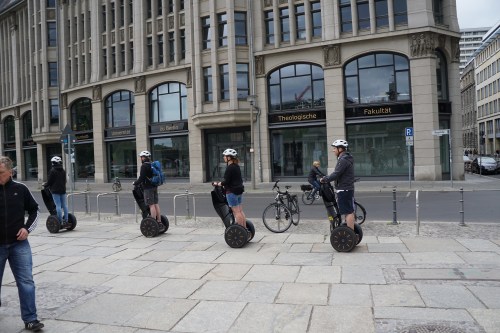
the tourists who use bicycles tours, Segway tours, walking tours ,

DSC01950

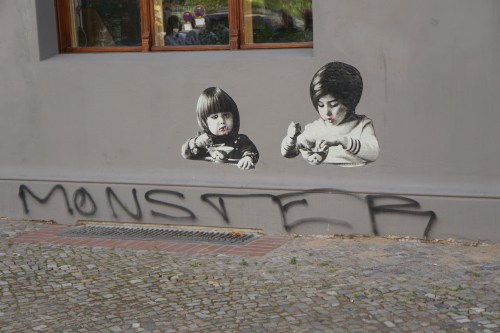
the ever new graffiti

DSC02028

DSC02079

the people

DSC02084DSC02026DSC02021

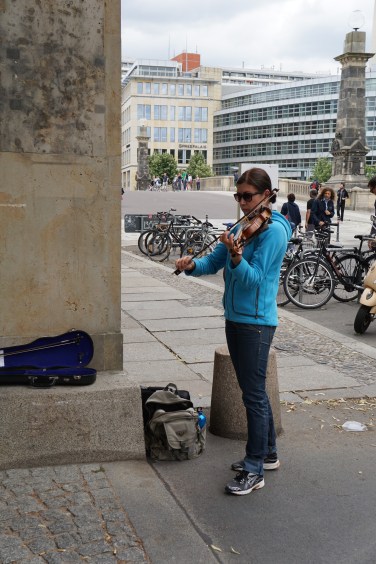
the buskers

DSC02151

These guys ride the U bahn dodging the transport authority and bringing joy to passenger (me at least).

DSC02098

DSC02019

Playing Vivaldi’s Four Seasons

DSC01959

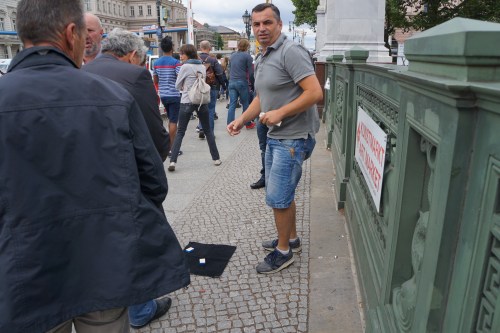
There are a few practitioners of the 3 card trick trying to earn a buck in the street. They are wary of police and of photographers.

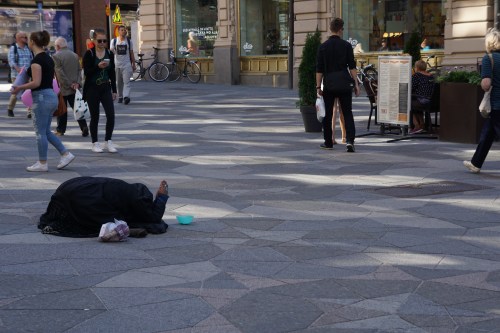
For the first time in Berlin, in Alexanderplatz, I noticed the homeless people. Why wouldn’t I?  They are in every major city in the world. I hesitated about putting the following photos in, out of respect for them, but really we all need to be confronted with the underside as well as the beauty and fun, so that we are reminded of the real issues that face all of us.

DSC02099

DSC02096

Berlin has so many experiences. I still regret I didn’t have time  to visit again the amazing Ishtar Gate on Museum Island or to wander the private galleries around Auguststrasse.

I did however see again the murals painted during the cold war on the wall of what was once Goering’s Luftwaffe Building, then the Communist party HQ and now ironically the German Finance Ministry (tax office too!).

DSC01978DSC01982

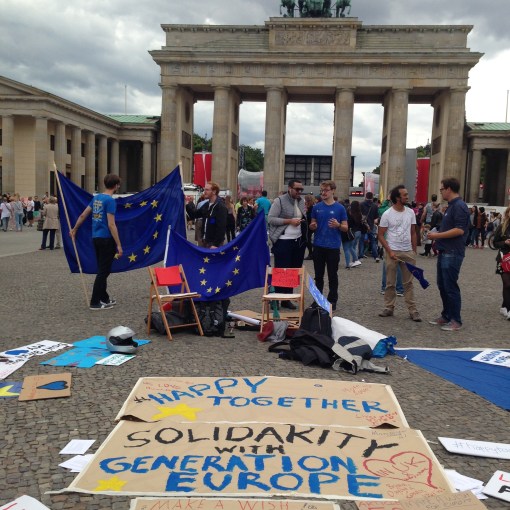
And one can never go to Berlin with the obligatory dues being paid to the Brandenburg Gate. This time with an anti-Brexit demo. in front.

IMG_3631


That night I had truely global dinner. Around the corner from the Adina at Hackescher Markt where I stay, there is a new Japanese restaurant. The trouble was that the menu for the Japanese dishes was written in German. I was reduced to pointing to an unknown fellow diner’s dinner and  saying in the famed words of Sleepless in Seattle “I’ll have what she’s having”.

Next morning after good coffee and a croissant at my now fav.and cheap Berlin cafe on the square behind the apartment, it is time to go. Again I believe I have left much undone, especially when it comes to understanding the architectural layers of the city.

So what is the take home message for me? Berlin accessible and now familiar, still has its great world city ambience. A kaleidoscope of colourful and cultural experiences. But I don’t know whether a 3 day or a 2 week visit is what I want anymore. To really know this city, not just sample its complex delights one would need to live her for a while. I wish I could


Leave a comment

Filed under Photography, Travel