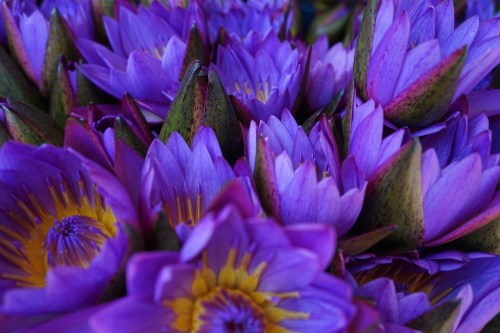
Temple offerings
Sri Lanka is a small island of varied experiences –from urban business, archaeological and Buddhist World Heritage sites, wildlife parks, fine hill scenery and beaches…. to historic Dutch and Portuguese settlements. All there, all accessible.
I visited because it has been painted as a ‘magical’ place. I think the magic is in the fact that all these things are closely and easily accessible not necessarily because of the quality of any one experience.
Sri Lankans do not like their country to be called India Lite but somehow the memory of the vibrancy of my relatively recent trip to South India sometimes exceeded the Sri Lankan colour.
That said, some things stand out:
Firstly, after a 30 year war, the multicultural society is seemingly happily integrated. The 71% Buddhist population appeared to be as equally represented (at least in the built form) as are the many Hindu, Muslim and Christian institutions. Singhalese and Tamils, Burgers and Plantation Tamils appeared to live peacefully. Indeed driving through the country there seem to be more Catholic institutions and mosques than there are temples and stupa.
The multiculturalism was underlined in a paragraph in Michael Ondaatje’s book, Running in the Family, that resonated with me: “Eric Daniels (a Burgher) summed up the situation for most of them when he was asked by the British Governor what his nationality was. ‘God alone knows, your Excellency’.”
Small quirky moments remind one of the global melting pot. Driving through what appeared to be a totally Muslim town, I caught sight of a sign saying MELBOURNE BAKERY.
Secondly, political passions still bubble with 2 major demonstrations in Colombo the first days we were there – one with the Muslims and the former President demonstrating against the government and the other, university students demonstrating against privatisation of education.
Thirdly, wherever we went, there were groups and processions of happy school children of all ages all dressed in the same immaculate white uniforms, coloured socks and ties being the only differentiation.
Before I go into the photo show I must mention our driver Chatura because he seems to personify some people in an aspirational third world emerging economy . He is a young man with the large, tall stature of a Burgher (the descendant of Singhalese and early European settlers – Dutch or Portuguese).
Catholic educated, at the age of 27 he went to Afghanistan and worked at an American base fuelling the fighter planes. He raised enough money to buy land/build a house of 2 bedrooms for him, his new wife and baby, his brother, parents and granny. He is planning to get another overseas job soon leaving his much loved family so he can save more money to finish the house with a second storey ensuring room for all.
If there was any doubt about his dedication to family, whenever Chatura had time off, say for an afternoon and night, he would travel up to 4 hours by public transport to be with them.
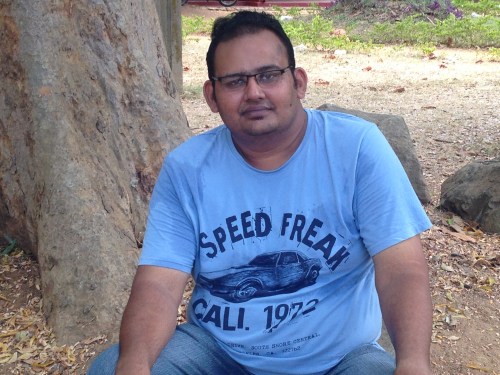
Chatura, our charming gentleman driver/guide.
Rather than a daily diary, these photos are organised along the lines of specific experiences.
Colombo
The capital is an emerging third world city with a population of around 650,000.The area was settled by Muslim traders around 700 AD but only came to prominence during the Colonial period. Portuguese arrived in 1518 and built the fort; then the Dutch conquered in 1656; rebuilt the fort and some of their elegant buildings like the hospital (now a tourist retail/eating centre) remain. In 1796 the British took over and besides expanding the infrastructure of the country, they developed the port as the main trading centre taking over from Galle.
Sri Lanka became an independent Dominion in 1948 and a Republic in 1972. For 30 years until 2002 the Sinhalese majority and the Tamils fought a civil war.
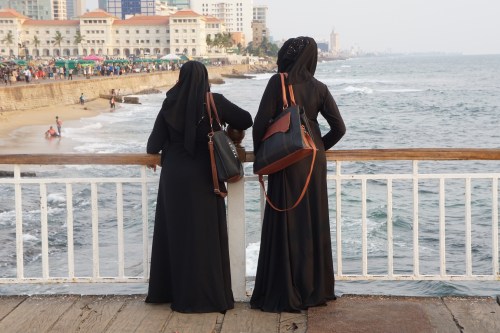
The women are looking back across Galle Face Green toward the gracious old Galle Face Hotel where a G&T on the fan cooled verandah is one of life’s pleasures.
We were not there long enough to get a real feeling for the city but some things stand out like the amazing work being done by the Department of Defence and Urban Development. Sounds like an oxymoron but makes real sense. After a 30-year war with so many in the armed forces, what do you do with them? Put them to work restoring the historic, heritage parts of the city which will bring in the tourists making enough money to pay the army’s wages.
Mark Forbes, another Burgher leads a walk through the Port City sharing his love of the architecture.
Wonderful restoration work is being undertaken in the Old Port area where the Dutch banished the old Portuguese buildings and then the British did their best to obliterate reminders of the Dutch.
Tourism with 2 million visitors a year, and factories for overseas manufacturers (like Marks and Spencer and Noritaki), are replacing overseas workers, tea and rubber as major sources of national income. Conditions for the factory workers were reported as being better than for those in say, Bangladesh
The Mark Forbes walk ends on the top floor of the once grand, now run down Grand Oriental Hotel which has fine views of the port and houses the ‘rooms’ of Human Touch Massage. The latter presumably on the dance card of visiting sailors.
The port itself is a story. The Chinese signed a deal with the previous President to build Colombo Port City . The Chinese company will keep half the land on a 99 year lease plus 50 acres in perpetuity– 575 acres of reclaimed land between the harbour and the Green are to be transformed into offices, hotels – you know the kind of deal. It will cost $1.4billion.
The current President stopped the project but it’s on again perhaps linked to the $5+billion Sri Lanka owes China. Colombo port has always been an internationally strategic port between China and India and it adds to the Chinese portfolio which also includes the strategic Australian port of Darwin.
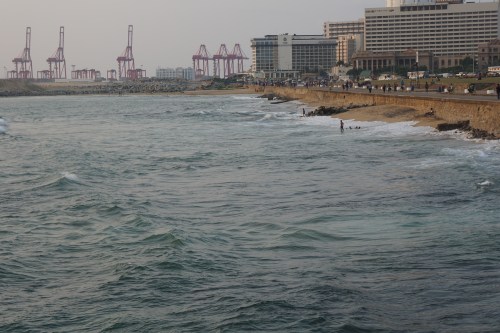
View of the port looking from the waterfront park known as Galle Fort Green
Galle Fort Green, the slightly scruffy park fringing the harbour is where Sri Lankans come to relax at sunset; kites are flown; stalls sell snacks and general promenading and water joy happens.

Paddling

Children squealing

There is even a snake charmer trying to charm the tourist rupee.
As in all emerging economies, the old and the new sit happily together

These twin towers adjoin the Old Port City

The new architecture of a sports stadium
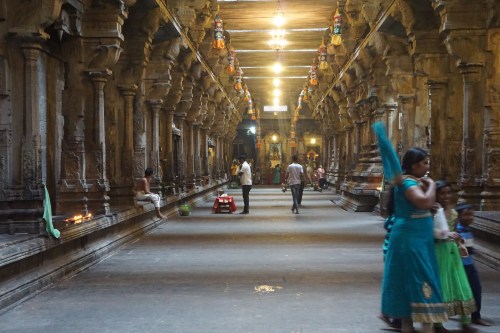
This wooden temple was a marvel and full of life
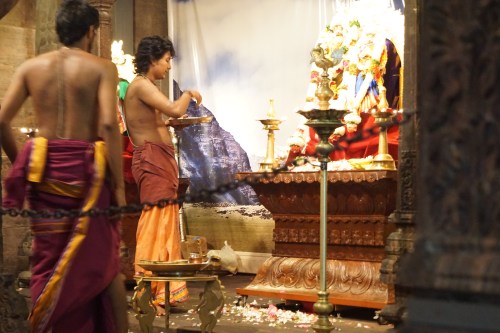
Priests make offerings
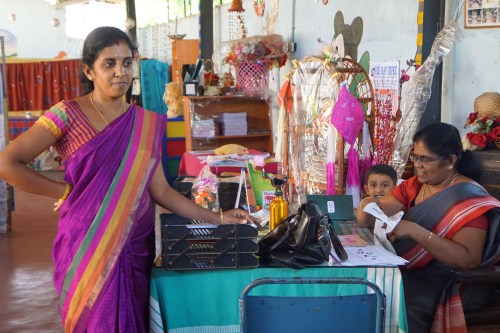
Delightful teachers in the temple school

Sri Lankan ‘style’ is expressed here in what was architect Geoffrey Bawa’s office in Colombo. It is now a cafe.

These girls were celebrating Pakistan’s national Day. The father of one, an Embassy chap, was keen to talk cricket, as were many.
Anuradhapura, Minintale, Sigriya Rock, Polonnaruwa Ancient Kindgom and Dambulla –otherwise known as The Cultural Triangle
Next we drove north to look at the World Heritage sites from the ruins of the early cities to the sites associated with the coming of Buddhism to Sri Lanka. Perhaps in hindsight we might have skipped a few!
Below at Mihintale, is the rock where Mahinda is said to have had his cave. The story is that Mahinda was sent from India to introduce Buddhism to Sri Lanka 247BC. He met the king who was out hunting and converted him and his 40,000 attendants. Hence, Buddism came to the island
The Minintale site has a number of ruin, a grand shrine where the ground is too hot for the shoeless feet and a procession of visitors who are entertained by the monkeys.

The stairway has 1,840 granite steps
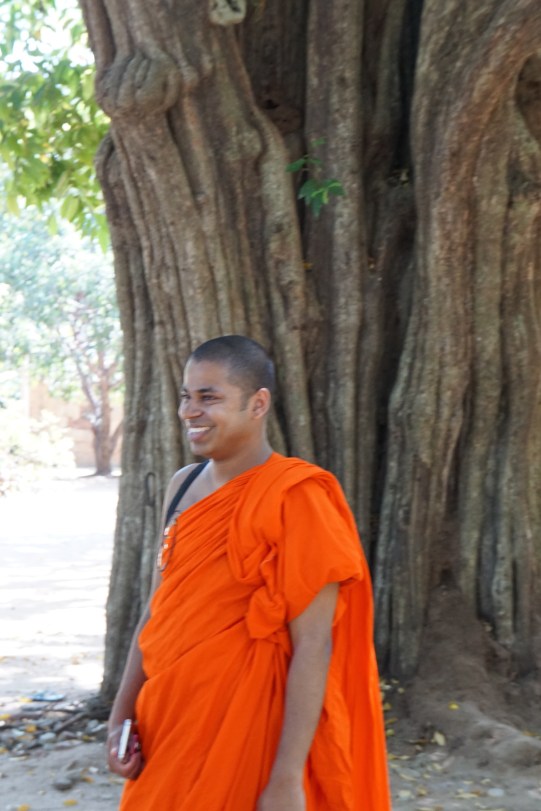
Many come for prilgimmage

The many monkeys are endlessly entertaining
Below is the Word Heritage Sigiriya Rock rising 200 metres about the plain. The story is that one ruler built a citadel on top of the rock (between 477-485AD) to protect himself from his brother who disputed his claim to the kingdom. After his brother returned from India and won the battle, the rock was handed back to the Buddhists as a monastic site.
There are ruins of the once grand water and other gardens around the base of the rock and frescos along the climb to the top. I stayed below.
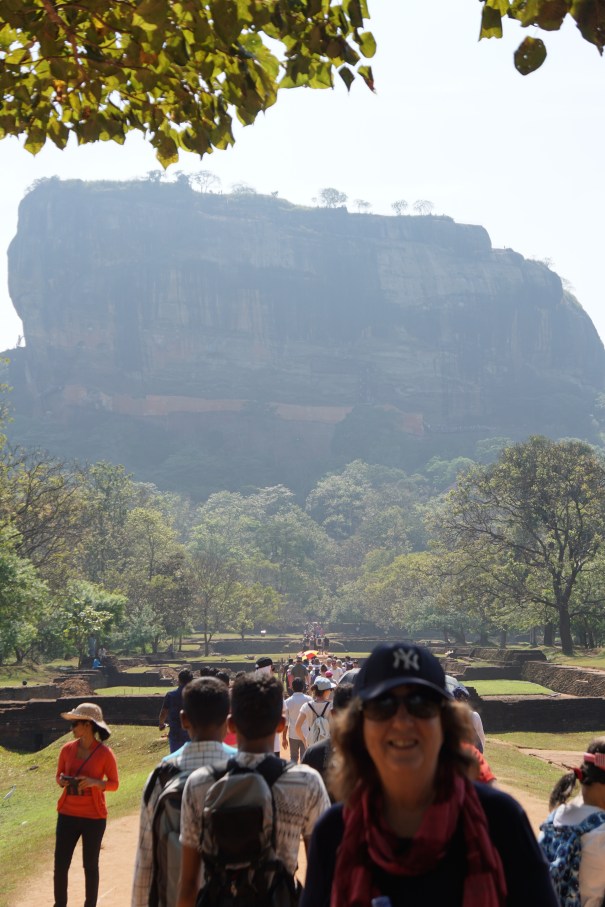
The queue to climb!
My favourite was another UNESCO site, Dambulla Cave Temple. This complex dates from the 3rd century BC and the caves sit in a large rock 160metres above the surrounds and 1.5ks around the base. They house numerous religious and cultural paintings and sculptures. There are 5 caves to see and the biggest one, cave 2 ,contains some spectacular sights.

Only part of a magnificent rows of statues. Note the ceiling decorations.
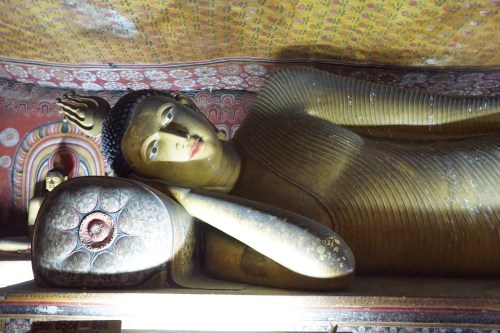
A resting Buddha
Below is a small part of the remain of Polonnaruwa Ancient Kingdom which was founded in the 11th century. This was the second kingdom of Sri Lanka, after Anuradhapura, and known as a golden age. The site is compact and the remains well preserved.

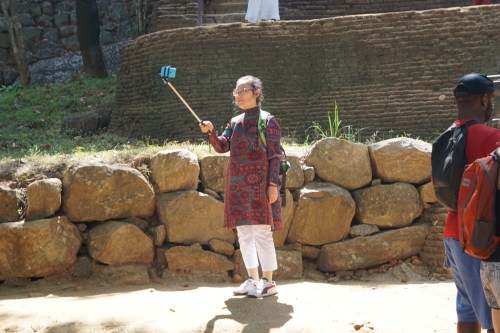
The cultural triangle attracts many visitors, some of whom are intent on capturing it on film whatever device is at hand or on the head.

For part of the World Heritage hunting, we stayed at the Heritage Kandalama, a great, but tired, hotel built along the side of a cliff overlooking a serene lake. The calm challenged only by the monkeys scampering along the decks. The country’s most famous architect, Geoffrey Bawa, designed the hotel.


Kandalama’s deck is careful of this bunyan tree.
Kandy
Kandy was the last of the Sri Lankan kingdoms to hold out against the British. It is an unprepossessing city famous mostly for the Temple of the Tooth, the famed Kandy dancers and the huge Botannical Gardens.
The Buddha tooth is said to be in the temple at Kandy making it the centre of pilgrimage and known for the accompanying rituals. If crowds don’t worry you then a delightful hour can be spent watching the weekly procession of tributes to the Tooth.

Inside the Temple of the Tooth the drummers entertain the crowd as they anticipate the procession of offerings which the priests will take into the room behind the doors.

Lots of monks stay in Kandy to pay respect to the Buddha’s relic.
We stayed at the Ozo Hotel which had pretensions to being hip and was walkable to town. Apparently there are some quite glamorous retreats out of town. One find was the Queen’s Hotel Bar with its atmosphere colonial stye bar and wide first floor verandah bar. Inside it seems to be the go-to place for smart locals.

Drummers for the Kandy dancers
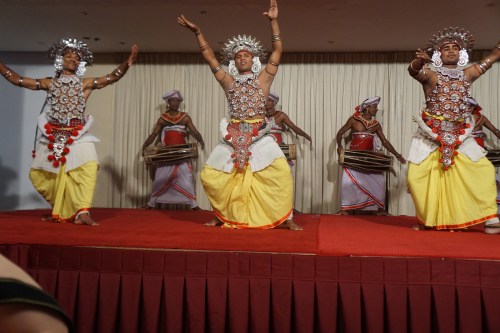
The dancers obviously travel as we saw them leading a wedding procession in Galle
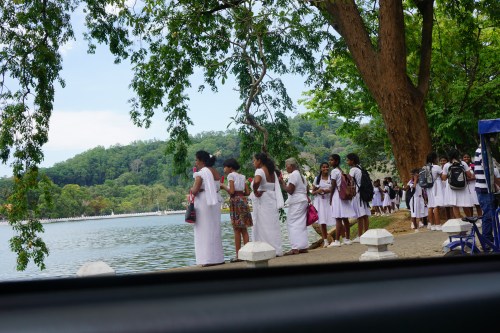
Waiting for the bus alongside the river

Downtown Kandy

School girls tour the Botanical Gardens and are more than happy to chat.
Nuwara Eliya
The last outpost of the colonials was Nuwara Eliya the highest town in the country (1800 metres) where, in the 19th century, the British would come for the season to escape the heat of the coast.
It is now a trekking and honeymoon favourite with guest houses and gated communities. The town is known as Little England with faux Victorian and even Tudor estate developments happening. Key landmark buildings like the Grand Hotel, St Andrew’s Hotel and the Hill Club still set the scene..
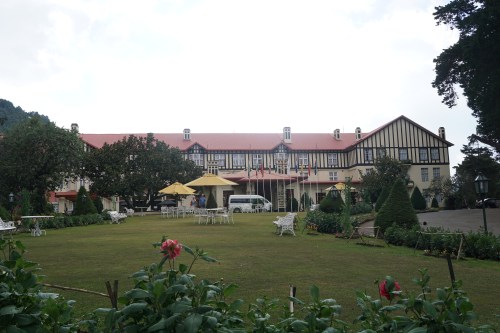
The Grand Hotel does a charming High Tea
We stayed next door to the Grand at Green Hills a large new stark hotel clearly built with rich Islamic visitors in mind. Perhaps in the season when it is full it might feel alive. Anyway since the President’s brother runs the holding company, it will likely thrive
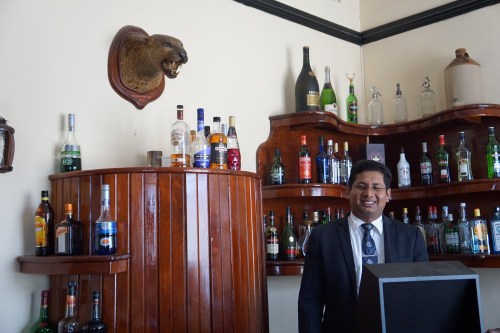
The Hill Club – next door to the President’s estate – is a story in itself. Once described as “the best of empire”, it is the colonial life of days gone by. Every item in the Bar (below) was imported from England even the spoons. Still you must be signed in and gentlemen should wear a coat. English hunting pictures adorn the walls together with photos of the English Queen.
The leopard on the wall below was killed by the Hunting Club and leopards still roam the hills nearby.
Contrasting with the grand life, the photo below is of the shanty town in another part of town. Nuwara Eliya is a Tamil town. The Tamils were brought in by the British to work the tea plantation when the Sinhalese refused to work for them.
Women are currently paid $4 a day for picking 30 kilograms of tea a day.

In keeping with its history and its pretensions Nuwara Eliya has a lush municipal golf club, a boating lake and of course, the famous “Royal” race course.
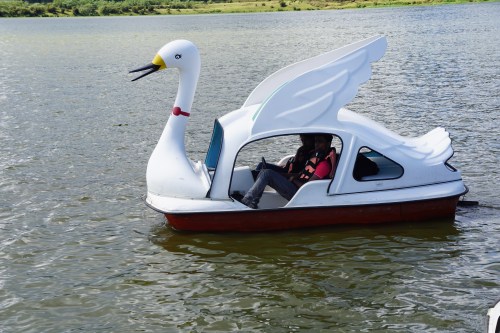
Paddle boating on the lake

Technology happens everywhere

The starting barrier at the “Royal Turf Club”
For me, the most enjoyable event was the hours spent at the Botanic gardens when a gentleman who described himself as the gardener, joined us to show us around making sure we smelt the best perfumes and pointed out the eucalyptus.

Our guide to the gardens
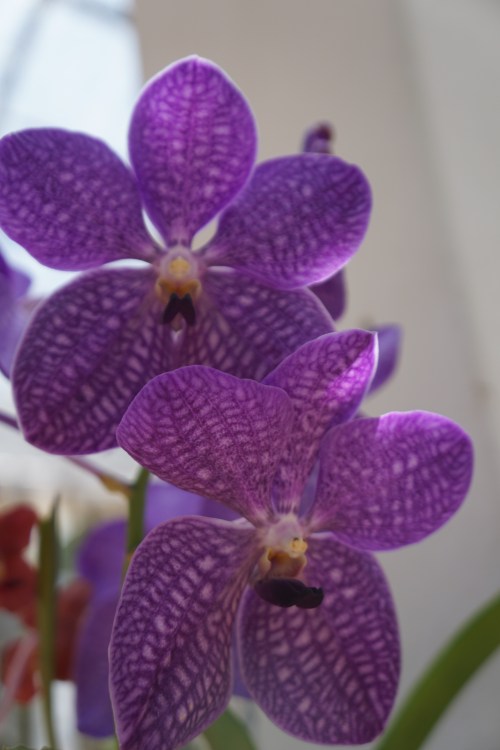
There is a wonderful orchid house
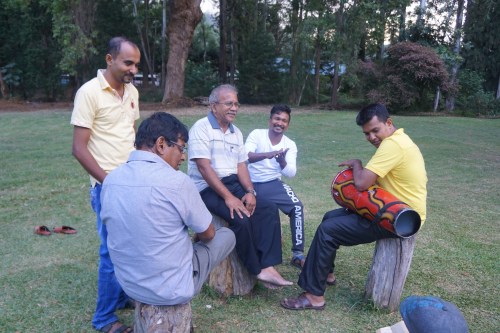
Then an impromptu a capella group called us over to enjoy,
Young couples were grateful for me to take their pics (with their cameras),

and finally some joyous young Buddhist monks chatted happily and we photographed each other. One of them carried a photo he had taken years ago on the same spot.

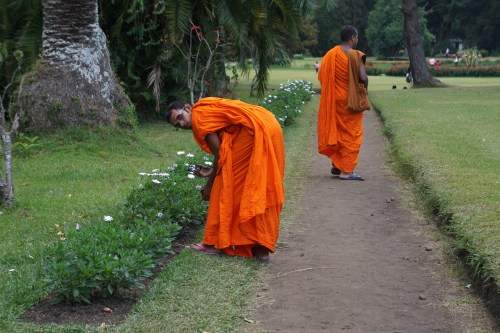
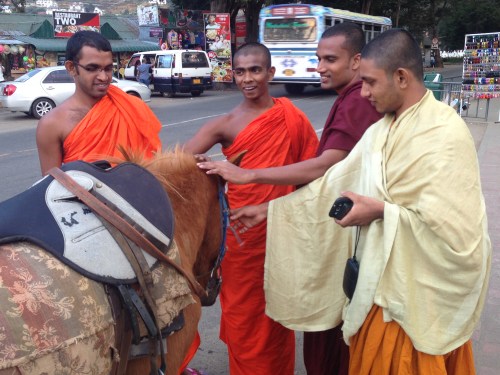
This was one of those days when happiness suffuses; you live truly in the moment and feel part of the stream of humanity sparkling in the sun.
The hills
We took a splendid train trip down through the mountains and past yet more tea plantations.
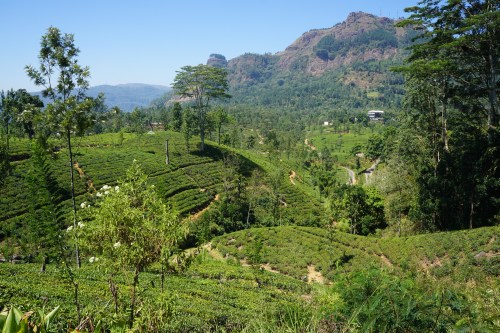

Working in the tea sheds is back breaking work
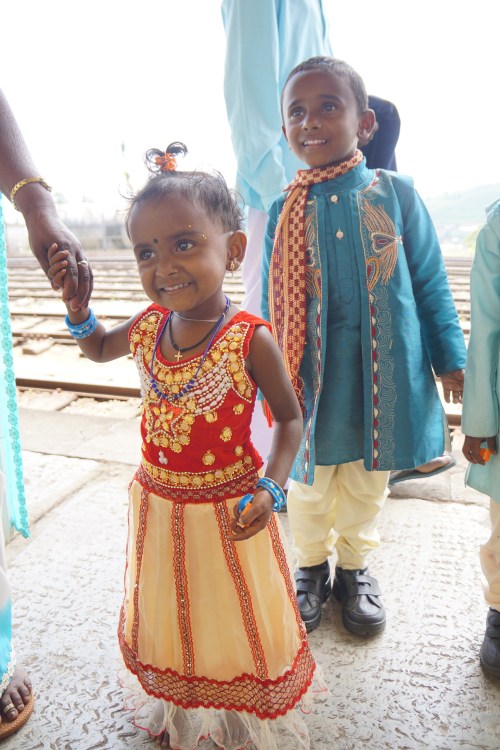
What a delight the children were as we all waited for the train
Udawalware National Park
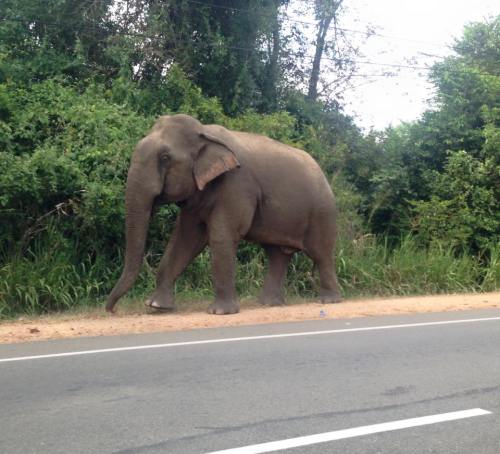
We picked up Chatura again and headed for safari HQ, Grand Udalwalware Safari Resort. Like most other places to this point, the rooms were fine and the food less so. We knew we were near the national park when an errant elephant came wandering down the road and further along a gathering of people by the roadside waited to chase him away from their village.
An early morning wake up to see dawn from one of the many safai jeeps that somehow manage to keep out of each others’ way in the park. There were a few sightings of elephants, many of birds and perhaps a croc.
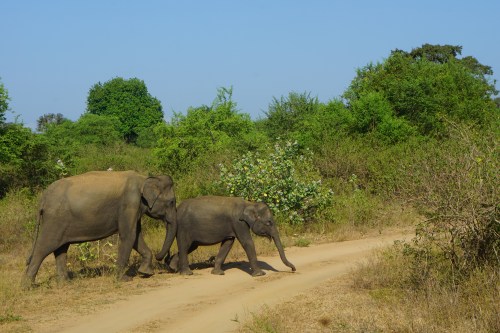
Crossing in front of us

A peacock up a tree
My safari photos were so blah that I bought a long distance lens after I came home.
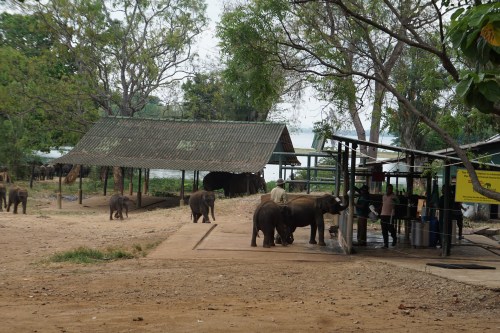
Better than the safari was the visit the next morning to the Elephants Orphanage where little ones are nurtured until they are released back into the park at age 4. Sri Lankans do love their elephants, witness the head monks who was charged while we were there for keeping an elephant in his temple.
Galle
Another World Heritage site, this time a vibrant walled town busy with tourists.
We stayed at Deco on 44 and for the first time in Sri Lanka enjoyed the food, so much so that we did a short cooking course with the hotel chef. With him we visited the veg, fish and spice markets just outside the fort walls; watched him prepare and later ate a great long lunch.

Chef Sugath Mendis is a fine teacher

The fishmarket
The staff were terrific and one took us on a tour of town.
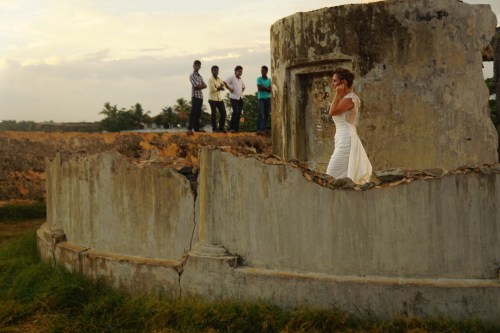
Galle has become popular as a destination wedding centre
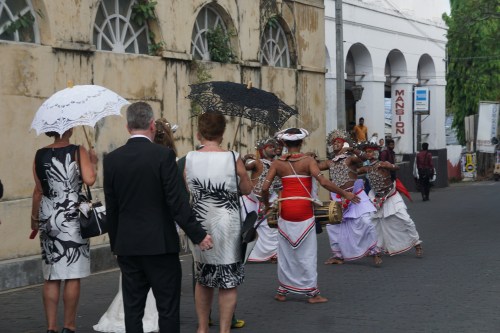
Kandy dancers lead the wedding procession for these English
Galle has known traders and travellers for 2000 years and has been colonised by Portuguese, Dutch and British rulers. Myth has it that Sinbad the Sailor found a river of gems here and in 1292 Marco Polo called in as did that other fabled traveller, Ibn Butata.
Certainly the many jewellery shops keep the gem tradition alive.
In 1594 the Portuguese built the first fort on the point. Over the next 400 years various colonial powers captured it. Of particular elegance are the Dutch hospital and warehouse buildings.
The fortifications are so strong they withstood the 2004 tsunami which devastated the adjoining coast line and villages.
Now Galle is a bustling tourist town with quite grand heritage hotels, stylish restaurants and bars and more gem shops than I have ever seen in a small space.
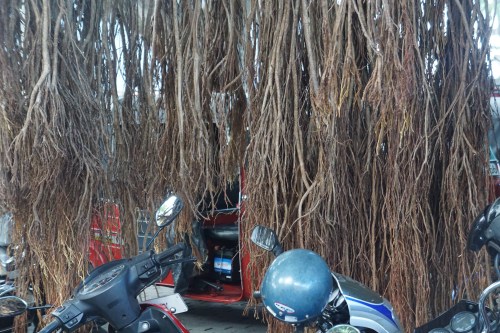
The bunyan tree in the court square is a good place to park

Part of the global village
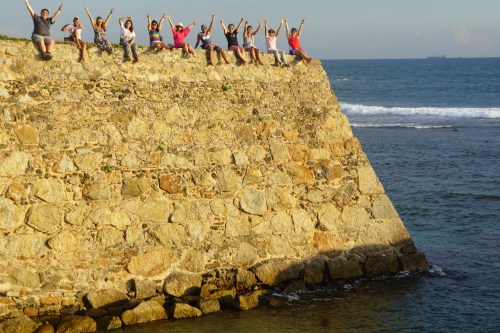
Tourists from the Philippines take a photo to remember
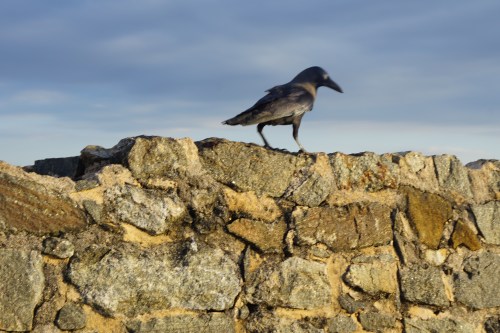
There are hundreds of crows on parts of the fort walls

Sri Lankans seem to be upfront in recognising base emotions. Have a new building? There will be jealous people who will wish you ill. This construction “scarecrow” is intended to distract attention from your good fortune and stop any jealousy.
Leaving
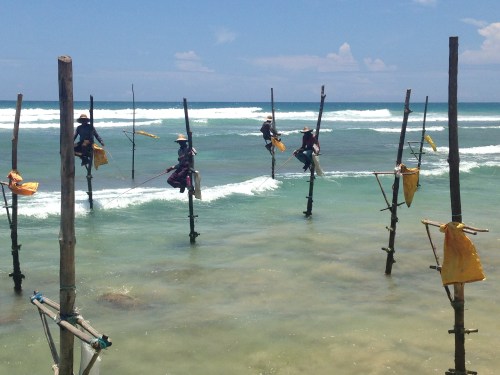
We took the coast road back to the airport breaking the trip with a visit to one of a number of turtle sanctuaries and a photo shoot of some villagers replicating traditional pole fishing – in the hopes of catching the tourist photographers’ dollar (400 rupees in this case)

Most impressive though was the country estate of Geoffrey Bawa still operated by a family trust. Winding jungle roads seemed to keep it well hidden.
These are beautiful gardens said to be surpassed though by the near-by gardens of his brother, Bevis. One delightful story elates to the Australian artist Donald Friend who is said to have come for a visit to and stayed 5 years. There are scultured planter pots in both gardens designed by Donald.

The Donald Friend planter pot

The garden room where planning happened
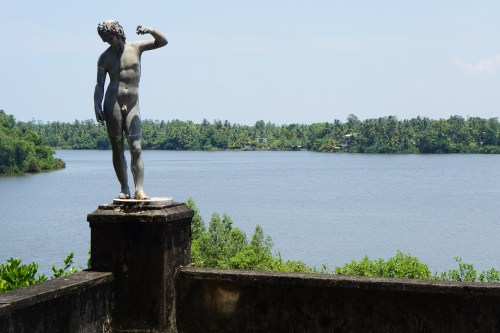
Classical touches
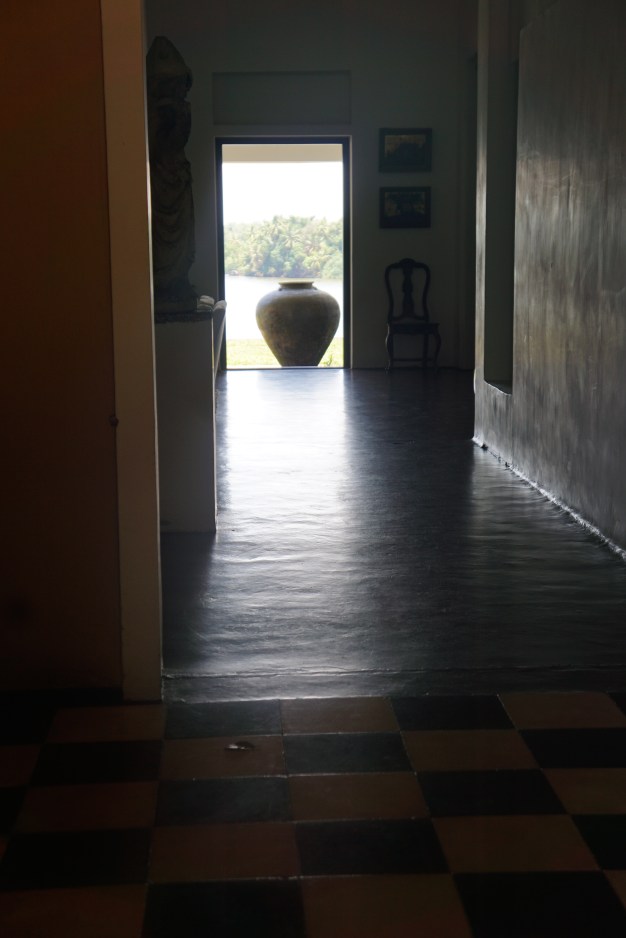
A glimpse through Geofrey Bawa’s country home.
Back to the coast and a last sunset before flying home.

In the airport lounge two families catch my eye. The first is a stunningly beautiful slim woman in a chador with patterned sleeves smiling lovingly at her family as she brings them food from the breakfast bar. Her husband and 2 boys aged around 10 and 13 look like a touring sumo squad. Never before have I seen such obese boys as they hoe into the many pastries she places before them. Does she not notice?
Opposite me is a Chinese couple in their late 30s with a gorgeous baby about 5 months old in a stroller, dummy firmly in the mouth. For half an hour the mother has been holding a phone screen in front of his eyes as it plays some distracting cartoon. The baby watches intently.
















 A Game Old Dame