

A desert Berber of the Maghreb
Libya is in a horror zone; thousands dead, violence dominant, cities ruined, citizens terrified, chaos abounds. And still the tyrant has not gone.
It seems almost improper to talk of my brief visit there in the face of the current civil war and the deserted hospitals with bodies piled up. But perhaps my pictures will provoke a better idea of a real country for those who have seen nothing of it but clips of the fighting.
In 2006 I went on a study tour of Roman North Africa. It didn’t start well as my travelling companion was careless enough to be knocked over by a car in Sydney while I was in transit visiting Uganda. So I was left with a bunch of strangers who didn’t dance to the same drummer. Still, it was an adventure, a chance to see what had been a pariah state although now Gaddafi was sucking up to the west.
As we approached Libya’s western border from Tunisia, the road was lined for a few kilometres with men selling cans. I was told it was petrol. Smuggled out of Libya with its overabundance of cheap oil I can understand, but what were the cans full of on the other side of the road? More work for Dr. Google.
At the border we were held up for hours before being allowed to enter because someone on the bus was suspected of once having visited Israel. No-one owns up. That same bleak border now houses thousands of “guest workers” from further south in Africa sheltering in makeshift refugee camps escaping the civil war.
Tunisia had a French, Roman, Moslem, Berber overlay but Libya? I didn’t go into the vast Sahara desert inland but clung to the coast; still it was parched and overwhelmingly Arab, male and in retrospect, the air was heavy with what was probably the heel of oppression. The following snippets skim the surface mostly of the past.

The theatre at Sabratha
Counterpoint to the featureless highway and the first bleak town of poor provincial Libya, Sabratha had form ~ a Berber, Phoenician, Hellenistic and later Roman settlement. Sometimes drifting off to sleep at night, I conjure up the still majesty of the theatre at Sabratha as the sun sets on its sandstone. Now a UNESCO World Heritage site, its three colonnaded stories tower behind the stage testimony in scale and beauty to the grandeur of great Roman architecture. The dying sun turns them rose.

Gaddafi dominated Green Square – the museum wall
Green Square is the civic centre of Tripoli. On one side is the Med a few scraggerly palms along the front, on another the Italinate arched gallerias; across from them is the fine museum and the doorway to the medina. Here in front is the platform where Gaddafi used to stand to harangue the people and review his Empire. The medina has the narrow alleys of Middle Eastern cities; tradesman shape bronze; antiques and gold are sold. I scored some fine coral and trading beads. But Tripoli never felt alive to me and now seeing the depth of the anger the people have, I understand.
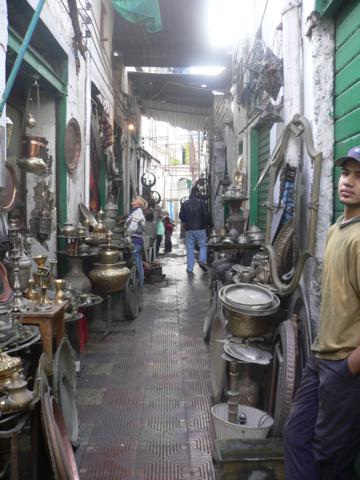
A street in the medina

Glamour must be somewhere

Antique shops

Always the gold merchants

Star fish on sale
Leptus Magna is east of Tripoli and perhaps the greatest intact Roman archeological intact site. Situated on the ruins of a 7th century BC settlement, it reached its peak under the Romans when it was their food bowl and probably the shipping of lions and other exotics to amuse them. The extent of the ruins is extraordinary, the market with its weights and measures stone, the empale and theatre, the forum and the goths. I was overwhelmed by the Great Colonnaded Street, the remains of statues and mostly by sitting on the high wall separating the almost intact amphitheatre and the Hippodrome, gazing out to sea.

Arch of Septimius Severus at Leptus Magna
I was tweaked to realise that 2000 years ago the Romans had expensive holiday homes by the sea. The Villa Sireen is a grand isolated estate replete with fine mosaics and a private bathhouse that must have wowed the guests. I could see the fine ladies in draped robes and fine jewels sitting where I propped on the seawall contemplating life.
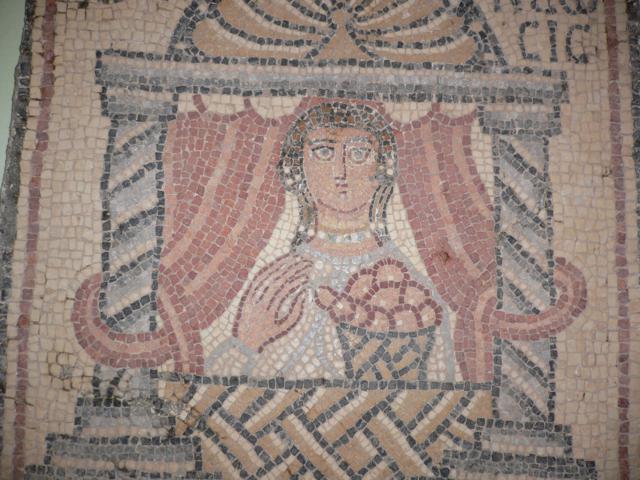
Mosaics at the Villa Sireen

Mosiacs at the Villa Sireen
We stayed in Misrata, the scene of recent particularly bloody battles and I remember cheerfully catching a taxi to a cyber cafe where young men earnestly sought the wider world. Then on to Sirte halfway between Tripoli and Benghazi in the area where Gaddafi came from and where his tribe is based. It was the modern centre of his administration (his Canberra?) where he had his famed Congress tent. I am glad the photos I had taken before his huge portrait there are too dark to reproduce, ditto me speaking at the lectern from where he lectured the world.
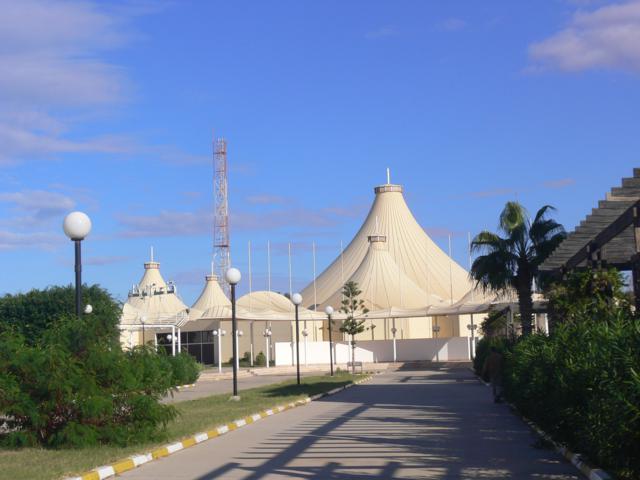
The famous tent where Gaddafi met the world
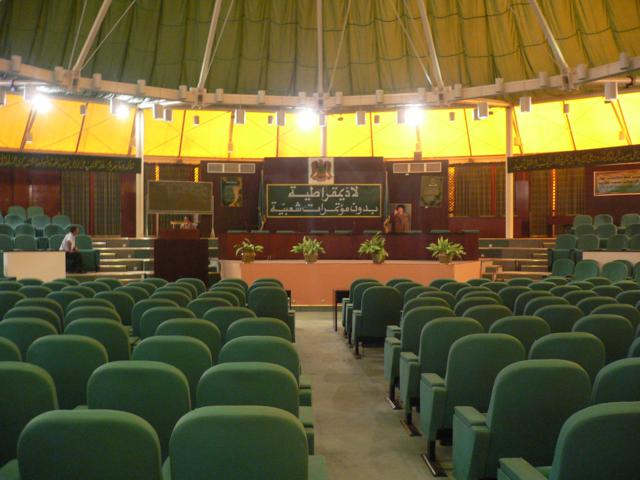
Inside the tent with Gaddafi?
 A Game Old Dame