Category Archives: Photography

Berlin 4 – the Cold War…September 2014

Berlin was the symbol of the Cold War – that shadow cast over relationships between the USSR and the west from the 1950s through to the final decade of last century. This was a period of international hostility which some believed could erupt into war at any time.

With its division into two Berlins and later the surreal isolation of the western sector of the city by the building of the Wall around it, Berlin became the figurehead of the times. Below I write around some of the photos and some of the impression I took away. I apologise for representing history so simplistically.

The start of it.

Berlin’s post-war problems began at Cecilienhof, the summer residence of Germany’s last Kaiser, which was to play host host to the Potsdam Conference in 1945. Discussions between Churchill, Truman and Stalin sealed the boundaries of Cold War Europe for the next half-century. They divided a conquered Germany into 4 sectors – French, American, English and Russian. But Berlin was the clincher; the western sector of the city was to be an island in what was to become East Germany.

Cecielhof where the Potsdam Conference settled the Soviet/Allied division of Europe and of Berlin. The red star of plantings was said to be a Stalinist exercise.

Cecilienhof where the Potsdam Conference settled the Soviet/Allied division of Europe and of Berlin. The red star of plantings was said to be a Stalinist exercise.

The first blow-up was in June 1948 when the Soviet in response to monetary crises, blocked all allied access and turned off electricity to the western sector of Berlin. For a year goods and services could only be delivered via the famous Berlin Airlift.

Over 200,000 flights (1 every 62 seconds) landed at Tempelhof airport delivering food and fuel. The blockade ended a year late and two separate states formally emerged with the communist German Democratic Republic (East Germany) declared on 7 October 1949.

The Wall

Three and a half million….perhaps one in 6 people, especially and young and the professionals, left the GDR in the first decade of the new “country”. Then one night in 1961 without warning the GDR administration rolled out barbed wire and tore up adjoining streets. Access to West Berlin was terminated.

Seventeen million people were cut off; 4,000 children were isolated overnight from their families; 65,000 couldn’t get to work the next day. That first morning when people saw what was happening some jumped into the west from windows of buildings adjoining the wall. Those windows were soon sealed.

That barbed wire was the beginning of the Wall or as they called it in the East, the Anti-Fascist Protection Rampart. The communist claim was that it was protecting their people from remaining Nazi elements. 

The Berlin Wall was more than 140 kilometres long. In June 1962, a second, parallel fence was built 100 metres behind it. Buildings between the fences were demolished The area between the walls was the Death Strip. This area was raked to show footprints; had spikes to stop vehicles and was in sight of the guard towers should someone dare try to escape.

A small section of the Wall at Potsdamer  Platz

A small section of the Wall at Potsdamer Platz

And a stretch of the original.

And a stretch of the original.

Checkpoints and Friedrichstrasse station

The most famous checkpoint and the only one allied personnel and other foreigners could pass through was Checkpoint Charlie on Friedrichstrasse, now a cheap tourist replica.

More interesting is the exhibition in the small museum behind Friedrichstrasse railway station on the site of the original border post. It reproduces the narrow security gates which Germans had to pass to move from one sector to the other by changing rail systems. It is said that 100 people died of heart attack with the anxiety caused at this crossing.
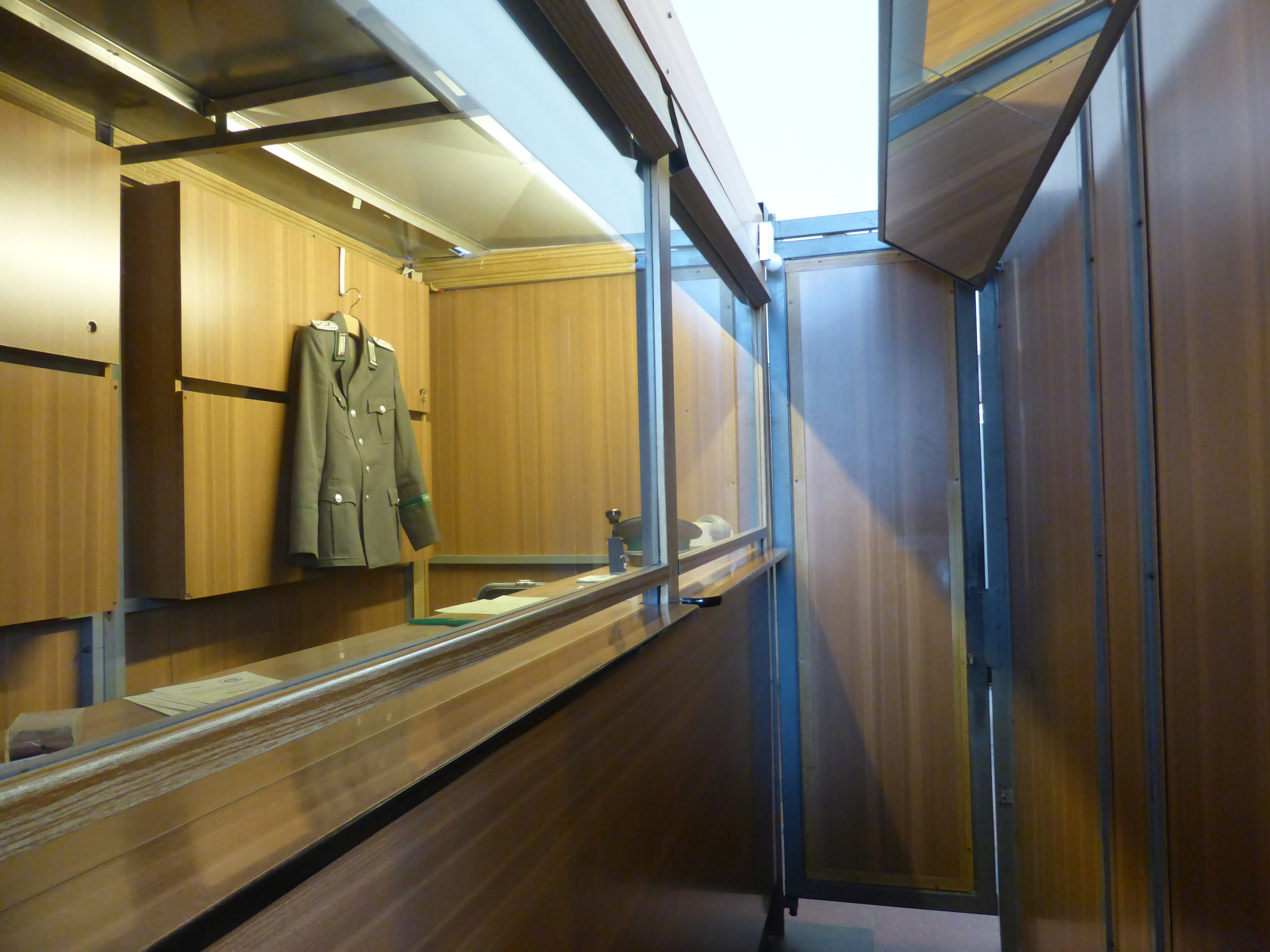
This was the GDR communists' nerve wracking  passageway from west to east.

This was the GDR communists’ nerve wracking passageway from west to east.

While the 9 border posts remained open, any deals (resonances here of Le Carre novels) between east and west did not occur there. Prisoner exchanges occurred at Potsdam in the centre of the now-called Bridge of Spies. To this day each half of the bridge is painted a different shade of green denoting the half owned by each Germany.

The Bridge of Spies at Potsdam

The Bridge of Spies at Potsdam

Escapes
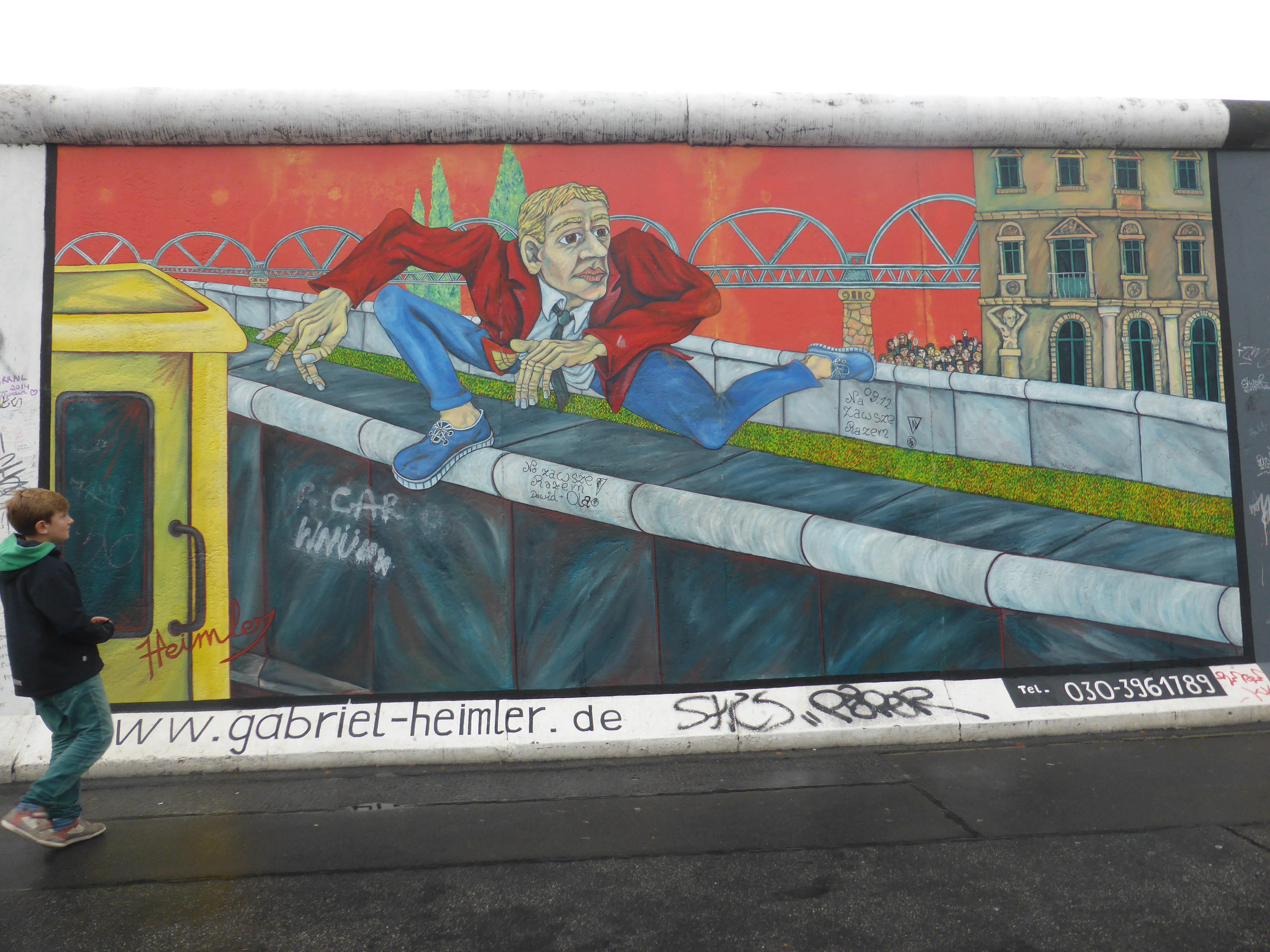
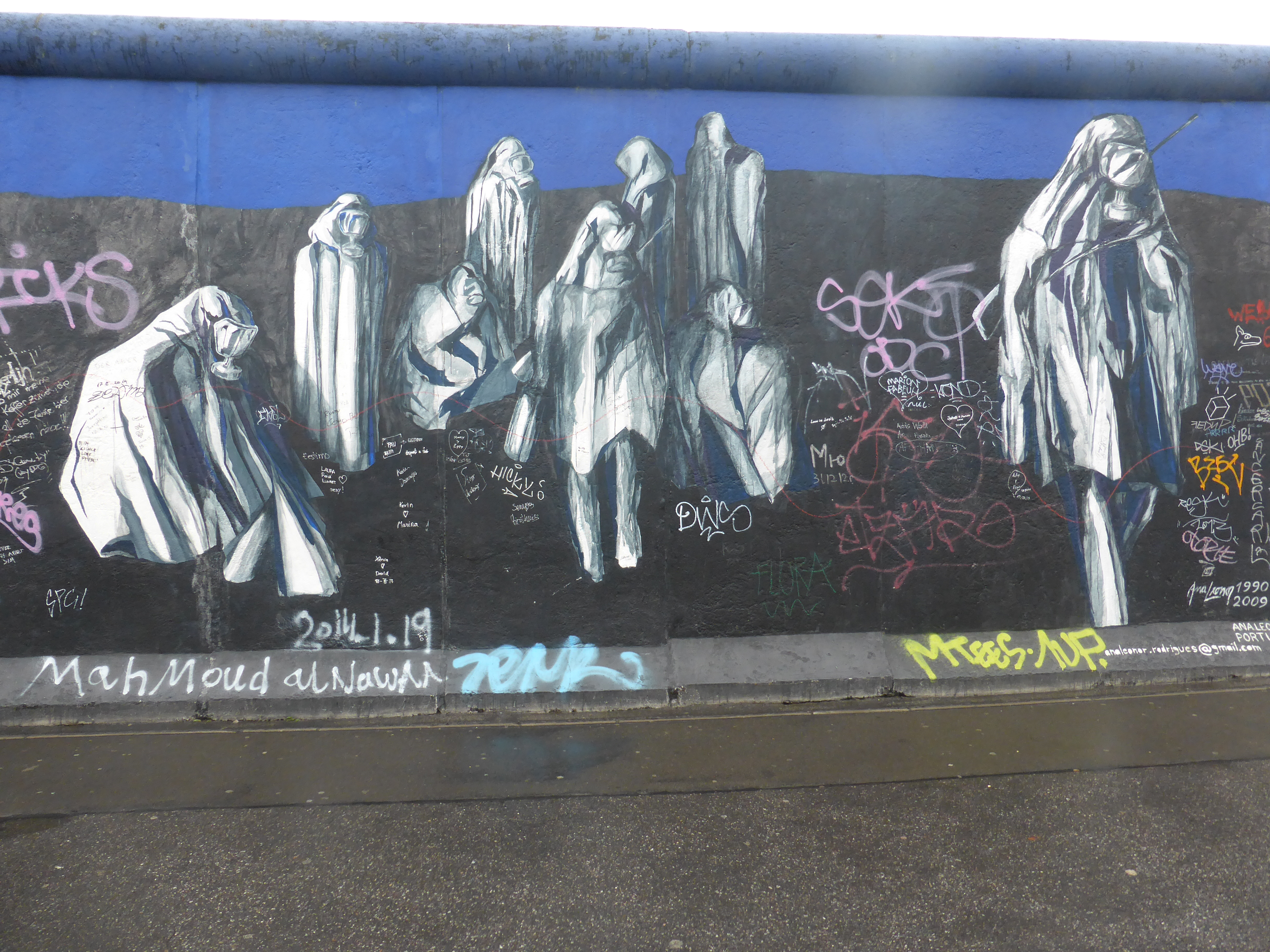
From a painting on the Wall

From a painting on the Wall

At the wall memorial (Berliner Mauer) along Bernauer Strasse there is a 70 metre section of the original wall. Along it is a wall of portraits of many of the estimated (as of now) 139 people who died trying to escape. Walk along to see how the Wall used to be; learn the stories and see the photos of those who died trying such as:

  • in 1961 Ida was the first woman who died trying to jump over the barbed wire from a window above;
  • in 1962 a 21 year old Peter was shot in the death strip;
  • there is the story of the young boy who was shot when he chased his ball into the wrong place and
  • who cannot be moved by the tragic love story of the young man you tried to swim underwater to his love but froze in the river?

Stories are also told of the successful attempts.

  • One engineer knew the tunnels under the river and through manipulating a series of complicated gates organised his family to safety.
  • Students from the West carved a tunnel under the wall to a safe house and rescued those wanting to leave. The story is that they talked a TV station into paying for the project in exchange for first pictures of emerging faces.
  • My favourite was the story of the train driver who instead of stopping at the rail barrier between east and west, loaded his train with family and drove straight through. Other unwitting passengers were taken for the ride but later returned to the east.
  • Finally, another love story……. of the man who hid his fiancée and her mother in the boot of a sports car low enough to careen under the checkpoint barrier as at the last moment, he ducked.
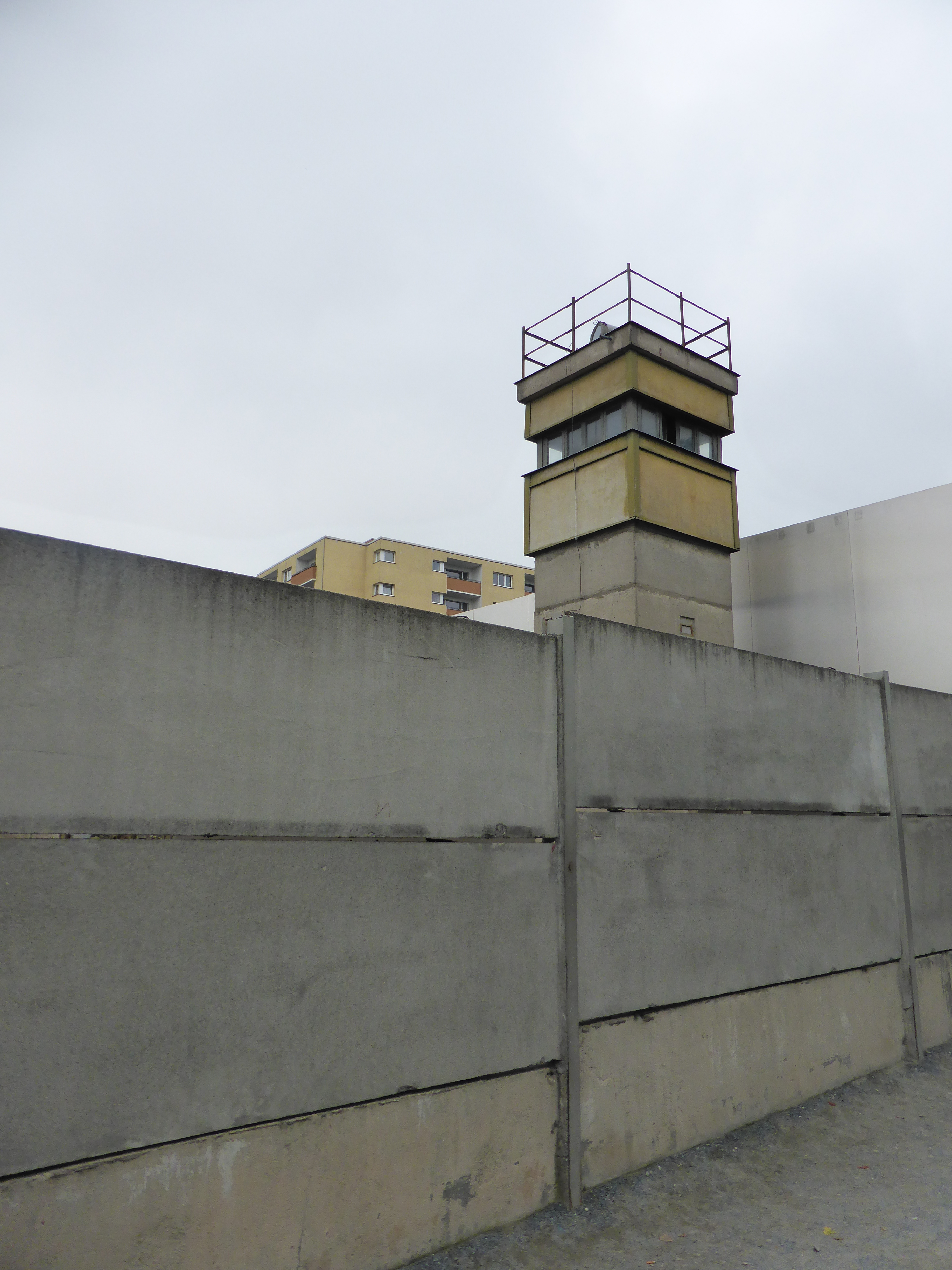
A remaining guard tower inside the concrete walls

A remaining guard tower inside the concrete walls

The number of attempted escapes is quoted as 5,000 and many of the successful ones were the young police on guard duty.

The Stasi and life in East Berlin

On the eastern side of the wall, the Stasi worked at controlling the citizens. It is said that the absence of CCTV in Berlin today is a reaction against the draconian surveillance methods of the past and the reason so much table tennis is played in Berlin was that in the East this was the way people could interrupt any microphone surveillance.

Shredded files and microfiche found in Stasi HQ

Shredded files and microfiche found in Stasi HQ

Nowhere is the insidious story of the Stasi so well told as in “Stasiland” by Anna Funder.

Fifteen thousand people worked in the Stasi HQ which now houses a small museum again with stories of those whose lives were affected. There was one spy, often local “informers”, for every 7 citizens. When the Wall came down citizens were able to access the 111 miles of files and seek out their own story. Many found that neighbours and even relatives had informed on them such was the pervasive environment of threats and fear.

If you have 15,000 spied you  must have a lot of stamps!

If you have 15,000 spied you must have a lot of stamps!

Part of the east Berlin Stasi offices

Part of the east Berlin Stasi offices

This whimsically display in the Stasi museum was probably displaying the various chair seats left by the bureaucrats.

This whimsically display in the Stasi museum was probably displaying the various chair seats left by the bureaucrats.

In Nuremburg the “puzzle women” are working still at piecing the shredded files together.

Opposition to the Wall in the East.

The German people continued to show their scorn for the bureaucratic, moralistic and spying communist regime. At the minor end of the spectrum it was the symbolic growth of  nude sunbathing.

Here at the park in potsdam nude sunbathing continues. Anecdotally it is said to have grown as a protest against the rigours of the communist era.

Here at the park in Potsdam nude sunbathing continues. Anecdotally it is said to have grown as a protest against the rigours of the communist era.

More seriously….in the early days, overt protests happened. On June 16 1953 there was a strike by workers building new housing near Frankfurter Tor. On June 17 1053 there was a small revolution when 40,000 people marched to the Brandenburg Gate chanting: “We want food, we want bread; we will kill the Russian dead”. Troops opened fire. Later public meetings of more than 6 people were forbidden.

The workers strike in 1954 was by workers building the housing here at Frankfurter Tor.

The workers strike in 1953 was by workers building the housing here at Frankfurter Tor.

In the ‘80s Gorbachev in Russia began his policies of Glasnost (openness) and Perestroika (reform). The border with Hungary was opened and thousand of GDR citizens left that way. In East Germany small gatherings often in churches were signs of a liberation movement gaining confidence. In 1989 an East German official, wrongly briefed, said in a TV interview that relaxed border restriction in Berlin would come into effect immediately. An avalanche of people immediately descended on the Wall and there was no holding them back.

The Wall today.

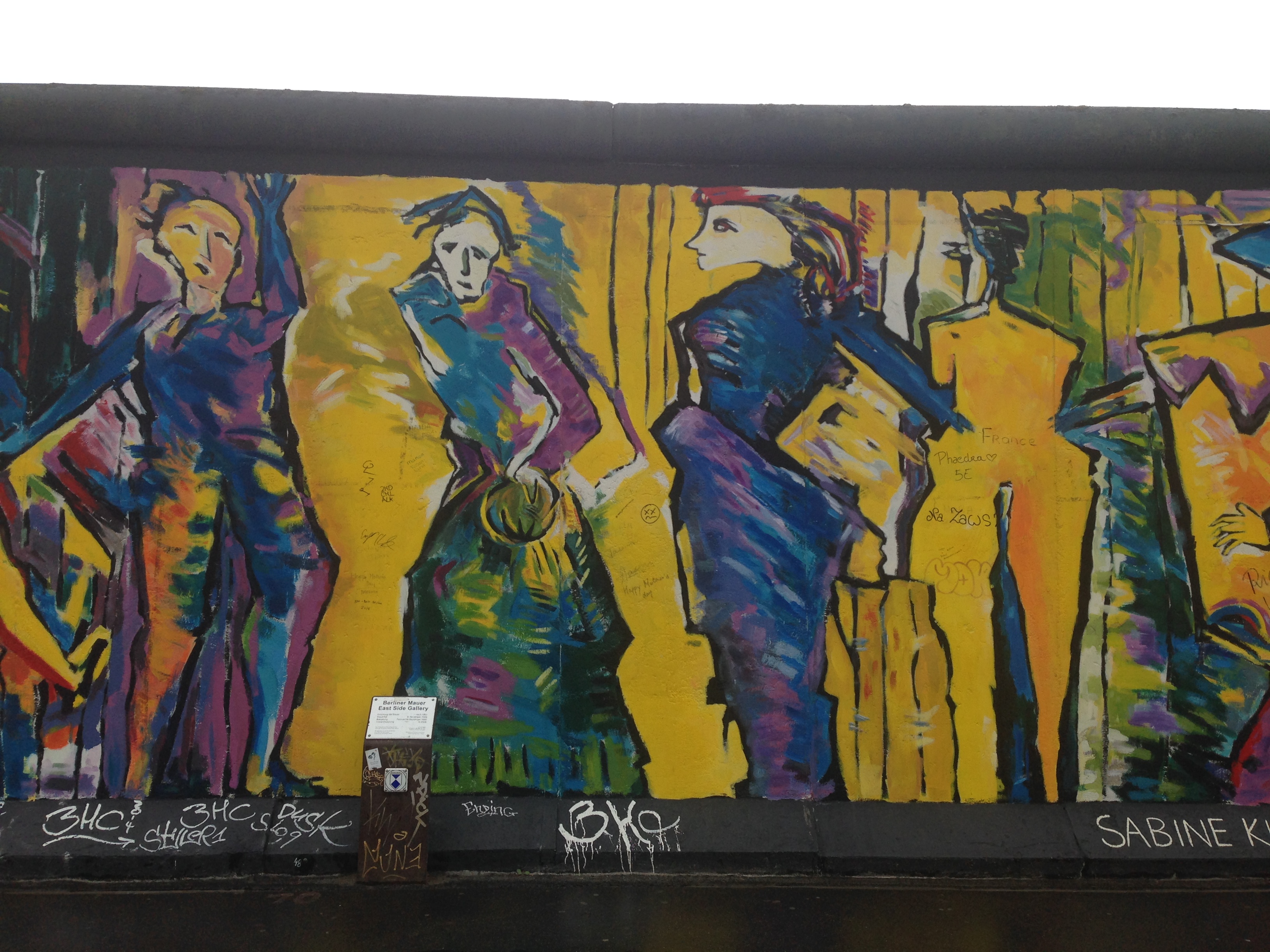
There are a few remnants of the Wall at Potsdamer Platz which has been totally redeveloped since it was totally demolished through bombing and then by demolition for the Wall. The Berliner Mauer memorial along Bernauer Strasse is a strong tribute to the hardship of those times but unification is really celebrated in the East Side Gallery where artists painted over the remains of the concrete barriers. Sadly graffiti has damaged much of it.

The most popular painting of all -Leonid Brezhnev and Erich Honecker kissing as painted by Dmitri Vrubel.

The most popular Wall painting of all -Leonid Brezhnev and Erich Honecker kissing as painted by Dmitri Vrubel.

Below is a small sample of the other pictures I could not resist

2014-09-20 19.49.42

2014-09-20 20.18.55

2014-09-20 20.23.02

2014-09-20 11.53.36

2014-09-20 11.45.56

This November marks the 25th anniversary of the Wall coming down and Berlin will commemorate it with a light installation set up along the former path of the Wall as a “symbol of hope for a world without walls”. Made of thousands of illuminated, helium-filled balloons, a border made of light will run for 12 kilometres across the city centre for a weekend. At 5 points balloons will be released to the sky to commemorate the opening of the Wall.
Leave a comment

Filed under Photography, Travel

Berlin 3 – remnants of Hitler …. September 2014

On rereading this memoir I am surprised at how, unlike most things I write it is free of opinion, explicit or implied. It may be that there is so much factual material I want to record or it may be that the subject is so complex and large that I have refrained from playing superficially at the edges.

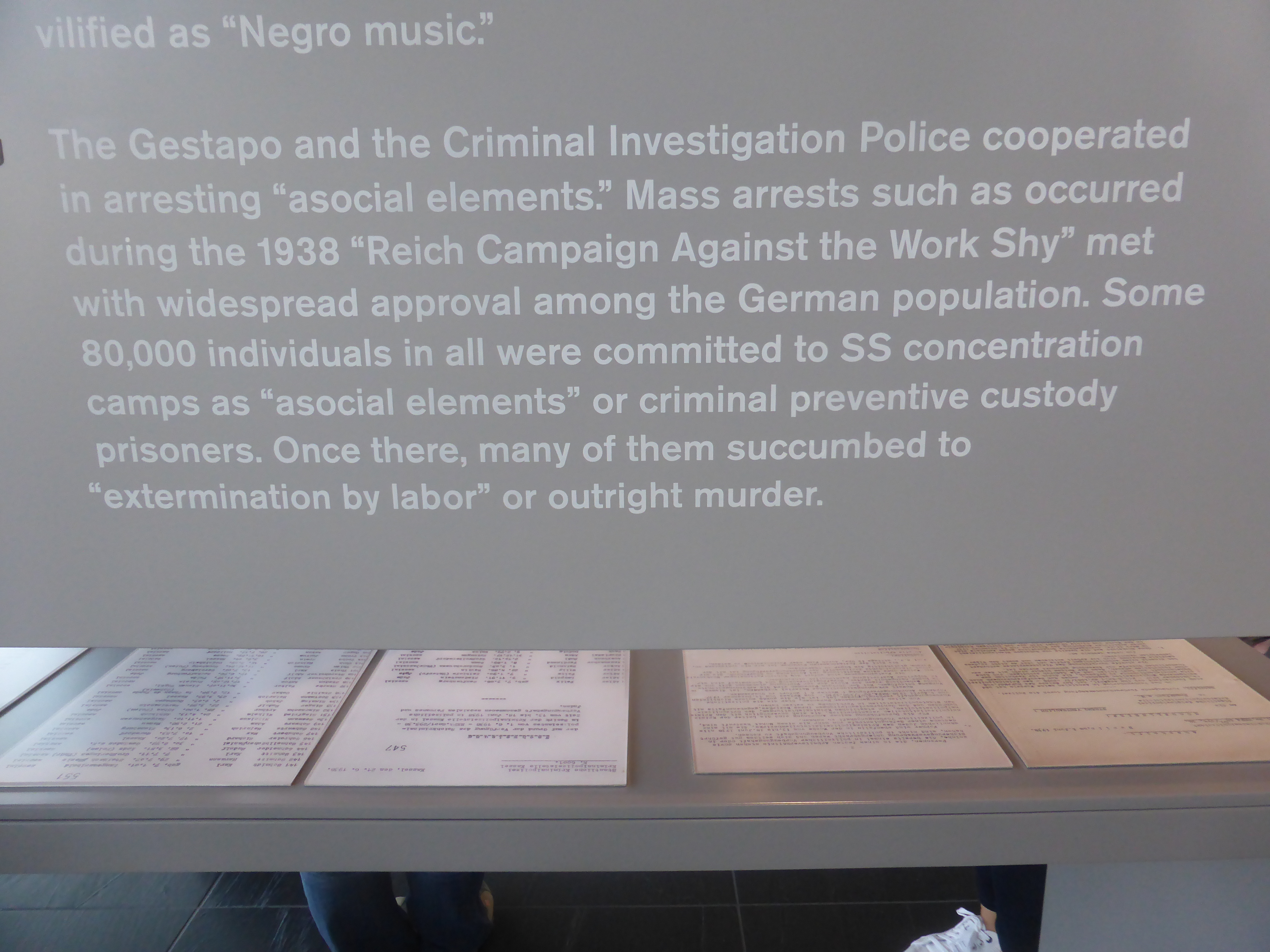
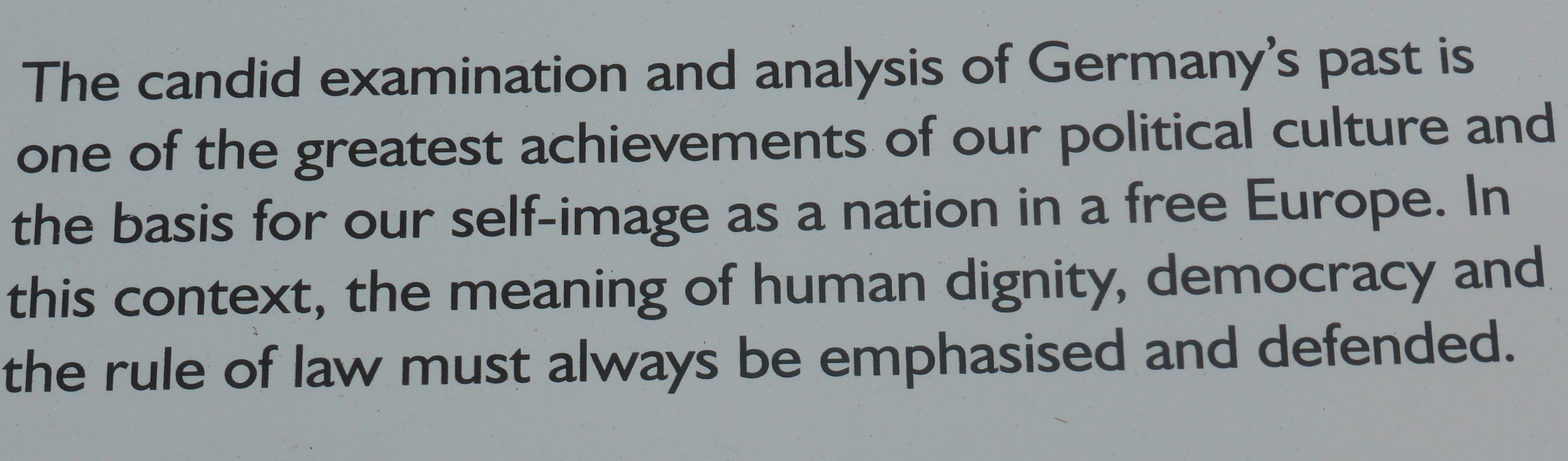
This panel in the Topography of Terror provides the context.

This panel in the Topography of Terror provides the context.

*************************************************************************** There is nothing left of the grand architectural vision Adolph Hitler and Albert Speer designed for their Germania/our Berlin except some lampposts along Strasse des 17 Juni. The ghost of Hitler himself is tightly lassoed. The very public icons of remembrance and reconciliation are the museums about the evil that was initiated by the Third Reich and the touching homages to the victims. Some of the shadows of the city’s history are to be found in memorials and museums I visited. At all the places below as at others, I was constantly impressed by the number of visitors and the quiet respect they showed for the evil acts to which they were bearing witness.

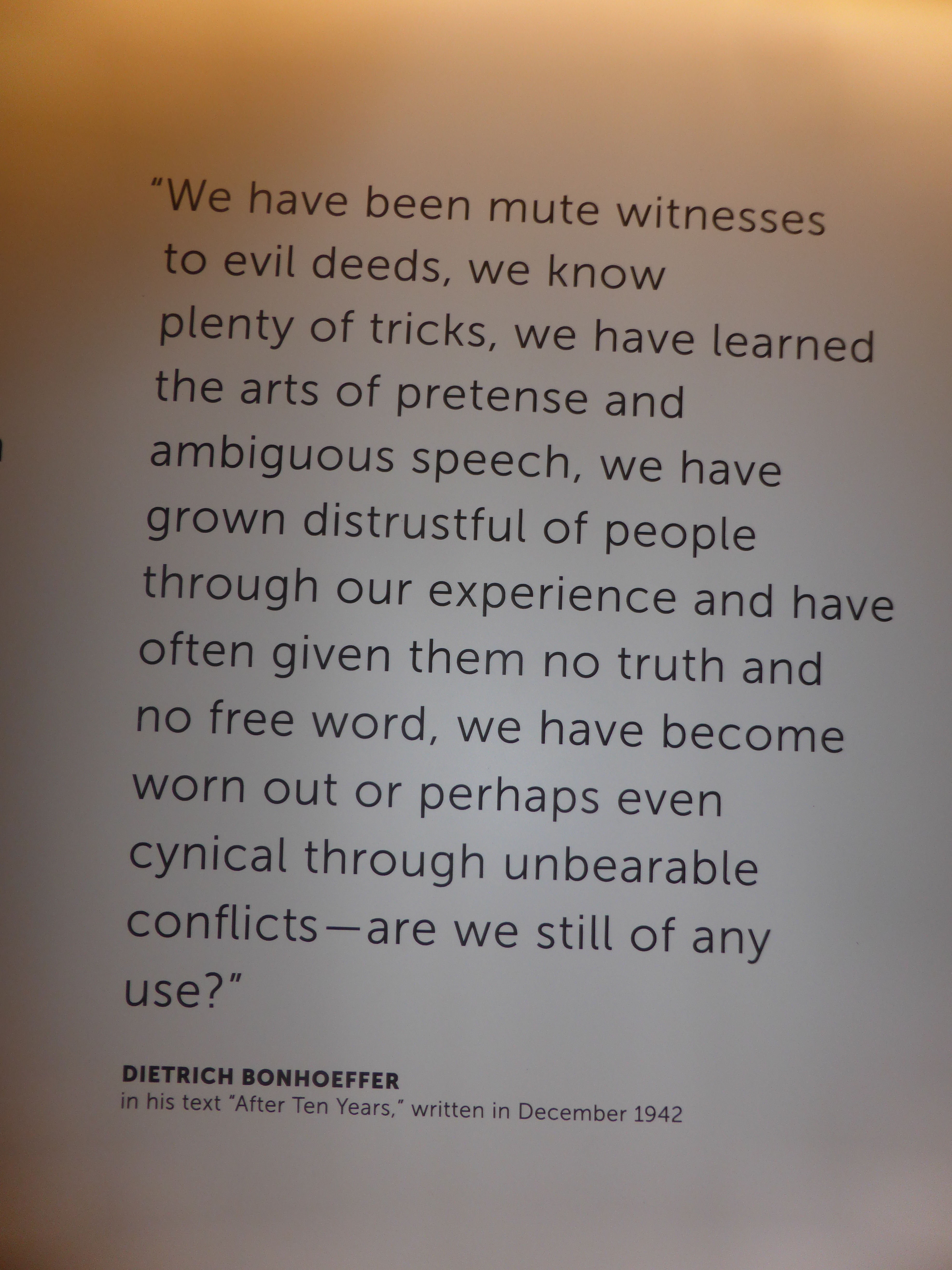
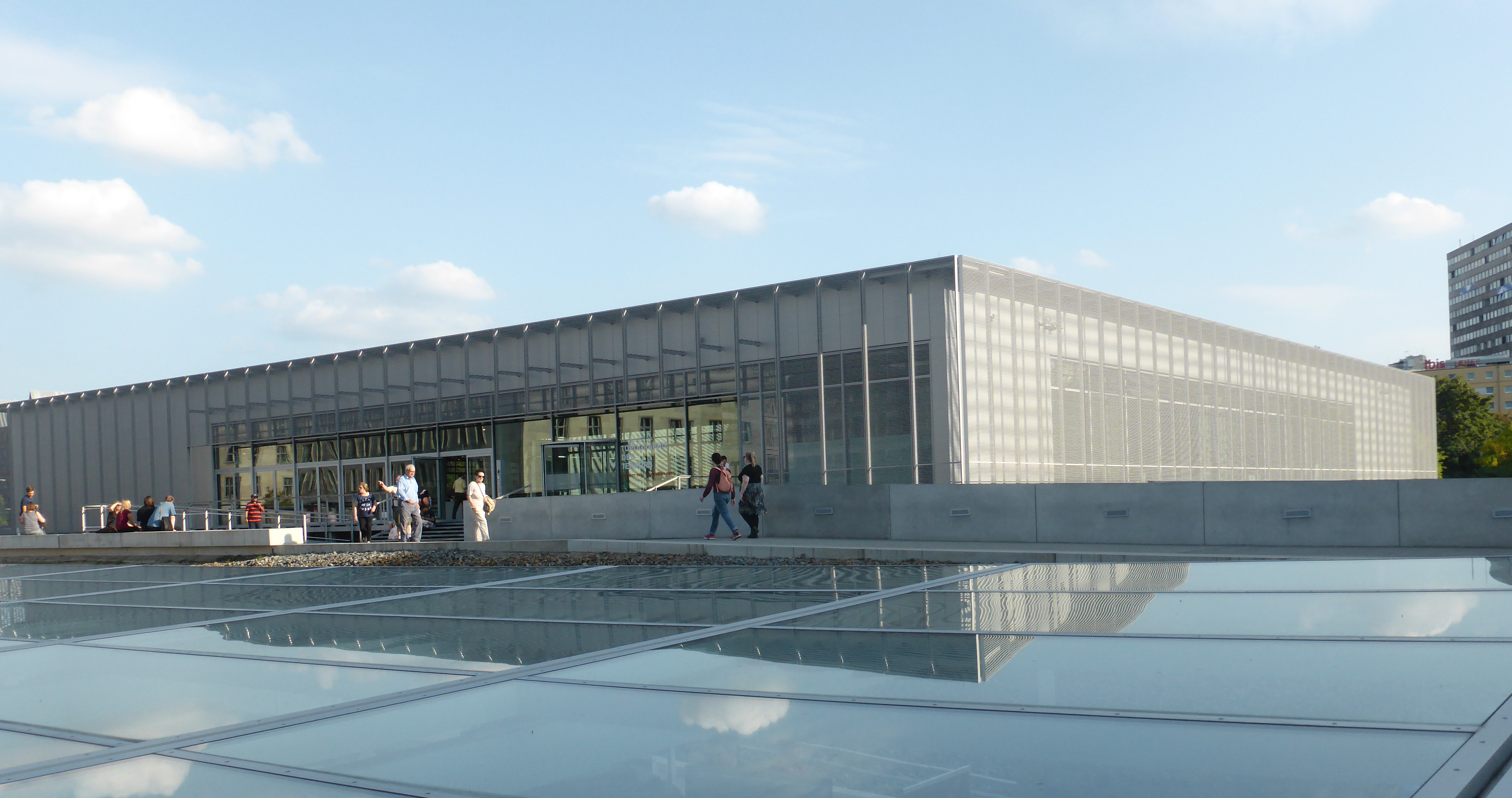
  • The Topography of Terrors – a museum built on the site of the old Gestapo and SS headquarters, which details both the perpetrators and the victims of their crimes. A visit here reduced me to tears. Not only are there the stories of individuals from all the persecuted minority groups but a picture of SS men and women enjoying Xmas in their party hats is a terrible counter-point. Much of the story is told in the ever present stark cardboard hangings
The Topography of Terrors on the site of the old Gestapo and SS HQ

The Topography of Terrors on the site of the old Gestapo and SS HQ

Former female guards in the first trail before a British military court of 45 of the SS camp personnel and Kapos from Bergen-Bergen camp.

Former female guards in the first trail before a British military court of 45 of the SS camp personnel and Kapos from Bergen-Bergen camp.

While the world knows that jews, homosexuals, and Jehovah's Witnesses were rounded by and sent to the camps, we are not so aware that the "work shy" also faced that fate.

While the world knows that Jews, homosexuals, the mentally ill and Jehovah’s Witnesses were rounded up and sent to the camps, we are not so aware that the “work shy” also faced that fate.

  • The Jewish Museum . This silvery zinc building details the history of Jewish people from Roman times until today and explores cultural and political themes often in minute detail.
One of the splendid architectural achievements of modern Berlin.

One of the splendid architectural achievements of modern Berlin.

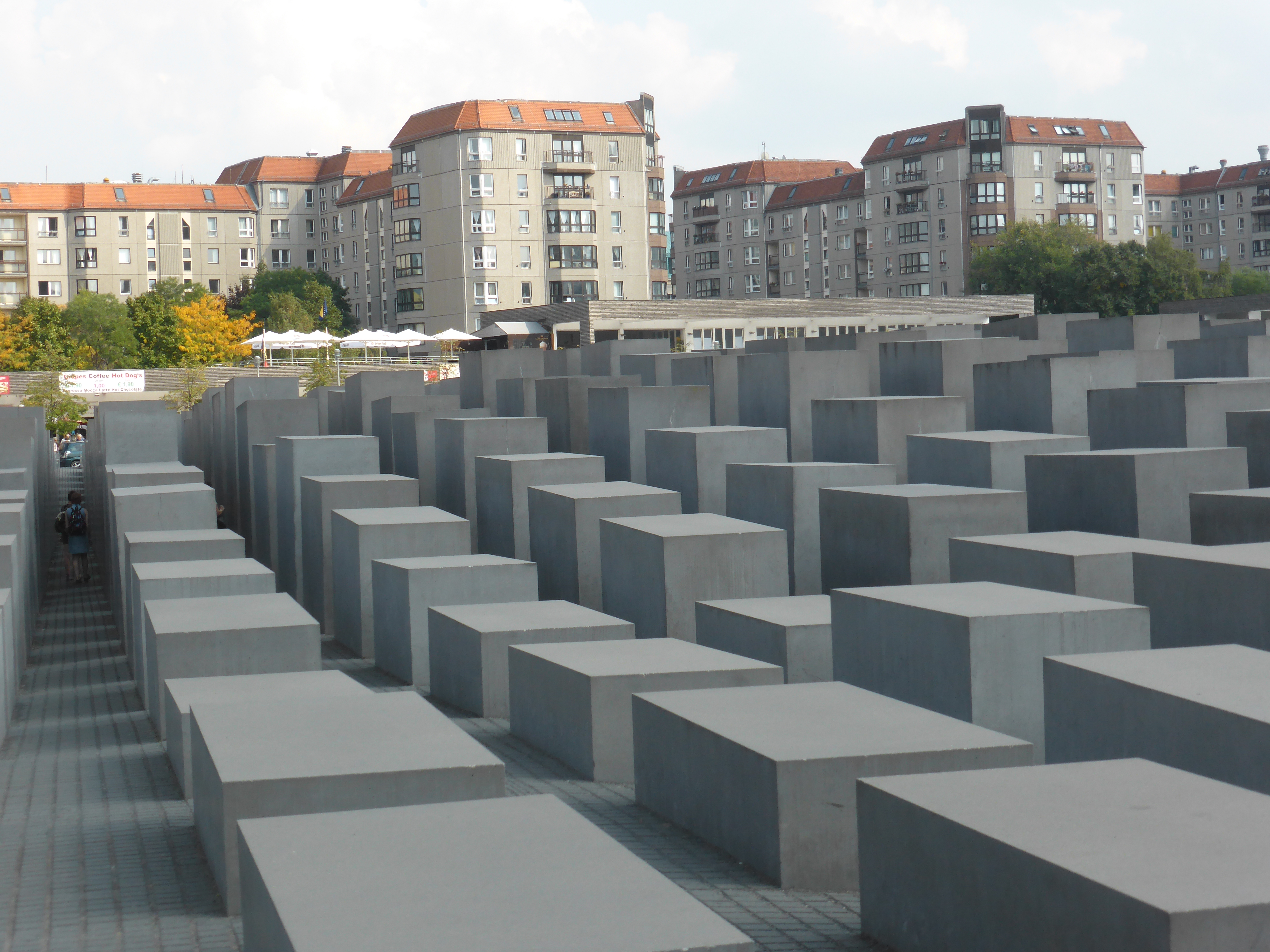
  • The Memorial to the Murdered Jews of Europe. It takes a whole city block, 2711 stelae of different heights; land slightly undulating; sombre, yet at one stage I saw young children jumping from one to the other and thought  that maybe as a sign of their innocence it was OK. In one of the rooms under the memorial a brief biography about each of  the 6 million murdered, is being read. It is said that it takes 6 years to complete.
People walk silently through the memorialMost stelae tower above head height.

People walk silently through the memorial. Most stelae tower above head height.

A panel in the Topography of Terrors speaks of the seeming indifference of “ordinary” Germans to the treatment of the Jews, It speaks about  how the “mistakes” or “excesses” in the Nazi’s treatment of Jews  were seen as marginal in the context of the great political ‘events’ and the improvement in the social and economic lot of most citizens. These latter disposed people to view Hitler and his crowd’s treatment of the Jews with indifference. But there were exceptions……….

  • The Workshop of the Blind in Hackescher Hof was where Otto Weidt employed  a number of Jewish people in his brush making business and then hid them for as long as possible from the Nazis.
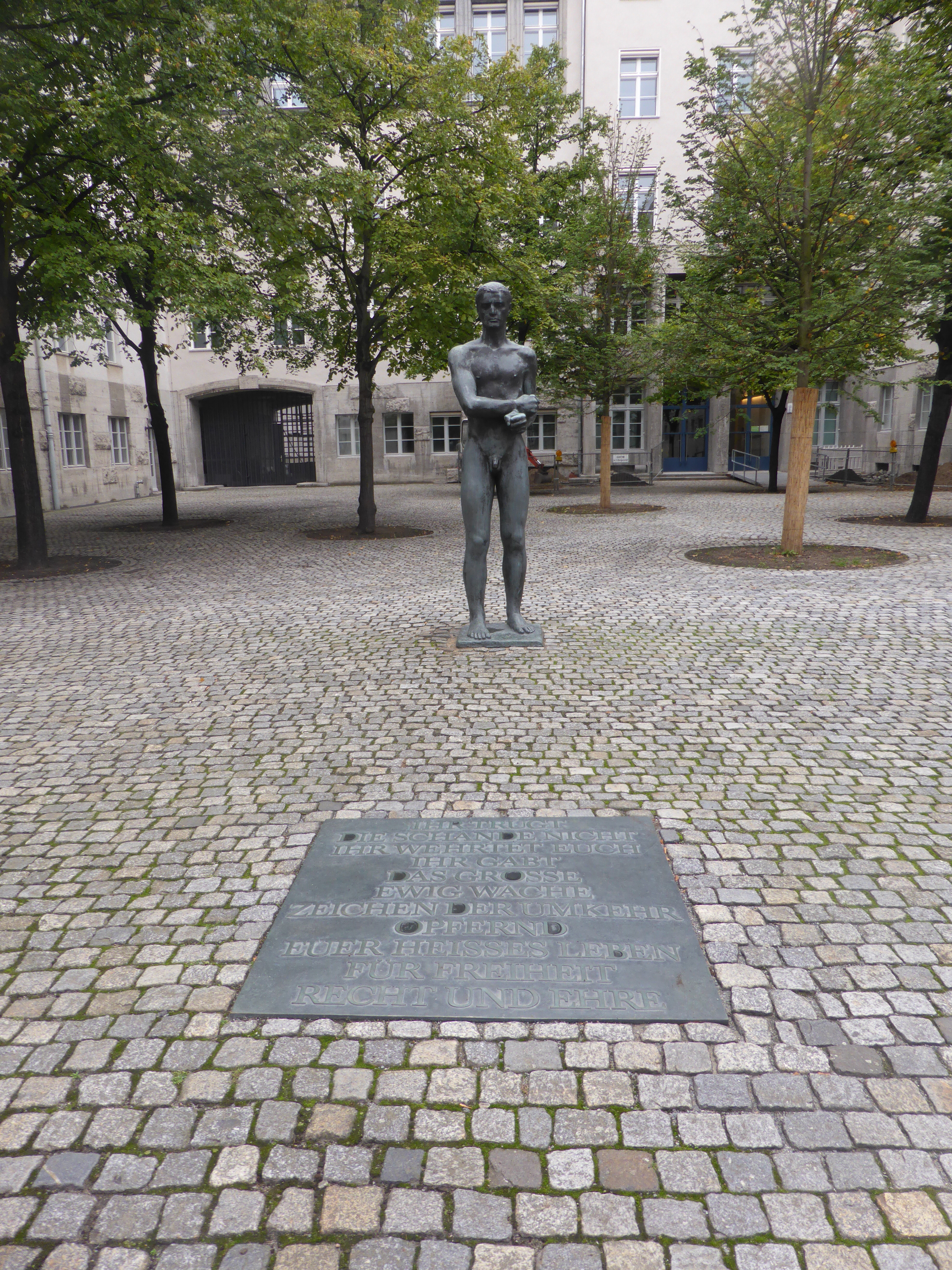
  • The German Resistance Museum– Again, we have the simple stories on cardboard of those individuals who did their best to stand up to the Nazis . In the courtyard is a tribute sculpture to the military men who tried unsuccessfully in the Valkyrie operation to bring about Hitler’s downfall.
The memorial on the sport where the military men charged with the assassination plot against Hilter, were shot.

The memorial on the spot where the military men charged with the assassination plot against Hilter, were shot.

A small sign in this museum to those who tried to stand against the Nazis.

A small sign in this museum to those who tried to stand against the Nazis.

Goring’s grand old Luftwaffe HQ from where he directed the Battle of Britain, inter alia has been put to a more practical use. It is now the department of finance managing the national tax.

Once Goring's Luftwafee HQ, now tax is collected here and during the Cold war it was incorporated into the Wall.

Once Goring’s Luftwafee HQ, now tax is collected here and during the Cold war it was incorporated into the Wall.

Around town there are other smaller remnants of the Third Reich:

  • A small memorial to students who tried to start an anti Nazi demonstration stands near the Lustgarten
  • Small brass plaques are embedded in the paving in the old Jewish quarter with the names of the Jews who were taken away. In 1933, the Berlin Jewish population was 163,000 or 0.77% of the city’s population.

    Bronze plaques in the cobble stones commemorating holocaust victims who lived nearby

    Bronze plaques in the cobble stones commemorating holocaust victims who lived nearby

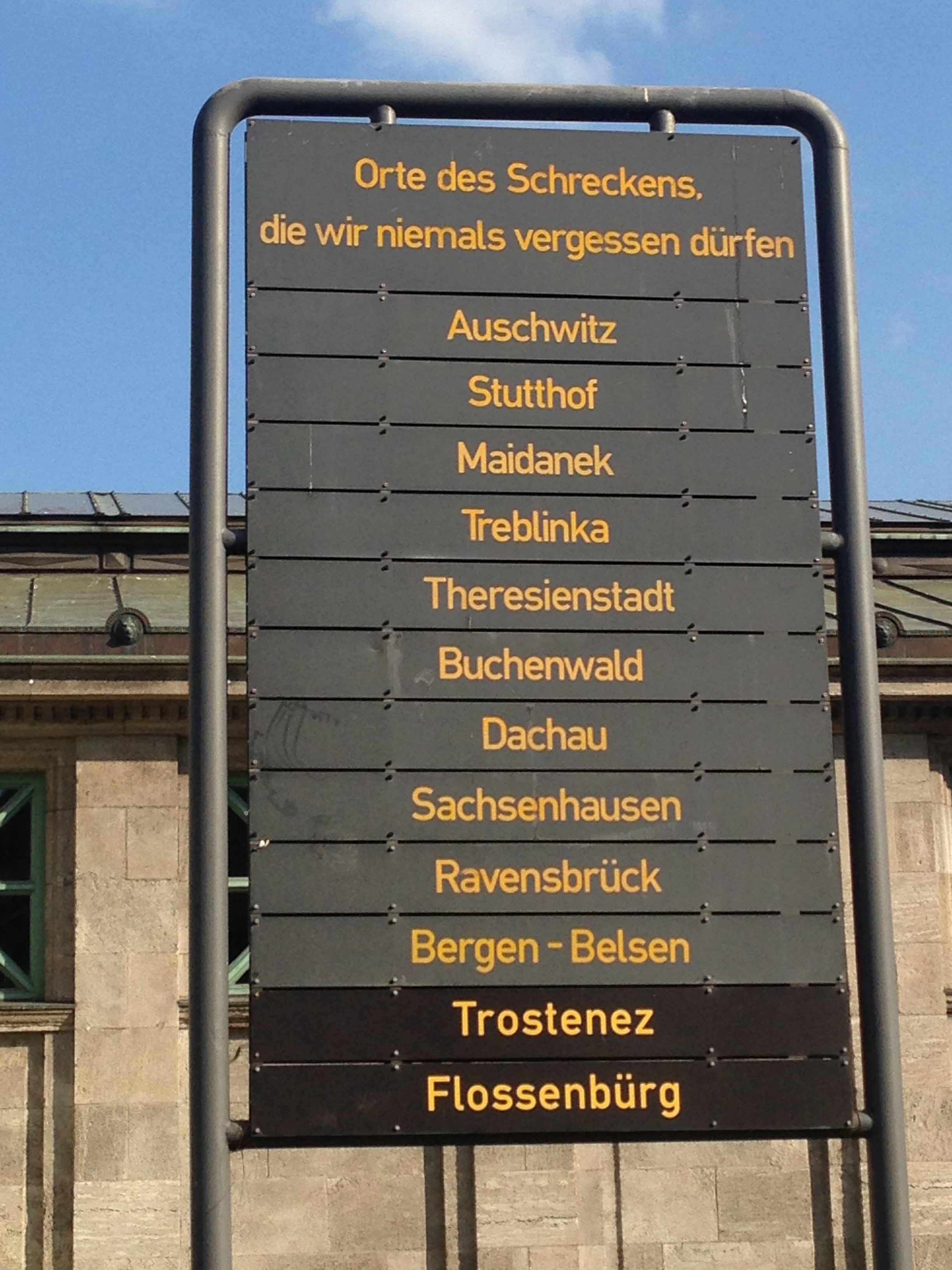
  • Outside an Wittenbergplatz railway station is a sign that lists the names of all the concentration camps where Jews departing from this central point were taken
Yet another simple, stark reminder in a central area.

Yet another simple, stark reminder in a central area.

  • In Bebelplatz, opposite the grand library of Humbolt university a glass covered view of underground empty bookcases marks the spot where Nazi students burnt 20,000 books. Goebbels addressed the crowd of 40,000 before the fire.
Near this spot in front of the Opera renovation and opposite the university library, students fired up by the Nazis burnt books by Brecht, Mann and Marx. Under a glass pane  empty bookshelves are the reminder.

Near this spot in front of the Opera renovation and opposite the university library, students fired up by the Nazis burnt books by Brecht, Mann and Marx. Under a glass pane empty bookshelves are the reminder.

  • The broken spire of the bombed memorial church near the Zoo station and near Kurfurstendamm (the famed centre of West berlin during the Cold War) stands as a reminder of the Allied bombing.
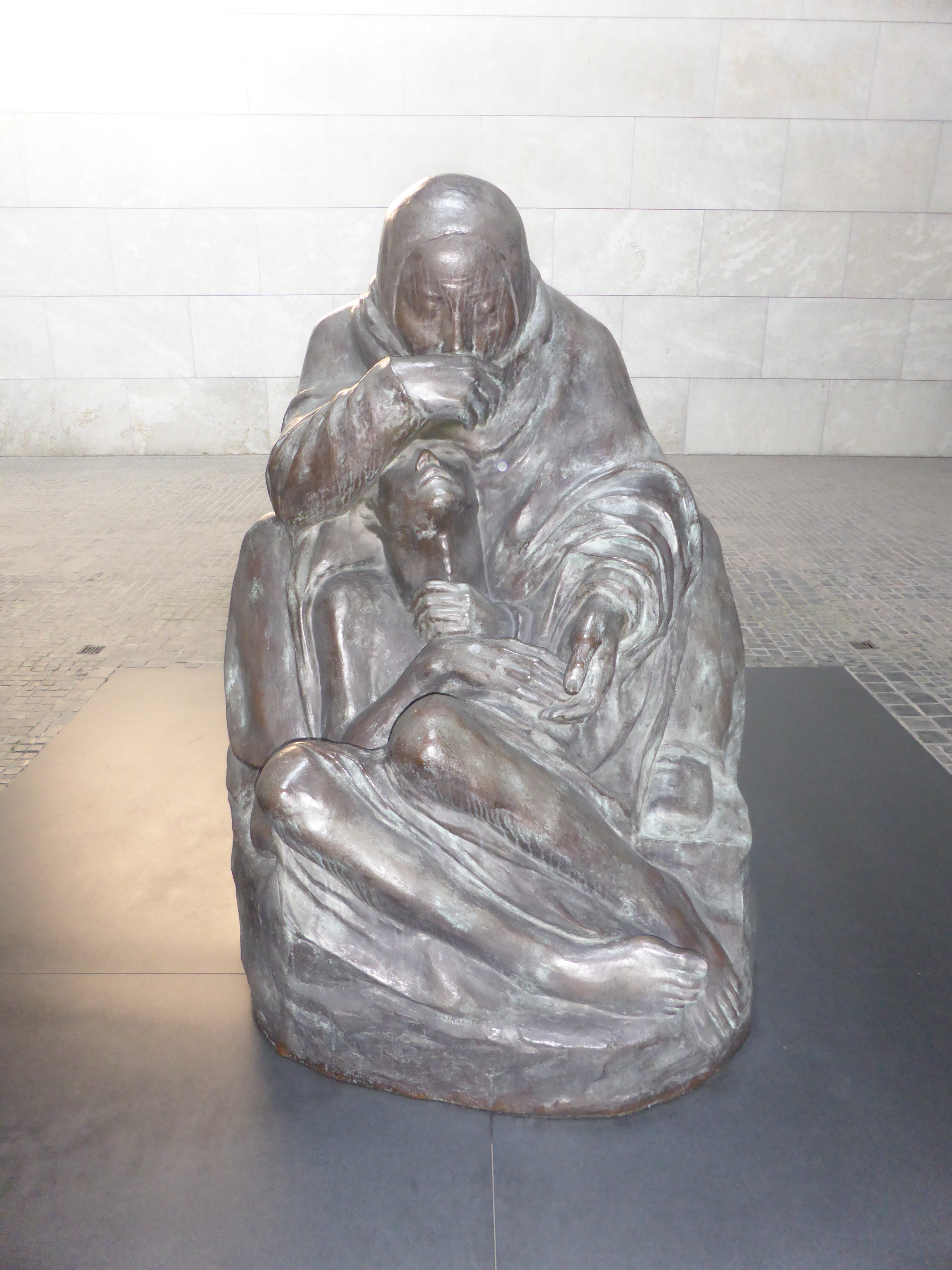
  • Schinkel designed the neo Classical peace memorial on Unter den Linden for the Prussian court. The Nazis used it as a Hall of Fame for Heroes and now it is a memorial to the Victims of Fascism and Militarism. It houses only a pieta sculpture by the famed Kathy Kollwitz.
This is the pieta which sits in the peace memorial on Unter den Linden.

This is the pieta which sits in the peace memorial on Unter den Linden.

About 30 minutes outside Berlin on the edge of the  charming German village of Oranienburg is the former Sachsenhausen Concentration Camp. I went there with a guided group. Nigel the guide was wonderfully knowledgeable.

The gates of the camp bear the slogan "work makes (you) free".

The gates of the camp bear the slogan “work makes (you) free”.

How in a simple travel aide memoire can one write about a place where such horrors occurred? Although nearly 30 years ago I visited Dachau, it perhaps wasn’t with the increased sensitivity of my now age.Suffice to say, at Sachsenhausen I was flattened and tearful. Among the prisoners, there was a “hierarchy”: at the top, criminals (rapists, murderers), then Communists (red triangles), then homosexuals (pink triangles), Jehovah’s Witnesses (purple triangles), and Jews (yellow triangles). This was the HQ of all the camps where many of the worst Commandants were trained for the 2000 other camps across 18 countries. Here industries included making bricks for Speer’s version of the new Germania, sorting glasses and teeth from other camps and testing army boots by excrusiatingly running all day until you dropped to test every possible circumstance. Women were prostituted and if pregnant, their babies killed. Medical experimentation occurred. Over 200,00 enemies of the Reich were imprisoned here from 1936; in 1941, 10,000 Soviet prisioners were brought here to be killed and the Soviets kept it operating for the first 10 years of their occupation when 12,000 people died here. At the end of the war  in the death marches when prisoners were taken into the countryside by the failing regime, 35,000 were taken from Sachsenhausen and only 6000 survived. In one of those sad ironies, the adjoining training camps used by the Third Reich are now the Berlin police training camps.

The memorial at Schachenhausen

The memorial at Sachsenhausen

My final Nazi era memory is of the carpark and adjoining road near the form administrative offices of the Reich. This very bland and almost unkempt precinct now covers the bunker where Hitler, Goebbels and their loved ones died. There is no sign, no acknowledgement. The “Feuhrer’s” personal memory has been fittingly supressed by the ordinariness of the place.

Hitler's bunker was under  a carpark here - no sign, no acknowledgement. Fitting.

Hitler’s bunker was under a carpark here – no sign, no acknowledgement. Fitting.

1 Comment

Filed under Photography, Travel

Berlin 2 – unscrambling the city….September 2014

Berlin leaves my head a kaleidoscope of dizzying experiences and thoughts . For some reason I think of filo pastry – fine layer upon layer of history, of human folly and of cultural aspiration. The chronological layers are clear yet their impact on the urban fabric is like a spoon has stirred the strudel’s  cherry filling. Within one square kilometre around Unter den Linden are major historical footprints:

  • the Prussian grand precinct with the Humboldt University buildings and State Library, Museum Island and the old palace now being rebuilt;
  • the old Third Reich Luftwaffe building ironically now the tax office;
  • the early Prussian Brandenburg Gate in the  Pariser Platz,  framed by the now rebuilt Deutsche Bank, the Adlon Hotel and the American Embassy;
  • Frederick the Great’s palace, Sanssouci  at Potsdam
  • the new glass architecture of the parliamentary precinct.

Prussian memories

Schloss Sanssouci at Potsdam

Schloss Sanssouci at Potsdam

And its folly

And its folly

Altes Museum, one of the many neo Classical buildings designed by KF Schinkler, used to be draped in Nazi flags when  Hitler spoke to the crowds in the Lustgarten from here.

Altes Museum, one of the many neo Classical buildings designed by KF Schinkler, used to be draped in Nazi flags when Hitler spoke to the crowds in the Lustgarten from here.

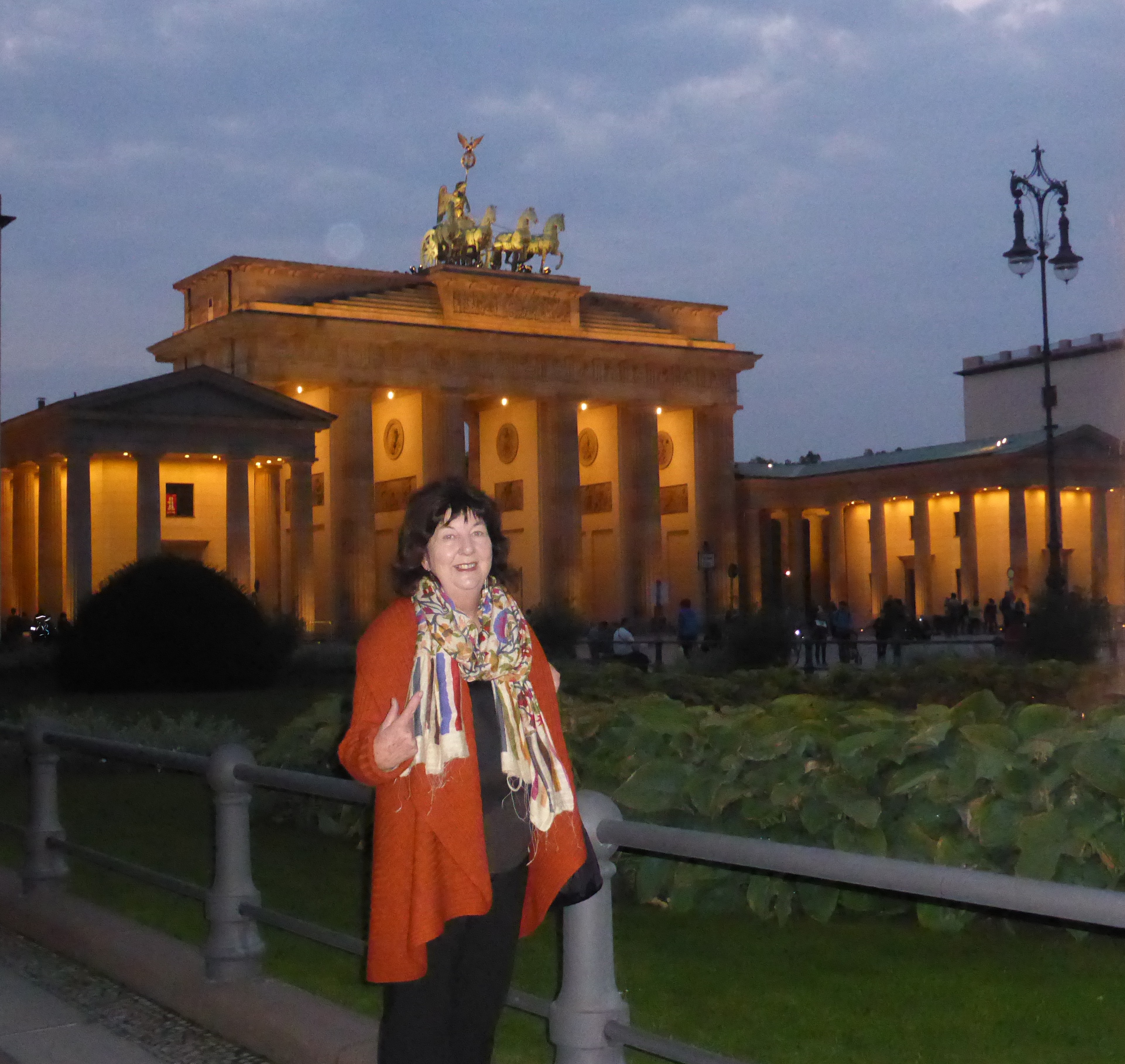
How could you go to Berlin and not have your photo taken at twilight by the Brandenburg gate?

How could you go to Berlin and not have your photo taken at twilight by the Brandenburg Gate?

The city surface is like a marbled cake  – here some Prussian grandeur, there some remnant communist building not the least of which is their showpiece TV Tower on Alexanderplatz, over there a monument to the murdered Jews of the holocaust and finally some standout modern architecture. And most of it , including the restoration of the Prussian palaces,  built in the last 70 years since 70% of the city was bombed.

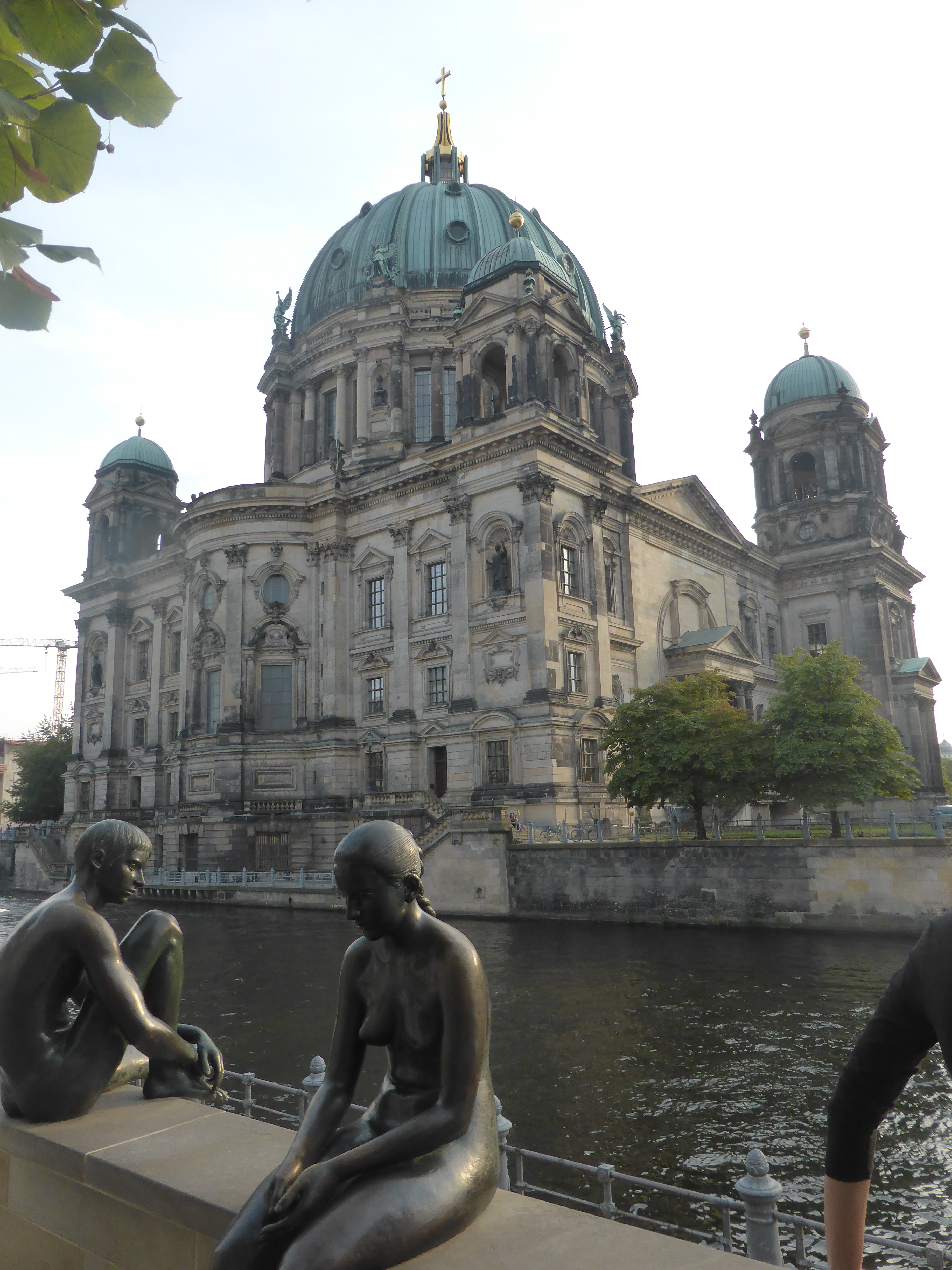
Berliner Dom, the royal court cathedral  built in 1905 stands by the River Spree,

Berliner Dom, the royal court cathedral built in 1905 stands by the River Spree,

Scattered throughout are the dozens of museum and galleries to every aspect of past and present life.

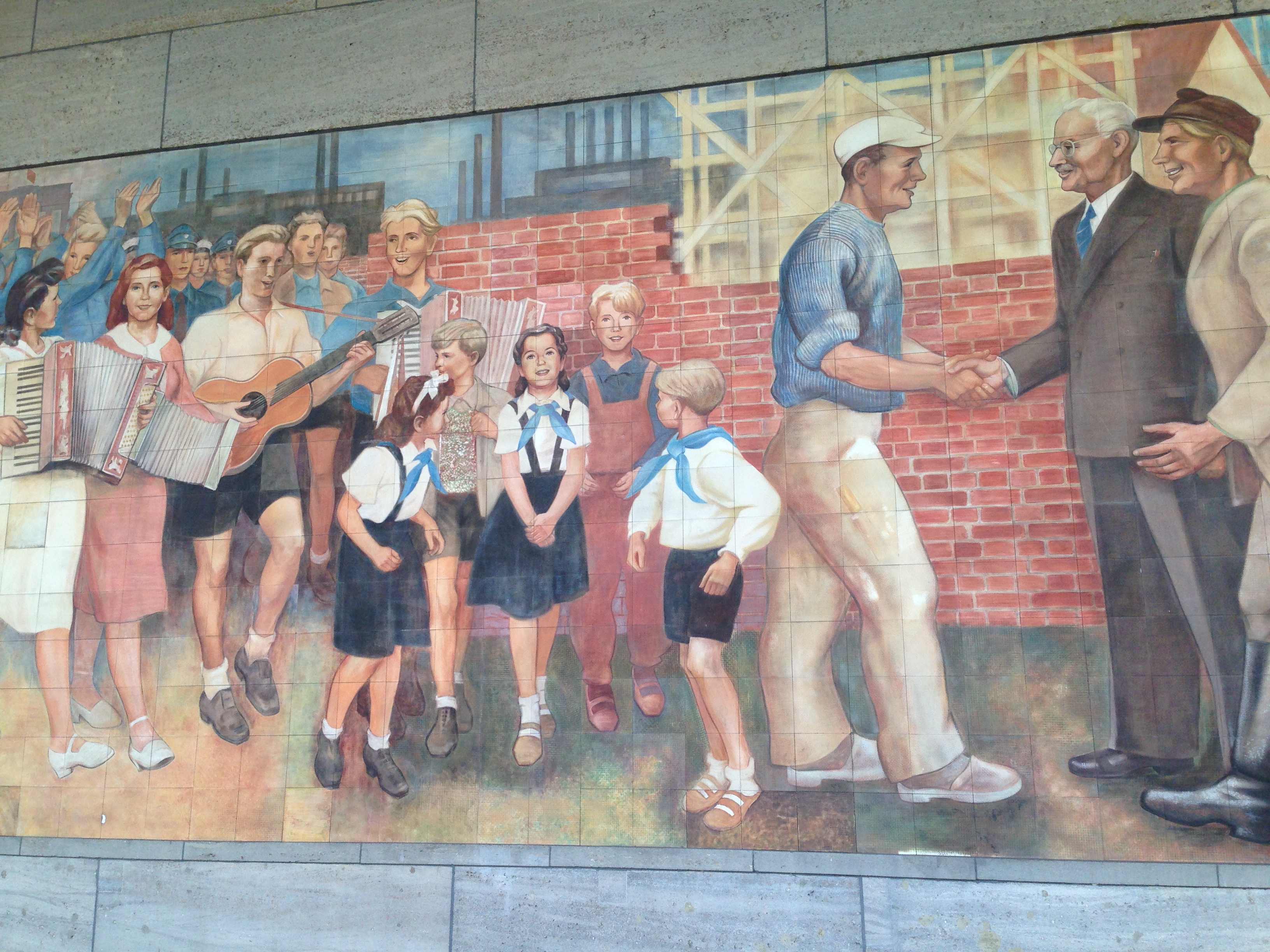
Part of a large communist era mural adorning the old Luftwaffe building.

Part of a large communist era mural adorning the old Luftwaffe building.

Part of the Sony Centre at Potsdamer Platz. The Wall ran right though here and destruction was rife; it left a blank canvas for some great modern architecture and a wonderful arts precinct.

Part of the Sony Centre at Potsdamer Platz. The Wall ran right through here and destruction was rife; it left a blank canvas for some great modern architecture and a wonderful arts precinct.

This is a city central to World War 2, the epicentre of the Cold War and now capital of a country leading much of the world in free education, renewable energy and support to other nations. The city in its many museums and memorials resonates with thousands of showcased stories (often retold on large cardboard placards) about both the perpetrators and the victims of its history. This is reconciliation on a large public scale.

Here taking up a city block are theField of Stelae or the Holocaust Memorial.

Here taking up a city block are the  labyrinth Field of Stelae or the Holocaust Memorial. Underneath in one room short biographies of the 6 million Jewish people killed in Hitler’s war are read out. To read them all takes 7 years.

One small reason I came to Berlin was my own struggle to understand “man’s inhumanity”. On a much smaller scale in my own country the majority of people are seemingly unmoved by the government’s treatment of asylum seekers, and the awful life suffered by many Aboriginal people passes mostly unremarked. I came to touch the surface of how the German people, who remind me much of Australians, seemed to be compliant during the years from 1933, ignore the persecution of the enemies of the Reich, the unbridled fascism and later the unbridled power of the Stasi.

In many memorial museums simple cardboard placards record history.

In many memorial museums stark cardboard placards record history, mostly in the form of individual stories.

The answer too seems to be a marble cake of reasons – simplistically, the chaos of the Weimar Republic, the desire for improved economic conditions, the impetus to recover face from WW1, the pervasive rhetoric, the fear of  the Gestapo and later the Stasi, and maybe that innate respect for authority manifested daily in the fact that still no German seems prepared to cross the road without a green light. Anyway I leave with books to read to help clarify the mind. I am captured by a city where so many visible statements of the past are treated with quiet respect, where the arts are central, where alternative Berlin still lingers and at the same time young people say it is party central. This is a city of stories. The horrors of the twentieth century have been laid out for all who would, to see. In the blogs that follow, I now know how I shall slice the layers:

  • The Third Reich
  • The Cold War
  • Archeology, art and architecture
  • Alternative Berlin and street life

They used to say New York was where the future came to rehearse. I think Berlin is where the future is being created, where everything old is new again and much that is old is actually new and there is striving to do it well.

Leave a comment

Filed under Photography, Travel